
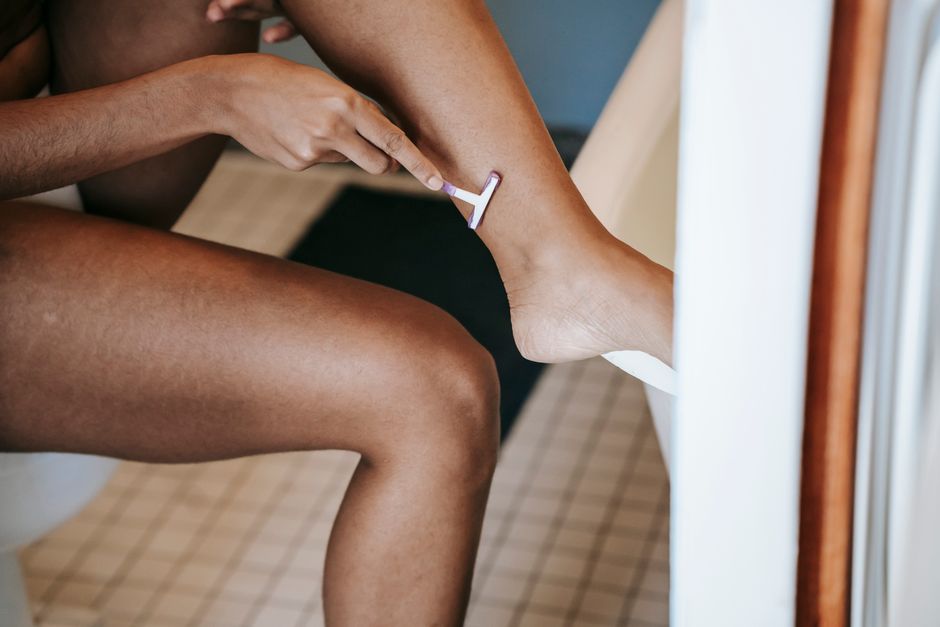
An ingrown hair happens when a hair curls back or grows sideways into the skin instead of rising up out of the follicle. It causes a small, often painful bump that may look red and inflamed. The most reliable way to get rid of one is to stop shaving or tweezing that area for a few days, then gently encourage the hair to surface with warm compresses and light exfoliation. If the hair is visible just under the skin, you can carefully lift it with a sterile needle, but you should never dig into the skin or squeeze the bump like a pimple.
What Causes an Ingrown Hair?
Ingrown hairs develop when the sharp tip of a shaved or tweezed hair re-enters the skin. Curly or coarse hair is more prone to this because it naturally tends to curve back toward the follicle. Shaving against the direction of hair growth, pulling the skin taut while shaving, or using a dull blade increases the risk.
When the hair pierces the skin, the body treats it as a foreign object. The immune system responds with inflammation, producing the red, tender bump you see. This is not an infection in most cases — it is a localized inflammatory reaction to the hair itself.
How To Get Rid Of A Ingrown Hair Safely
Stop all hair removal in that area immediately. Shaving, plucking, and waxing will only push the hair deeper and worsen the inflammation. Give the skin two to three days of rest before attempting any treatment.
Apply a warm compress to the area for 10 to 15 minutes, two to three times a day. The heat softens the skin and the hair shaft, making it easier for the hair to break through on its own. This single step resolves many ingrown hairs without any further intervention.
Once the skin is softened, gently wash the area with a mild cleanser and use a soft washcloth in small circular motions. This light exfoliation can free a hair that is trapped just below the surface. Do not scrub hard. Aggressive rubbing damages the skin and makes the bump worse.
When You Can See the Hair Loop
If a dark loop of hair is visible just beneath the skin surface, you can lift it out with a sterile needle. Clean the area with rubbing alcohol first. Sterilize a sewing needle with alcohol or heat, then let it cool. Use the needle to gently lift the loop of hair upward and out of the skin.
Do not break the skin open or dig for the hair. If the hair is not visible, do not attempt this. Digging creates a wound that can become truly infected and often leaves a scar. Once the hair is lifted, you can trim it with clean cuticle scissors. Do not pluck it out — plucking removes the hair below the skin line, and the new hair will likely become ingrown again.




Do Not Squeeze or Pop the Bump
Squeezing an ingrown hair bump is one of the most common mistakes people make. Unlike a pimple, there is no pus pocket to drain in most cases. The bump is inflamed tissue around a trapped hair. Squeezing it damages the skin, increases inflammation, and can push the hair deeper into the follicle.
If the bump becomes filled with pus, it may be infected. An infected ingrown hair looks like a larger, more painful pimple with yellow or green discharge. In that case, keep the area clean and apply a warm compress. If it does not improve in a few days or if redness spreads, see a healthcare provider. You may need a prescription antibiotic.
Over-the-Counter Treatments That Work
Several over-the-counter products can help an ingrown hair resolve faster. Look for products containing salicylic acid or glycolic acid. These are chemical exfoliants that dissolve the dead skin cells trapping the hair. They are available as creams, lotions, and pads.
Apply these products once daily to the affected area after cleansing. They can cause mild stinging or dryness, especially on sensitive skin. Start with every other day if your skin is reactive. Stop using them if the skin becomes raw or irritated.
Hydrocortisone cream, at 1% strength, can reduce redness and itching. Use it sparingly for no more than a few days. Prolonged use of topical steroids thins the skin and is not recommended.
Some products are marketed specifically for razor bumps or ingrown hairs. Many contain a combination of exfoliating acids and soothing agents. Check the ingredient list rather than trusting the marketing claims. A product with a proven exfoliating acid is more likely to help than one relying on botanical extracts alone.
How To Prevent Ingrown Hairs
Prevention is more effective than treatment. If you are prone to ingrown hairs, change how you remove hair.
Shave in the direction of hair growth. This produces a less close shave but significantly reduces the chance of the hair tip re-entering the skin. Use a sharp, single-blade razor. Multi-blade razors pull the hair up before cutting it, which allows the hair to retract below the skin surface — a major cause of ingrown hairs.
Shave after a warm shower or while the skin is wet with warm water. Heat softens the hair and makes it easier to cut cleanly. Use a shaving gel or cream rather than shaving dry. Rinse the blade after every stroke and replace it regularly. A dull blade tugs at the hair and creates uneven cuts that are more likely to become ingrown.
Exfoliate the area one to two times per week between shaves. This removes dead skin cells that can trap hairs before they surface. Do not exfoliate on the same day you shave — the combination is too irritating for most skin.
Consider alternatives to shaving. Electric razors with a foil guard cut the hair slightly above the skin surface, which reduces ingrown hairs. Depilatory creams dissolve the hair at the skin line, though they can irritate sensitive skin and should be tested on a small area first. Laser hair removal and electrolysis are the only methods that permanently reduce hair growth, which eliminates the problem over time. These are expensive and require multiple sessions, but they are the most effective long-term solution for chronic ingrown hairs.
When To See a Doctor
Most ingrown hairs resolve on their own within one to two weeks with home care. See a healthcare provider if the bump grows larger, becomes increasingly painful, or shows signs of infection such as spreading redness, warmth, or pus. Fever is a sign that the infection has spread and requires prompt medical attention.
People with diabetes or weakened immune systems should be more cautious. Skin infections that are minor in healthy people can become serious in these groups. If you have diabetes and develop an ingrown hair that does not improve in a few days, have it evaluated.
Dark-skinned individuals are more prone to a condition called pseudofolliculitis barbae, commonly known as razor bumps. This is a chronic inflammatory response to ingrown hairs, most often on the face and neck. It can cause dark spots and scarring. If razor bumps are a frequent problem, a dermatologist can recommend prescription treatments such as topical retinoids or antibiotics.
Common Myths About Ingrown Hairs
One myth is that rubbing alcohol or hydrogen peroxide on the bump will help it heal faster. These substances kill bacteria but also damage healthy skin cells and delay healing. Warm water and mild soap are sufficient for cleansing.
Another myth is that you should pull the hair out completely with tweezers. Removing the entire hair from the follicle does not prevent recurrence — the new hair will likely grow in the same direction and become ingrown again. Trimming the hair at the skin surface is the correct approach.
Some people believe that ingrown hairs are always caused by poor hygiene. They are not. Even people with excellent hygiene develop ingrown hairs because the cause is mechanical — the hair’s growth pattern — not dirt or bacteria.
Frequently Asked Questions
How long does an ingrown hair take to go away?
Most ingrown hairs resolve within one to two weeks with warm compresses and gentle exfoliation. If it has not improved after two weeks or shows signs of infection, see a healthcare provider.
Should I pop an ingrown hair like a pimple?
No. Squeezing the bump damages the skin and can push the hair deeper. If there is visible pus, it may be infected and should be treated with warm compresses or evaluated by a doctor.
Does shaving make ingrown hairs worse?
Yes, shaving can worsen an existing ingrown hair and cause new ones. Stop shaving the area until the bump heals, then shave in the direction of hair growth with a sharp blade.
Can ingrown hairs cause permanent scars?
Yes, repeated scratching or squeezing can leave dark spots or scars. Treating the area gently and avoiding trauma reduces the risk of permanent skin changes.
