
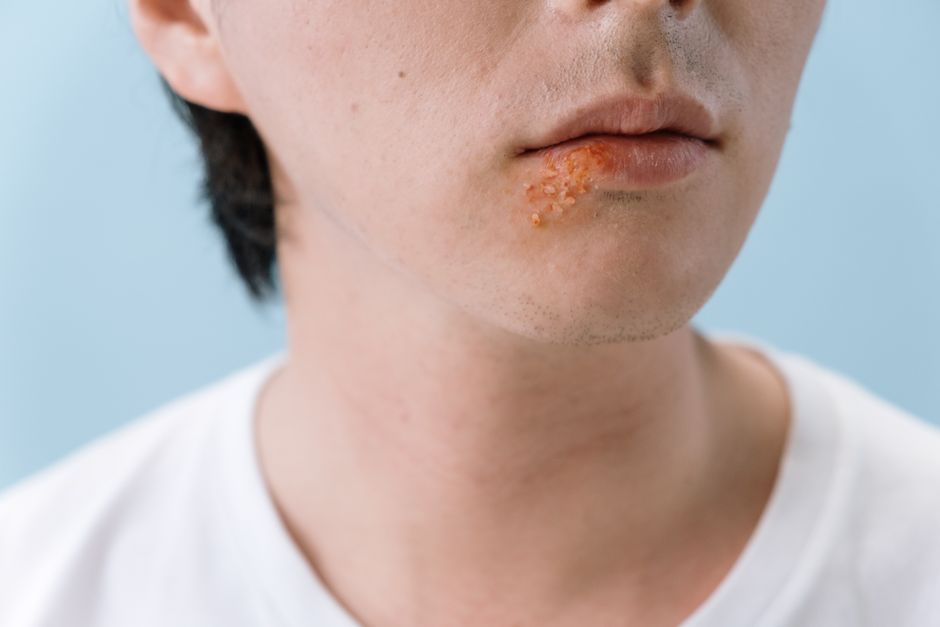
A cold sore inside your lip needs different treatment than one on the outside. Antiviral creams made for external use can irritate the delicate tissue inside your mouth. Over-the-counter oral antiviral medications and prescription options are the most effective approach. For immediate relief, use a topical oral gel designed for mouth sores, and see a doctor if sores appear frequently or last longer than two weeks.
What Is a Cold Sore Inside Your Lip?
A cold sore inside your lip is a fluid-filled blister caused by the herpes simplex virus. Most commonly, it is herpes simplex virus type 1. The same virus causes cold sores on the outside of the mouth. When it appears inside the lip, it is sometimes called a herpetic stomatitis lesion or an intraoral cold sore.
These sores differ from canker sores. Canker sores are not caused by a virus and are not contagious. Cold sores inside the lip are contagious and can spread to other people through kissing or sharing utensils.
The blister inside your lip may rupture quickly. This leaves a shallow, painful ulcer. You may notice redness and swelling around the area. Some people experience tingling or burning a day before the sore appears.
How To Get Rid Of A Cold Sore Inside Your Lip Fast
Speed matters with cold sores. Starting treatment at the first sign of tingling gives you the best chance of shortening the outbreak. Antiviral medications work best when started within 48 hours of symptoms.
Prescription antiviral pills are the most effective option for cold sores inside the lip. Acyclovir, valacyclovir, and famciclovir are the standard medications. These require a doctor’s prescription. A typical course lasts several days. Your doctor will tell you the right dose for your situation.
Over-the-counter options are more limited for internal cold sores. Antiviral creams are formulated for the skin outside the mouth. Using them inside the lip can cause stinging and may not deliver enough medication to the affected area.
Oral gels containing benzocaine or lidocaine can numb the sore. These treat pain but do not kill the virus. They are useful for making eating and talking more comfortable while the infection runs its course.
Prescription Treatments That Work
Antiviral medications target the herpes virus directly. They stop the virus from replicating. This shortens the duration of the outbreak and reduces symptom severity.
Valacyclovir is commonly prescribed for cold sores. It is taken as a pill. Some doctors prescribe a single high dose for an outbreak. Others recommend a multi-day course. Both approaches have evidence supporting their use.
Acyclovir is another option. It has been used for decades and has a well-established safety record. It requires more frequent dosing than valacyclovir because the body clears it faster.
Famciclovir is less commonly used for cold sores but is still an effective option. Your doctor may choose it based on your medical history or other factors.
These medications are generally well tolerated. Some people experience nausea or headache. Tell your doctor about all medications you take, including supplements, because antiviral drugs can interact with other medicines.





Home Care That Helps and What to Avoid
Home care cannot cure a cold sore, but it can reduce discomfort and prevent complications. Keep the area clean. Rinse gently with warm salt water several times a day. This helps prevent bacterial infection in the open sore.
Apply a cold compress to the outside of your lip near the sore. This can reduce swelling and numb the area temporarily. Wrap ice in a clean cloth. Do not apply ice directly to the skin.
Avoid acidic and salty foods while the sore is active. Citrus fruits, tomatoes, and salty snacks can cause intense stinging. Soft, bland foods are easier to tolerate.
Do not pick at the sore or try to pop it. This can spread the virus to other parts of your mouth or face. It also increases the risk of bacterial infection and slows healing.
Some people use lysine supplements hoping to prevent outbreaks. The evidence for lysine is mixed. Some studies suggest it may help reduce outbreak frequency, but quality varies. No large, well-controlled trials have confirmed a clear benefit.
How Long Does a Cold Sore Inside the Lip Last?
An untreated cold sore inside the lip typically heals in 7 to 14 days. With antiviral treatment started early, the duration may be shorter. Some people notice improvement within a few days of starting medication.
The healing process follows a predictable pattern. The blister forms, ruptures, and leaves an ulcer. The ulcer slowly shrinks as new tissue grows. Eventually, the area heals without a scar in most cases.
Pain is usually worst in the first few days after the sore appears. As the ulcer begins to heal, discomfort decreases. Some people feel a burning sensation throughout the outbreak.
If a sore inside your lip lasts longer than two weeks, see a doctor. Persistent sores can have other causes. Some require biopsy to rule out more serious conditions.
When To See a Doctor
Most cold sores resolve on their own. But certain situations warrant medical attention. See a doctor if you have frequent outbreaks, defined as more than six per year. Preventive antiviral therapy may be appropriate for you.
Seek medical care if the sore spreads beyond your lip. Cold sores can affect the gums, the roof of the mouth, and the throat. Widespread oral lesions may require stronger treatment.
People with weakened immune systems should see a doctor promptly. This includes people undergoing chemotherapy, organ transplant recipients, and those with advanced HIV. Cold sores can be more severe and longer lasting in these populations.
If you develop a fever, swollen lymph nodes, or feel generally unwell with a cold sore, contact a healthcare provider. These symptoms may indicate a more widespread infection.
Cold sores during pregnancy should be discussed with an obstetrician. Most cold sores do not harm a developing baby. But a first-time infection late in pregnancy carries higher risk and needs medical evaluation.
Can You Prevent Cold Sores Inside the Lip?
Prevention focuses on avoiding triggers and reducing viral shedding. If you know your triggers, you can sometimes prevent outbreaks before they start.
Common triggers include stress, illness, fatigue, and sun exposure. Some people notice outbreaks after dental work or injury to the mouth area. Hormonal changes during menstruation trigger outbreaks in some women.
Once you have the virus, it stays in your body for life. It remains dormant in nerve cells near the lip. Certain conditions reactivate the virus, causing it to travel back to the surface and form a sore.
Taking antiviral medication daily can reduce outbreak frequency. This is called suppressive therapy. It is typically reserved for people with frequent or severe outbreaks. Your doctor can discuss whether this approach fits your situation.
The virus spreads through direct contact. Avoid kissing when you have an active sore. Do not share lip balm, utensils, cups, or towels during an outbreak. Wash your hands frequently, especially after touching the sore area.
Frequently Asked Questions
Can I use cold sore cream inside my lip?
No. Antiviral creams are formulated for the skin outside the mouth and can irritate the delicate tissue inside your lip. Use an oral gel designed for mouth sores instead.
Is a cold sore inside my lip contagious?
Yes. The herpes simplex virus spreads through direct contact with the sore or with saliva from an infected person. Avoid kissing and sharing utensils until the sore heals completely.
What does a cold sore inside the lip look like?
It starts as a small fluid-filled blister that quickly ruptures, leaving a shallow, painful ulcer with redness around it. The sore may have a grayish or yellowish center.
Can I pop a cold sore inside my lip?
No. Popping the sore can spread the virus to other areas and increase the risk of bacterial infection. Let it heal on its own and keep the area clean.
