
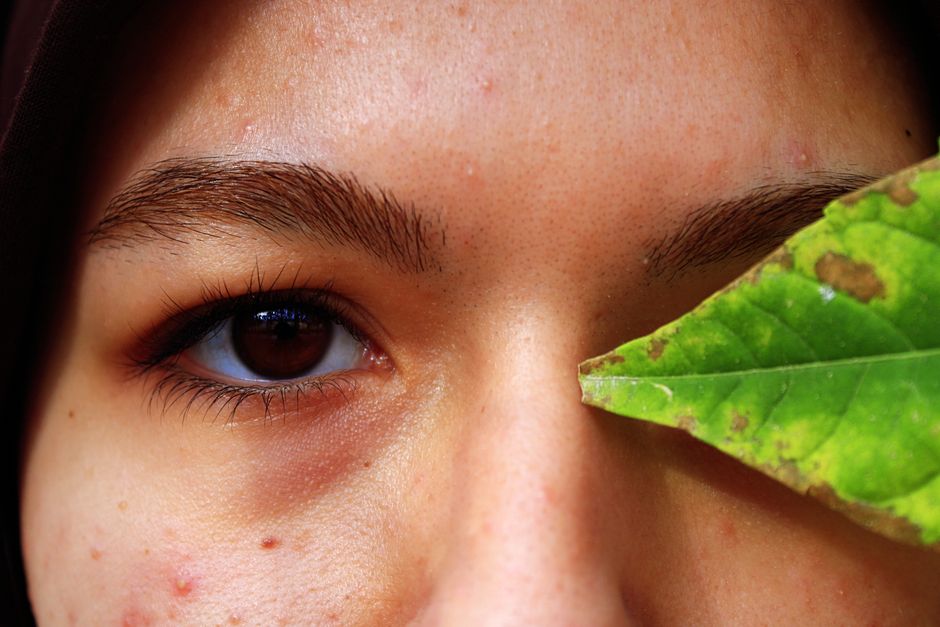
Acne marks are the frustrating reminder of a breakout that has finally healed. The good news is that most of these marks are not permanent scars, and there are effective, evidence-based ways to fade them. The most effective approach depends on the type of mark you have, whether it is a flat red or brown spot or a true indented scar. Treating the skin gently and using targeted ingredients over time is the most reliable path to a clearer, more even complexion.
What Type of Acne Mark Do You Have?
Before you buy any product, you need to identify what you are dealing with. The term “acne mark” is vague and covers two very different conditions. Treating the wrong type can waste your time and money.
Post-inflammatory hyperpigmentation (PIH) is a flat, discolored spot left after a pimple heals. It can be pink, red, or brown depending on your skin tone. This is not a scar. It is a temporary change in skin pigment caused by inflammation.
Post-inflammatory erythema (PIE) is a flat, red or purplish mark that is common in lighter skin tones. It happens when blood vessels dilate and become damaged during the inflammatory process. Like PIH, it is not a true scar, but it can take months to fade.
A true acne scar is different. It is a permanent change in the skin’s texture, such as a depression (ice pick, boxcar, or rolling scar) or a raised bump. These require different, more intensive treatments. If your skin is flat but discolored, you are dealing with PIH or PIE, not a scar.
Why Do Acne Marks Take So Long to Fade?
The fading process is slow because it relies on your skin’s natural healing cycle. Skin cells turn over roughly every 28 days in younger adults, but this process slows with age. The pigment in PIH sits in the deeper layers of the skin, and it takes time for those cells to migrate to the surface and shed.
The most important step is prevention. Every new pimple has the potential to leave a new mark. Picking, popping, or squeezing a pimple increases inflammation and significantly raises the risk of leaving a dark spot or a permanent scar. Protecting your skin from the sun is also non-negotiable. UV exposure darkens PIH and makes it last longer. Daily sunscreen use is one of the most effective things you can do to speed up the fading process.
Which Skincare Ingredients Actually Fade Acne Marks?
Multiple ingredients have clinical evidence supporting their use for fading acne marks. The best choice depends on your skin type, tolerance, and the type of mark you have.
Retinoids are a first-line treatment for both PIH and acne itself. Adapalene is available over-the-counter, while stronger retinoids like tretinoin require a prescription. Retinoids speed up cell turnover, which helps push pigmented cells out faster. They also help treat active acne, which prevents future marks. Skin irritation is common when starting, so begin with a low frequency, such as every other night.
Azelaic acid is another effective option. It works by inhibiting melanin production, which directly targets brown spots. It is well-tolerated by most skin types and is safe to use during pregnancy, unlike many other acne treatments. Some research shows that 15-20% azelaic acid is effective for PIH.
Vitamin C (L-ascorbic acid) is an antioxidant that can brighten the skin and reduce pigmentation. It works by interrupting the pigment production pathway. It is best used in the morning under sunscreen. The evidence for its effectiveness is solid, though it can be unstable in formulas and cause stinging in sensitive skin.
Hydroquinone is considered the gold standard for hyperpigmentation by many dermatologists. It is available in 2% concentrations over-the-counter and higher strengths by prescription. It works by blocking an enzyme needed for melanin production. Because of concerns about side effects with long-term use, it is typically used in cycles with breaks.
Niacinamide has some evidence supporting its use for hyperpigmentation. It works differently than other ingredients by preventing the transfer of pigment to skin cells. It is gentle and pairs well with most other treatments.





What Is the Best Treatment for Red Marks (PIE)?
Red marks are not pigment, so pigment-inhibiting ingredients like hydroquinone and vitamin C will do little for them. PIE is caused by dilated or damaged blood vessels. The treatment strategy is different.
Topical treatments for PIE are limited. Silicone-based gels or sheets may help by creating an optimal healing environment, though the evidence is stronger for true scars than for PIE. Niacinamide and centella asiatica (cica) may help calm inflammation and support the skin barrier, but they will not erase the marks quickly.
The most effective treatments for PIE are procedures performed by a dermatologist. Pulsed dye laser (PDL) targets the red blood vessels directly and is considered highly effective. Intense pulsed light (IPL) is another option that can reduce redness. These procedures require multiple sessions and are not cheap, but they are the most reliable way to clear persistent red marks.
When Should You See a Dermatologist?
If your marks are flat and you have only a few, a consistent skincare routine for 8-12 weeks is a reasonable first step. If you see no improvement after three months of daily sunscreen and targeted ingredients, a dermatologist can offer stronger options.
If your marks are indented or raised, you likely have true scars. Topical skincare will not fix these. A dermatologist can discuss procedures like microneedling, chemical peels, or laser resurfacing. These procedures work by stimulating collagen production to fill in depressions over time. They are not quick fixes and often require a series of treatments.
Do not attempt to treat deep scars with at-home dermarollers or aggressive acids. The risk of infection, further scarring, and worsening pigmentation is real. Professional oversight matters for these treatments.
How Long Until You See Results?
Be patient. Fading acne marks is a slow process, and there is no overnight solution. PIH typically takes 3 to 6 months to fade with consistent treatment. PIE can take a similar amount of time or longer. Deeper or darker marks can take up to a year or more.
Consistency matters more than intensity. Using a gentle cleanser, a targeted treatment, and a moisturizer with sunscreen every day is the foundation. Harsh scrubbing or using too many active ingredients at once will irritate your skin, increase inflammation, and make marks worse. The goal is to calm the skin and speed up its natural healing cycle, not to strip it.
Do Natural Remedies for Acne Marks Work?
Social media is full of claims about lemon juice, toothpaste, and garlic curing acne marks. The evidence for these is essentially absent, and some are actively harmful. Lemon juice is highly acidic and can cause chemical burns and worsen hyperpigmentation. Toothpaste is designed for teeth, not skin, and contains ingredients that irritate and dry out the skin.
Some natural ingredients have better evidence. Aloe vera has anti-inflammatory properties and may help soothe skin, but it will not fade a dark mark on its own. Green tea extract and licorice root extract have shown some promise in studies for lightening pigmentation, but the evidence is not as strong as for the clinical ingredients listed earlier. These are not replacements for proven treatments, but they can be part of a gentle skincare routine.
If a remedy sounds too good to be true, it usually is. No food, juice, or paste will erase a mark faster than proven skincare ingredients and time.
Can Makeup Help While You Wait?
Yes. Camouflaging marks with makeup is a practical and safe strategy while your skincare works. There is no evidence that wearing makeup prevents acne marks from fading, provided you remove it gently at night.
Choose a non-comedogenic foundation that matches your skin tone. Color-correcting concealers can be useful. A green corrector neutralizes redness from PIE, while a peach or orange corrector cancels out brown tones in PIH on medium to dark skin. Apply a thin layer under your foundation for a more even look.
Just ensure you are not using makeup to hide the problem and skip your skincare. The two can work together.
Frequently Asked Questions
Can ice or cold water help fade acne marks?
No, ice and cold water do not fade existing acne marks. They may temporarily reduce swelling on an active pimple, but they do nothing to alter pigment or repair blood vessel damage.
Is it safe to use multiple fading ingredients at once?
It can be safe, but it increases the risk of irritation. Combining a retinoid at night with vitamin C in the morning is common, but adding too many strong actives at once can damage your skin barrier and worsen marks.
Do acne marks go away faster if you exfoliate daily?
No, daily exfoliation is too harsh and will irritate the skin. Gentle exfoliation a few times a week can help speed cell turnover, but over-exfoliating increases inflammation and slows healing.
Will acne marks fade on their own without any treatment?
Yes, they will often fade on their own, but it can take many months. Sun protection and consistent skincare can significantly shorten the time it takes for the marks to disappear.
