
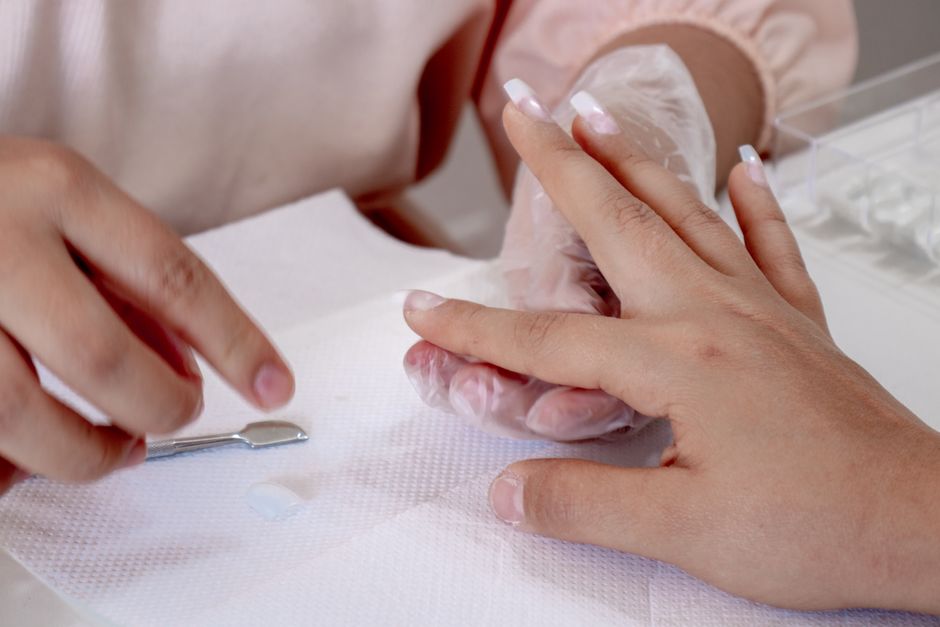
A separated nail can look and feel alarming, but the situation is often more manageable than it appears. Once a nail lifts away from its bed due to an injury, it cannot be glued back on or forced to re-adhere to the living tissue. The nail will not reattach to the nail bed in the way you might hope; instead, the old nail must grow out, and a new nail will grow in to take its place.
What Does It Mean When a Nail Separates?
Nail separation, known medically as onycholysis, happens when the nail plate lifts away from the skin beneath it. That skin, the nail bed, is what feeds the nail and keeps it attached. When the bond breaks, the nail loses its anchor.
Injuries are the most common cause. Dropping something heavy on a finger, slamming a finger in a door, or even repetitive pressure from running in ill-fitting shoes can cause this. Fungal infections, psoriasis, and certain medications can also cause separation without a specific injury.
The key fact is this: the nail bed is not glue. It is living tissue that produces a new nail over time. The separated portion of the old nail will never stick back down. Your job is to protect the area so the new nail can grow in healthy and strong.
How To Get Nail To Reattach To Nail Bed: The Only Real Answer
The only way to get a nail to reattach to the nail bed is to give the new nail time to grow in and replace the damaged one. A fingernail takes about six months to fully regrow. A toenail takes twelve months or longer. During that time, the nail bed slowly rebuilds itself and forms a fresh attachment to the new nail as it emerges.
You cannot speed up this process. No ointment, vitamin, or home remedy will make the old nail stick back down. What you can do is keep the area clean and protected so the new nail has the best chance to grow normally. If the separated nail is still partially attached, leave it alone. It acts as a natural bandage while the new nail forms underneath.
Immediate Steps to Take Right After the Injury
What you do in the first hours after the injury matters. It affects whether the nail bed heals cleanly or develops complications.
- Clean the area gently. Rinse the finger or toe with clean water. Use a mild soap. Do not scrub.
- Apply pressure if bleeding. Use a clean cloth for a few minutes until the bleeding stops.
- Keep the nail dry. Moisture trapped under a separated nail invites fungal growth. Dry the area thoroughly after washing.
- Trim any sharp edges. If the nail has a torn or jagged edge, trim it carefully with clean clippers. This prevents it from catching on clothing and tearing further.
- Do not pull off the nail. Even if it looks loose, leave it in place unless a doctor tells you otherwise.
After cleaning, apply a thin layer of petroleum jelly and cover the area with a bandage. Change the bandage daily and whenever it gets wet or dirty.




When To See a Doctor
Most nail injuries do not require a trip to the emergency room. But some situations need professional care. See a doctor if any of the following apply:
- The finger or toe looks deformed or bent.
- The nail bed itself is cut or torn open.
- The nail came completely off and the bed underneath is exposed.
- There is severe pain that does not improve.
- Signs of infection appear: redness spreading, warmth, pus, or increasing pain.
- You have diabetes or poor circulation in your hands or feet.
A doctor may need to remove the remaining nail if it is damaged beyond repair. They can also check for fractures in the bone beneath the nail. An X-ray is sometimes needed to rule out a break, especially if the injury was forceful.
Signs of Infection You Cannot Ignore
Infection is the main complication to watch for after a nail injury. The nail bed is exposed tissue, and bacteria can enter easily.
Watch for these warning signs in the days following the injury:
- Redness that spreads beyond the immediate area
- Swelling that gets worse instead of better
- Warmth radiating from the finger or toe
- Pus or yellow-green drainage
- Throbbing pain that intensifies
- Fever
If any of these appear, contact a healthcare provider promptly. An infection left untreated can spread to the bone, a serious condition called osteomyelitis. This is rare but possible, particularly in people with diabetes or weakened immune systems.
Does the Nail Grow Back Normal?
In most cases, yes, the nail grows back looking normal. But there are no guarantees. The nail bed is delicate tissue. If it was damaged in the injury, the new nail may grow back with ridges, a slight curve, or a thickened appearance.
Sometimes the new nail grows in with a small split or a permanent ridge at the site of the injury. This is cosmetic only and does not cause pain or functional problems. In severe cases where the nail bed was crushed or torn extensively, the nail may grow back misshapen or fail to fully attach at the edges.
Fungal infections during the healing process are another reason the new nail may look abnormal. Keeping the area dry is your best defense against this.
What Actually Helps the Healing Process
There is no proven way to accelerate nail regrowth. The nail grows from the matrix, the tissue at the base of the nail, and that growth rate is largely determined by your genetics and overall health.
Good nutrition supports healthy nail growth. Protein, biotin, iron, and zinc all play roles in nail formation. Most people get enough of these from a balanced diet. Biotin supplements are popular for nail health, and some research suggests they may help strengthen brittle nails, but no clinical evidence shows they speed up reattachment after an injury.
What helps most is protecting the area from further trauma. Wear shoes with a roomy toe box if the injury is on a toenail. Avoid activities that put repeated pressure on the injured finger. Keep the area moisturized with a simple emollient to prevent the surrounding skin from cracking.
How Long Until the Nail Reattaches
Expect a visible change within a few weeks. The separated portion of the nail will continue to grow forward. As it does, you will see new nail emerging from the cuticle area that is firmly attached to the nail bed.
For a fingernail, the entire process takes about six months. The old separated nail eventually grows out to the tip, and by that point the new nail has fully replaced it. For a toenail, the timeline is longer. Complete regrowth can take twelve to eighteen months because toenails grow more slowly.
During this time, the line of separation will move forward as the nail grows. This is a good sign. It means the nail matrix is producing healthy new nail tissue. If the separation does not improve or if it spreads further up the nail, that points to an ongoing problem like a fungal infection, and you should have it evaluated.
Frequently Asked Questions
Can a separated nail be glued back to the nail bed?
No. Nail glue or superglue cannot reattach a nail to living tissue and can cause chemical burns or trap bacteria. The nail must grow out naturally over several months.
How long does it take for a nail to reattach after injury?
A fingernail takes about six months to fully regrow, while a toenail takes twelve to eighteen months. The separated portion never reattaches; it grows out and is replaced by new nail.
Should I remove a nail that is lifting off the nail bed?
Leave it in place if it is still partially attached. The remaining nail protects the sensitive nail bed while the new nail grows in underneath. Only a doctor should remove it if it is causing problems.
What does a fungal infection look like on a healing nail?
Look for yellow or brown discoloration, thickening of the nail, a foul odor, or debris collecting under the nail. If the separation spreads upward instead of growing out, a fungal infection is a likely cause.
Nail reattachment is not an instant fix. It is a slow, natural process that requires patience and proper care. Keep the area clean, protect it from further injury, and give your body the months it needs to grow a healthy new nail. If you notice signs of infection or the nail does not show steady improvement, seek medical advice rather than waiting it out.
