
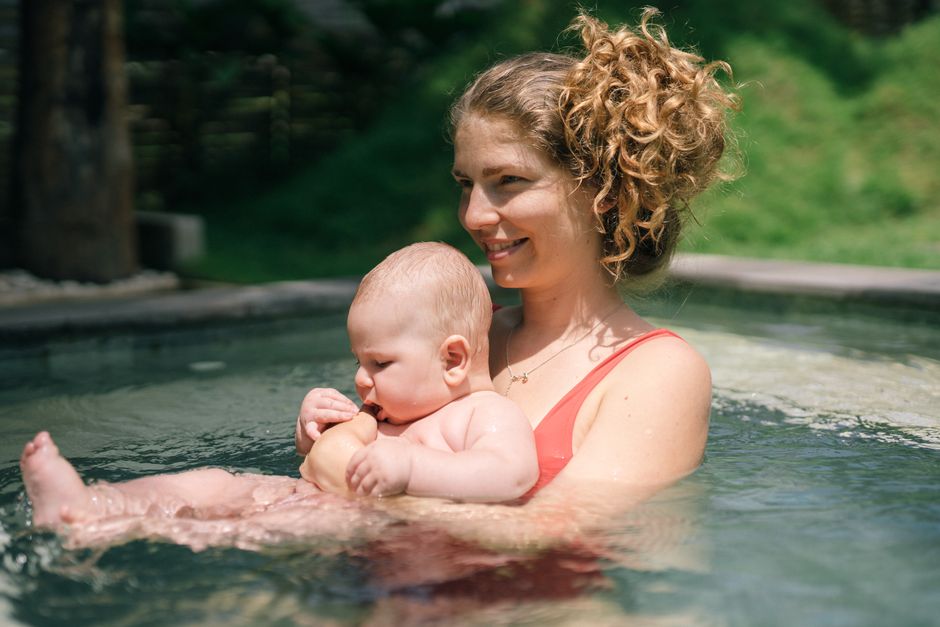
Babies learn to talk through thousands of small interactions, not through flashcards or expensive programs. The single most effective daily habit is talking directly to your baby throughout ordinary routines — diapering, feeding, bathing, walking — while looking at their face and responding to their sounds. Research consistently shows that the amount and quality of language a baby hears in the first two years predicts vocabulary and language skills later in childhood. Simple, repeated, face-to-face conversation is the foundation.
When Do Babies Usually Start Talking?
Language development starts long before the first word. Newborns recognize their mother’s voice within days of birth. By two months, most babies coo. By four to six months, they babble with consonant sounds like “ba” and “ga.”
First words typically appear between 10 and 14 months. By 18 months, many toddlers use 10 to 20 words. By age two, most children have a vocabulary of around 50 words and begin combining two words, like “more milk” or “daddy go.”
These ranges are wide for a reason. Some perfectly healthy children say their first word at nine months, others at 15 months. The American Academy of Pediatrics notes that boys and girls often develop language at slightly different paces, and that premature babies may follow a corrected timeline.
What matters more than any single milestone is the trajectory. A baby who is steadily adding sounds, gestures, and words is on track even if they are on the later end of normal.
What Are the Simple Daily Habits That Help Babies Talk?
Every routine you already do is a language opportunity. You do not need special materials or extra time. You need to narrate what is happening and respond when your baby makes sounds.
Here are habits that fit into an ordinary day:
- Narrate your actions. “I’m washing your hands. The water is warm. Now I’m drying them.” This gives words meaning by attaching them to real objects and events.
- Respond to every sound. When your baby coos or babbles, treat it as a turn in conversation. Pause, look at them, and answer. This teaches the back-and-forth rhythm of talking.
- Get face to face. Babies learn sounds by watching your mouth and lips. Hold them so they can see your face, not just hear your voice.
- Name things they are looking at. If your baby is staring at a dog, say “dog.” Following their attention is more effective than redirecting it.
- Read one book a day. Even a two-minute board book counts. Point to pictures and name them.
- Sing the same songs repeatedly. Repetition helps babies pick out word boundaries in the stream of speech.
- Pause and wait. After you say something, give your baby several seconds to respond with a sound, a look, or a gesture. This silent gap is where language practice happens.
The “serve and return” pattern — you say something, your baby responds, you respond back — is one of the best-studied mechanisms in early language development. It is not about how many words you say. It is about how many exchanges you have.
Does Baby Talk Help or Hurt Language Development?
The sing-song, higher-pitched voice adults naturally use with babies — sometimes called parentese or motherese — actually helps. Research published in journals including Developmental Science has found that babies prefer this style of speech and that it helps them segment words from continuous sound.
What matters is that parentese keeps normal words and grammar. “Ohh, look at the baaaby!” with stretched vowels and clear consonants is helpful. Replacing real words with nonsense sounds (“wook at da widdle bay-bee”) is not. Babies need to hear the actual words they will eventually use.
So the answer is: exaggerated melody, yes. Broken or fake words, no. The pitch and rhythm help attention. The real vocabulary does the teaching.





Does Screen Time Affect When Babies Talk?
Some studies have found an association between more screen time in infancy and lower language scores, though the evidence is mixed and the reasons are not fully settled. What is clearer is that screen time displaces the face-to-face interaction that drives language learning. A baby watching a video is not having a conversation.
The American Academy of Pediatrics recommends avoiding screen media other than video chatting for children under 18 months, and introducing high-quality programming with a caregiver present only after that. Video chatting with a grandparent is different because it is live and interactive.
The concern is not that screens are toxic. It is that every minute of passive screen time is a minute not spent in back-and-forth talk with a person. For language development, live human interaction is what counts.
What If My Baby Is Not Talking Yet?
Some children are simply late talkers who catch up on their own. Others have a language delay that benefits from early support. The challenge is telling the difference early, which is why professional evaluation matters more than waiting.
Consider talking to your pediatrician if any of these apply:
- No babbling with consonants by 9 months
- No gestures like pointing or waving by 12 months
- No single words by 16 months
- No two-word combinations by 24 months
- Loss of language or social skills at any age
These are general screening markers, not diagnoses. A child who misses one may still be developing normally. But earlier evaluation leads to earlier support, and early intervention for language delays has stronger evidence behind it than waiting until school age.
Hearing should also be checked. Even mild hearing loss from repeated ear infections can affect how clearly a baby hears speech sounds, which in turn affects how they learn to produce them. A hearing test is a reasonable first step when language seems behind.
Does Reading to a Baby Who Cannot Talk Yet Really Matter?
Yes, and the reason is not that the baby understands the story. It is that reading creates a predictable, repeated, face-to-face language exchange. Your baby hears the same words, sees your expressions, and gets a chance to point, babble, and turn pages.
Board books with simple, high-contrast pictures work well for babies under a year. You do not need to finish the book. Following your baby’s interest — naming whatever they look at or grab — is more valuable than reading cover to cover.
The number of books in a home is one of the more consistent predictors of early language scores in research, likely because it reflects how often reading happens rather than the books themselves. One book, read daily, does more than a shelf that stays closed.
Should You Correct Your Baby’s Words?
No, and correcting can backfire. When a toddler says “tat” for cat, the useful response is not “No, say cat.” It is “Yes, that’s a cat!” — repeating the correct word naturally.
This is called recasting, and some research suggests it helps children refine their speech over time. The key is that it feels like conversation, not correction. Your baby is practicing sounds and words. Turning that practice into a test can reduce how much they try.
Model the correct word clearly and move on. Over months, the sounds will sharpen on their own with repeated exposure.
How Long Before These Habits Show Results?
Language development is gradual, and you will not see daily progress. What you may notice over weeks and months is more babbling, more gestures, more eye contact during talk, and eventually more words. The habits work cumulatively, not overnight.
The honest position is that no single habit produces a talking baby on a schedule. What the evidence supports is that rich, responsive, face-to-face language input in the first two years gives children the strongest foundation for language. The rest — the exact timing of first words — varies widely and is not fully in your control.
Keep talking. Keep responding. Keep it simple and daily. That is what the research actually supports.
Frequently Asked Questions
At what age should a baby say their first word?
Most babies say their first word between 10 and 14 months, though a range from 9 to 15 months is considered normal. Talk to your pediatrician if there are no words by 16 months.
Does talking to my baby in a sing-song voice help them learn to talk?
Yes, the higher-pitched, melodic speech adults naturally use helps babies pick out words from continuous sound. The key is to keep using real words and normal grammar, not made-up sounds.
Can too much screen time delay my baby’s speech?
Some studies link more screen time in infancy to lower language scores, though the evidence is mixed. The clearest issue is that screens replace the face-to-face conversation that drives language learning.
What are simple daily habits to help my baby talk?
Narrate your routines, respond to every sound your baby makes, get face to face so they can watch your mouth, and read one short book a day. The back-and-forth exchange matters more than the number of words.
