
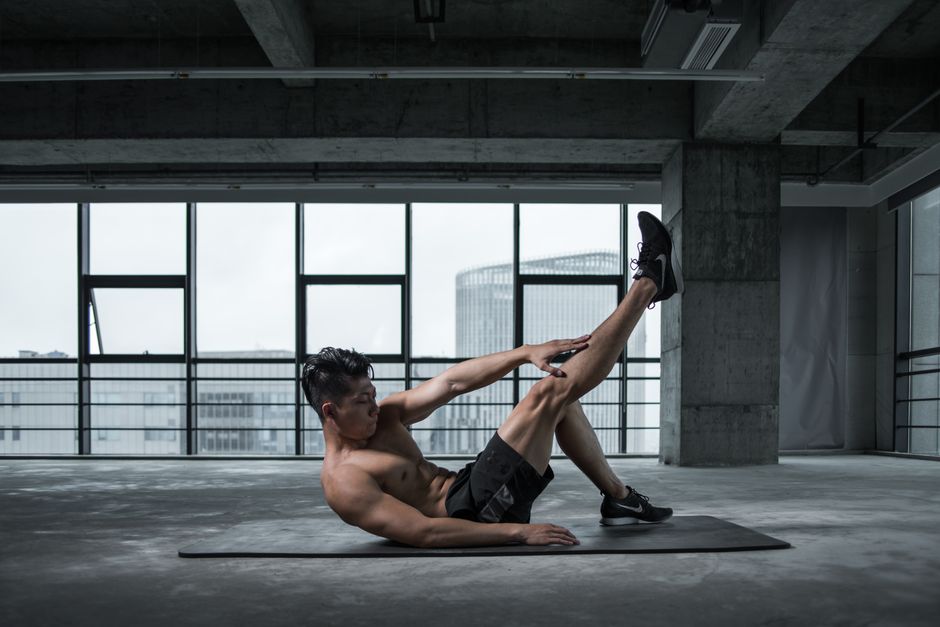
Building visibly muscular legs comes down to two things: progressive resistance training and eating enough protein and calories to support muscle growth. Genetics decide the shape of your muscles and where they attach to bone, but training volume, load, and nutrition decide how much size you actually gain. Most people who train legs consistently for several months see meaningful strength gains first, with visible size changes following more slowly.
How To Get Muscular Legs: The Basics That Actually Work
Muscle grows when it is challenged beyond what it is used to, then given time and raw material to repair. That process is called hypertrophy. It happens when mechanical tension on muscle fibers is high enough and repeated often enough to signal the body to build more contractile protein.
Three inputs drive that signal:
- Progressive overload — gradually adding weight, reps, or sets over time
- Adequate protein — enough to supply the amino acids muscle repair requires
- Enough calories — building tissue costs energy; a large deficit works against you
Everything else — supplements, timing tricks, fancy machines — is secondary. If those three inputs are missing, no program will produce much growth.
Which Leg Exercises Build the Most Muscle?
Compound movements that load the hips and knees through a large range of motion produce the most growth stimulus per set. Squats, deadlifts, lunges, leg press, and hip hinges all qualify. Isolation work like leg extensions and hamstring curls adds volume to specific muscles but does not replace the big lifts.
Research consistently shows that training a muscle with a full stretch under load is a strong driver of hypertrophy. For the legs, that means going deep enough in a squat or leg press that the knee and hip travel through a long arc, not stopping short.
You do not need a gym full of equipment. A barbell, a set of dumbbells, or even a sturdy backpack loaded with weight can work. What matters is that the load is heavy enough to be challenging by the last few reps of each set.
How many sets and reps?
Evidence indicates that roughly 10 to 20 hard sets per muscle group per week is a reasonable range for most people, spread across two sessions. Beginners can grow on the lower end. More advanced lifters often need the higher end.
For rep ranges, both heavy sets (around 5 to 8 reps) and moderate sets (around 8 to 15 reps) build muscle when taken close to failure. The key variable is effort, not the exact number. A set stopped five reps short of difficulty does very little.
How Often Should You Train Legs?
Training each muscle group about twice a week is a well-supported approach. Splitting leg work into two sessions lets you accumulate more quality sets without one session becoming so long that form breaks down.
Recovery matters as much as the training itself. Muscle protein synthesis stays elevated for roughly 24 to 48 hours after a hard session, which is part of why spreading volume across the week beats cramming it into one day.
Rest between sets is also a real variable. Longer rest — around two to three minutes on heavy compound lifts — tends to preserve performance on later sets, which means more total quality work. Short rests feel harder but often reduce how much you can lift.
If you are new to lifting, two leg sessions a week is plenty. If you have trained for years, you may need more volume or more frequency to keep progressing. The signal to add work is simple: if you are recovering well and no longer getting stronger, add a set or two.




What Should You Eat to Build Leg Muscle?
Protein intake is the most studied nutritional lever for muscle growth. A common evidence-based target is roughly 0.7 to 1 gram of protein per pound of body weight per day for people doing resistance training. For a 150-pound person, that is about 105 to 150 grams daily.
Spreading protein across three to four meals appears to support muscle building better than eating most of it in one sitting, though total daily intake matters most.
Calories matter too. Building muscle requires energy. Eating at maintenance or a slight surplus — a few hundred calories above what you burn — supports growth without excessive fat gain. A large calorie deficit makes it very hard to add muscle, though beginners and people with more body fat can sometimes gain strength while losing fat.
Carbohydrates are not optional. They fuel hard training and replenish muscle glycogen, the stored fuel your legs use during repeated efforts. Cutting carbs very low tends to hurt training quality, which in turn hurts growth.
Do You Need Supplements for Leg Muscle?
Most supplements marketed for muscle growth have weak or absent evidence in humans. A few have reasonable support.
Creatine monohydrate is the most studied sports supplement. Research consistently shows it increases strength and lean mass when combined with resistance training. It is not a steroid and does not work without training.
Protein powder is simply convenient food. It helps you hit your daily protein target but offers no advantage over protein from whole foods.
Beyond those two, the evidence thins out quickly. Branched-chain amino acids, testosterone boosters, and most “mass gainer” products have little to no human trial support for building muscle beyond what food and training already provide. If a product promises dramatic leg growth without training, that claim is not supported by evidence.
Why Are Your Legs Not Growing?
If you have trained for months with no size change, the cause is usually one of a few things.
- Not enough overload — using the same weights and reps week after week
- Not enough effort — stopping sets far short of real difficulty
- Not enough food — eating too little to build tissue
- Not enough protein — falling well short of daily targets
- Not enough recovery — poor sleep or too little rest between sessions
Sleep is often overlooked. Short sleep is associated with reduced muscle protein synthesis and worse training performance. Most adults need seven to nine hours. If you are sleeping five, that is likely limiting your results regardless of how good your program is.
Genetics also set a ceiling on how much muscle you can carry and where it sits. Some people build large quads easily and struggle with hamstrings, or the reverse. You can develop every muscle you have, but you cannot change where those muscles attach or their natural shape.
How Long Does It Take to See Results?
Strength gains show up first, often within a few weeks, largely because your nervous system gets better at recruiting muscle. Visible size changes take longer. Most people who train consistently and eat enough see noticeable changes over several months, with the pace slowing as they get more advanced.
Beginners tend to gain faster than experienced lifters. This is a well-documented pattern, not a motivational slogan. The same program that builds a lot of muscle in year one produces less in year three.
Consistency beats intensity over the long run. Three solid sessions a week for a year will outperform two months of extreme training followed by quitting.
Common Mistakes That Stall Leg Growth
Skipping legs is the obvious one, but there are subtler traps.
Training legs only once a week with a single brutal session is common and often less effective than splitting the work. Doing endless high-rep sets with light weight builds endurance more than size. Avoiding depth on squats and leg press limits the stretch that drives growth.
Another trap is chasing soreness. Soreness is not a reliable measure of a good workout. You can build muscle with little soreness and fail to build it while very sore. Judge progress by strength and measurements, not by how much it hurts to sit down.
Finally, changing programs every few weeks prevents you from ever accumulating enough consistent work to grow. Pick a plan, run it for at least eight to twelve weeks, and adjust only when progress stalls.
Frequently Asked Questions
How long does it take to get muscular legs?
Most people see strength gains within a few weeks and visible size changes over several months of consistent training and adequate eating. The pace slows as you get more experienced.
Can you build leg muscle without weights?
Yes, but it is harder once you are past the beginner stage. Bodyweight squats, lunges, and single-leg variations can build muscle if you keep increasing difficulty, though added resistance makes progression easier.
How much protein do you need to build leg muscle?
A common evidence-based target is roughly 0.7 to 1 gram of protein per pound of body weight per day for people doing resistance training. Total daily intake matters more than timing.
Is soreness a sign your legs are growing?
No. Soreness reflects unfamiliar stress, not muscle growth. Progress is better measured by increasing strength and by size changes over time.
