
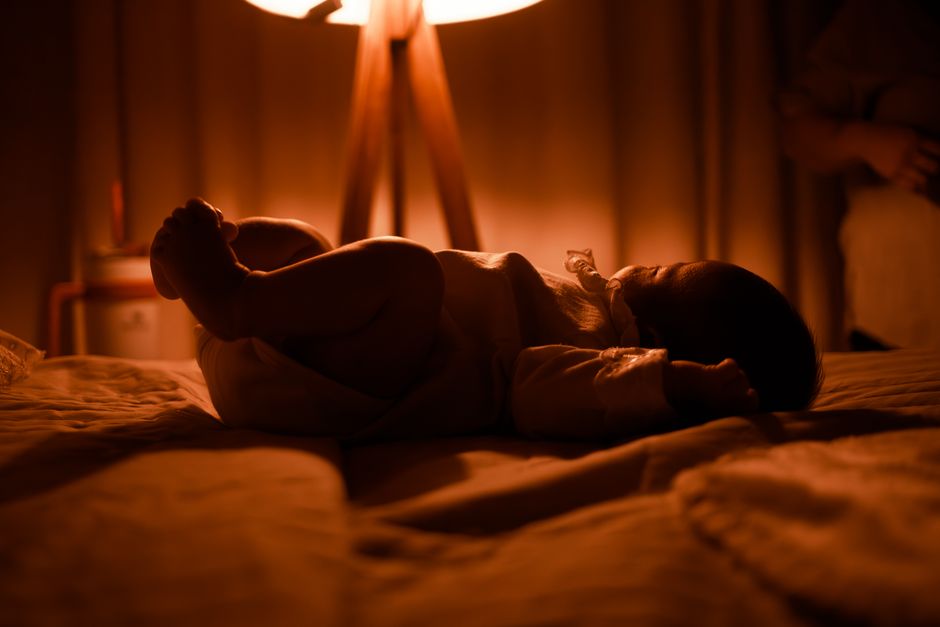
Getting an infant to sleep at night is one of the hardest parts of new parenthood. The key is understanding that newborns wake frequently because their brains and stomachs are still developing. Your job is not to force sleep, but to create the conditions where sleep can happen safely and naturally.
Why Do Infants Wake Up So Much at Night?
Newborns have tiny stomachs. They need to eat every two to three hours around the clock. This is normal and healthy. It is not a sign that you are doing something wrong.
Infants also spend more time in REM sleep than adults. REM sleep is light sleep. It is easier to wake from. Babies move, twitch, and make noises during this stage. Parents often mistake these normal movements for full wakefulness.
Your baby’s internal clock is not set yet. Melatonin, the hormone that helps regulate sleep, does not follow a day-night rhythm until around three months of age. Before that, your baby does not know the difference between day and night.
What Is the Difference Between Day and Night Sleep?
Day sleep and night sleep are not the same for infants. Daytime naps are usually shorter and lighter. Night sleep becomes longer and deeper as your baby grows.
You can help your baby learn the difference. Keep the house bright and noisy during daytime feeds. Talk to your baby and make eye contact. At night, keep lights dim and interactions quiet. Feed your baby in a calm, dark room. Change diapers only when necessary.
This contrast teaches your baby that nighttime is for sleeping. It does not work overnight. It takes weeks of consistency before your baby’s body begins to adjust.
How To Get Infant To Sleep At Night: The Basics
Start with a consistent bedtime routine. The routine does not need to be long or complicated. A warm bath, a feed, a book, and a lullaby works well. The goal is to signal to your baby that sleep is coming.
Put your baby down drowsy but awake. This is one of the most important steps. If your baby always falls asleep in your arms, they will expect that when they wake in the night. Learning to fall asleep independently at bedtime helps babies self-soothe when they wake later.
Keep the routine the same every night. Babies thrive on predictability. When the sequence of events is the same, your baby knows what comes next. This reduces resistance at bedtime.
Watch for sleepy cues. Rubbing eyes, yawning, and fussing are all signs. Putting your baby down at the first sleepy cue is easier than waiting until they are overtired. An overtired baby produces more cortisol, a stress hormone that makes sleep harder.





Is It Safe to Let a Baby Cry at Night?
This is one of the most debated questions in parenting. Some methods involve letting a baby cry for set periods before checking on them. Others involve no crying at all. The evidence does not clearly favor one approach over another.
Research shows that behavioral sleep interventions, including graduated extinction methods, can help some families. Studies have not found long-term harm from these approaches. However, the research has limitations. Most studies follow families for a short time, and many do not measure stress hormones or long-term attachment outcomes.
What matters most is consistency. Pick a method you can stick with. If you respond to your baby’s cries some nights but not others, your baby gets a mixed message. This can increase crying overall.
There is no universally correct answer. Some parents find graduated methods work well. Others prefer gentle approaches that involve responding to every cry. Both can work. The method that fits your family’s values and temperament is the right one.
What Is the Safest Sleep Environment?
Safety is non-negotiable. The American Academy of Pediatrics has clear guidelines for infant sleep. These guidelines are based on decades of research into sudden infant death syndrome, or SIDS.
Place your baby on their back for every sleep. This includes naps and nighttime. Side sleeping is not safe. Babies who sleep on their backs have a much lower risk of SIDS.
Use a firm, flat sleep surface. A crib, bassinet, or portable crib with a tight-fitting sheet is ideal. Do not use pillows, blankets, bumper pads, or soft toys in the sleep area. These items can block your baby’s airway.
Your baby should sleep in the same room as you for at least the first six months. This is called room-sharing. It reduces the risk of SIDS by as much as half. But your baby should have their own sleep surface. Bed-sharing increases the risk of SIDS and accidental suffocation.
Keep the room at a comfortable temperature. Overheating is a risk factor for SIDS. Dress your baby in one layer more than you would wear. Check the back of their neck to see if they are too warm. If it is sweaty, remove a layer.
How Long Should Night Wakings Last?
Night wakings are normal. The number of wakings depends on your baby’s age. A newborn may wake every two to three hours. A six-month-old may wake once or twice. Some babies sleep through the night by four months. Others continue to wake until their first birthday.
Sleeping through the night is defined as a stretch of five to six hours. Many parents think it means 12 hours. It does not. A five-hour stretch is developmentally significant for an infant.
Around four months, your baby’s sleep patterns change. They begin to cycle between light and deep sleep more like an adult does. This is called the four-month sleep regression. It is not a regression. It is a permanent change in brain development.
After this change, your baby may wake more often because they complete more sleep cycles. If your baby does not know how to fall back asleep independently, they will call for you at each cycle. This is normal. It is also the point where many parents choose to introduce sleep training.
When Should You Feed During the Night?
Newborns need to eat frequently. Do not try to stretch feedings in the first few weeks. Your baby needs the calories to grow and gain weight.
After your baby regains their birth weight, usually around two weeks, you can let them tell you when they are hungry. Some babies will naturally stretch their night feedings. Others will not.
By six months, most healthy babies can go through the night without a feed. But this is not true for every baby. Some babies still need one feed at night. If your baby is growing well and your pediatrician is not concerned, there is no need to force the issue.
If you are breastfeeding, night feeds help maintain your milk supply. Prolactin, the hormone that drives milk production, peaks at night. Cutting out night feeds abruptly can reduce your supply.
What If Your Baby Has Day and Night Confused?
Some babies sleep most of the day and are wide awake at night. This is exhausting for parents. It is also fixable.
During the day, expose your baby to natural light. Go for walks. Keep the house active and bright. Do not tiptoe around during naps. Let your baby hear normal household sounds.
At night, keep everything dark and quiet. Do not play with your baby during night feeds. Keep the interaction boring. This helps your baby’s body learn that nighttime is for sleep.
This approach takes time. Expect it to take one to two weeks of consistent effort before you see a shift. In the meantime, try to nap when your baby naps during the day. You need the rest.
When Should You Talk to a Doctor?
Talk to your pediatrician if your baby snores loudly, gasps, or pauses while breathing during sleep. These can be signs of sleep-disordered breathing. They are not normal.
Seek help if your baby is not gaining weight or seems excessively sleepy during the day. A baby who is hard to wake for feeds may have an underlying medical issue.
Some babies with reflux, allergies, or ear infections have trouble sleeping. If your baby cries inconsolably at night, a medical evaluation is appropriate. Trust your instincts. You know your baby best.
If you are struggling with sleep deprivation, talk to your doctor. Postpartum depression and anxiety are common. They are treatable. Getting help for your mental health is good for you and your baby.
Frequently Asked Questions
What age can a baby sleep through the night without feeding?
Most healthy babies can sleep five to six hours without a feed by around four to six months. Some babies need a night feed longer than this, which is also normal.
Is it okay to let a newborn cry it out?
No, cry-it-out methods are not appropriate for newborns under four months. Newborns need to eat frequently and cannot self-soothe yet.
How many hours of sleep does an infant need per night?
Newborns need 14 to 17 hours of total sleep per day, including naps. By six months, most babies need 12 to 16 hours total, with a longer stretch at night.
What is the safest position for a baby to sleep in?
Always place your baby on their back on a firm, flat surface. This is the single most effective way to reduce the risk of SIDS.
