
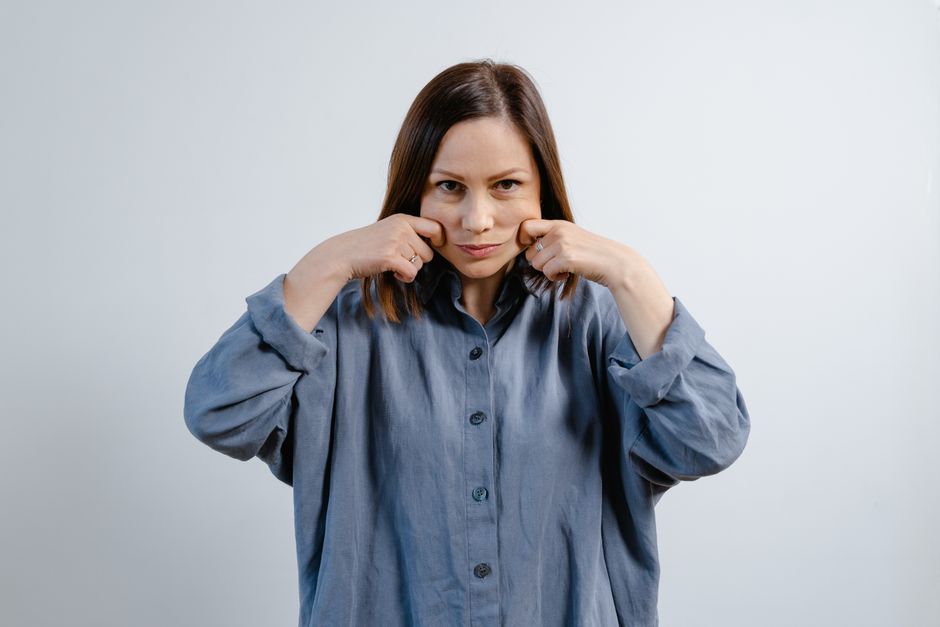
Hollow cheeks come from two things working together: less fat under the skin of the face, and a jawline and cheekbone structure that casts a shadow. You cannot change your bone structure without surgery. You can change facial fat, and you can change how much of that structure is visible. The steps below cover what actually influences each one, what the evidence supports, and what it does not.
What Actually Creates the Hollow Look?
The hollow you see in a mirror is mostly the shadow created where the cheekbone meets the hollow below it. That shadow depends on how much subcutaneous fat sits in the buccal region — the area between your cheekbone and your jaw.
Facial fat is not one solid layer. It is organized into distinct compartments separated by ligaments. The buccal fat pad is the deepest and most well known of these. It sits low in the cheek and gives volume to the mid-face. When it shrinks, the cheek above it starts to look more defined.
Two other factors matter. The first is your underlying bone structure. A prominent zygomatic bone — the cheekbone — creates a stronger shadow when fat is reduced. The second is skin quality. Thinner skin with less collagen shows contours more clearly. This is one reason the same body fat percentage can look very different on two people.
Genetics set your starting point. You can influence the fat. You cannot influence the bone without surgery.
Can You Target Facial Fat Specifically?
No. Spot reduction does not work. This is one of the most consistent findings in exercise physiology. When the body mobilizes stored fat for energy, it draws from fat cells throughout the body, not from one chosen area.
Facial fat does tend to be lost earlier than fat in some other areas for many people. That pattern is common but not universal. Some people lose weight and their face stays full. Others lose very little weight and their face thins noticeably. Hormones, age, and genetics all influence where fat comes off first.
This means any approach that reduces overall body fat may reduce facial fat. It also means you cannot guarantee it will. Anyone promising a facial exercise or cream that “melts cheek fat” is describing something that has not been demonstrated.
How Does Overall Fat Loss Affect the Face?
Reducing total body fat is the most reliable non-surgical route to a leaner face. The relationship is real and well established. The size of the effect on your face specifically is not predictable.
Fat loss happens when you take in fewer calories than you expend over time. That is the established mechanism. How fast and from where the fat comes off varies by person.
A few things are worth knowing:
- Very low body fat can make the face look hollow, but it also affects energy, hormones, and immune function. There is a real cost to pushing too low.
- Losing weight quickly tends to reduce facial volume faster than losing it slowly, and the face can look drawn rather than defined.
- Age changes the equation. After roughly the mid-30s, facial fat pads tend to shrink and shift downward on their own. Weight loss on top of that can accelerate a hollow or gaunt appearance rather than a sculpted one.
This is the part most guides skip. In younger faces, fat loss often reveals structure. In older faces, it can remove the volume that was holding the face up. The same strategy produces different results depending on age.



Do Cheek Exercises and Face Yoga Work?
There is no good evidence that facial exercises remove cheek fat. Fat cells are not muscle. Exercising the muscles around them does not shrink the fat sitting above them.
Some small studies have looked at facial exercise and reported changes in muscle tone or appearance. These studies are limited in size and design, and they do not show fat loss. Any visible change is more likely from muscle or temporary fluid shifts than from reduced fat.
That does not make facial exercise useless. It may support muscle tone, and some people report a firmer look. But it will not create hollow cheeks in someone whose facial fat has not changed. Treat the claims you see online with real skepticism.
What About Jawline and Definition?
A sharper jawline can make the hollow above it read more clearly, even without much fat change. Several factors influence how defined the jaw looks.
Body fat is the biggest lever. A leaner neck and jaw area shows the bone more. Beyond that, posture matters. Forward head posture shortens the appearance of the neck and softens the jaw line. Correcting it does not change fat, but it can change how the jaw reads.
Fluid retention also plays a role. High sodium intake, poor sleep, and alcohol can leave the face puffy, which hides contours. This is temporary, not structural. Reducing sodium and improving sleep can make a difference in how defined the face looks day to day, though the effect varies and is not permanent.
Chewing hard foods or “mewing” — pressing the tongue to the roof of the mouth — are popular online. There is no solid clinical evidence that mewing reshapes adult bone. Some dentists use tongue posture in children during growth, but that is a different situation and not established for adults.
Are There Medical or Surgical Options?
Yes, and they are the only methods that reliably produce hollow cheeks in someone whose facial fat will not otherwise reduce. They also carry real risks, and they are not reversible in every case.
Buccal fat removal is a surgical procedure that removes part of the buccal fat pad. It produces a more contoured mid-face. It is permanent. This is the key point: the fat does not grow back. Surgeons have raised concerns that removing this fat in younger patients can lead to a gaunt or aged appearance later, because facial fat naturally declines with age. Some clinicians now recommend caution, especially for patients under 30 or those with already-thin faces.
Fillers and contouring work the opposite way. Rather than removing fat, they add volume in specific places to change how shadows fall. This can create the illusion of hollowness by enhancing the cheekbone above the hollow. Results are temporary and depend on the product used.
Weight loss medications and procedures can reduce facial fat as part of overall fat loss, but they are not intended for cosmetic facial contouring, and their effect on the face specifically is not predictable.
Any surgical option should involve a real conversation with a qualified surgeon about how your face is likely to age. A result that looks good at 25 may not look good at 45.
What Should You Realistically Expect?
If your goal is hollow cheeks and you have a moderate amount of facial fat, reducing overall body fat is the most reasonable first step. Expect the change to be gradual and to vary. Do not expect to control exactly where the fat comes off.
If you are already lean and your face is not hollow, the limiting factor is likely your bone structure, not your fat. No exercise or cream will change that. Only a procedure will, and that comes with trade-offs.
If you are over 40, be careful. The facial fat you have is doing structural work. Removing it can make you look older rather than more defined. This is not a reason to avoid it entirely, but it is a reason to think it through rather than chase a trend.
There is no step-by-step method that guarantees hollow cheeks. There are levers that influence facial fat, and there are limits set by your anatomy. Knowing which one you are working with is the honest starting point.
Frequently Asked Questions
Can you get hollow cheeks naturally?
You can reduce facial fat naturally by lowering overall body fat, which may make your cheeks look more hollow if your bone structure supports it. Whether it works depends on your genetics and how your face stores and loses fat.
Do cheek exercises get rid of face fat?
No. Facial exercises do not remove fat, because you cannot spot-reduce fat in a chosen area. Any visible change is more likely from muscle or fluid shifts than from fat loss.
Is buccal fat removal safe?
Buccal fat removal is a real surgical procedure, but it is permanent and surgeons have raised concerns about a gaunt or aged look developing later. It should only be considered after a detailed discussion with a qualified surgeon.
Why do some people have hollow cheeks without trying?
It usually comes down to genetics — a prominent cheekbone and a naturally lower amount of facial fat. Bone structure cannot be changed without surgery.
