
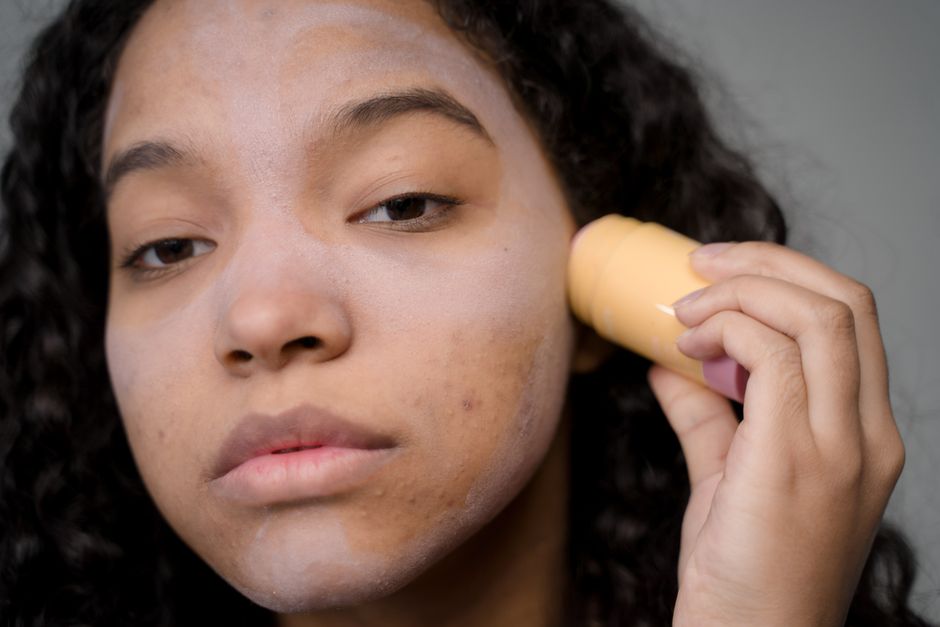
Getting an even skin tone takes time and consistent care. Uneven skin tone usually comes from sun damage, past inflammation, or hormonal shifts. The most reliable approach combines daily sun protection with ingredients that slow pigment production and speed up cell turnover.
What Causes Uneven Skin Tone?
Uneven skin tone happens when melanin, the pigment that gives skin its color, is produced unevenly. Sun exposure triggers extra melanin in some spots, creating dark patches or freckles. This is called hyperpigmentation.
Inflammation from acne, eczema, or cuts often leaves a flat dark mark that fades slowly. That type is post-inflammatory hyperpigmentation. Hormonal changes during pregnancy or from birth control can cause melasma, which appears as larger brown or gray patches on the cheeks, forehead, or upper lip.
Aging also plays a role. Older skin produces pigment less evenly, and cumulative sun exposure shows up as age spots. Genetics determine how your skin reacts to sun and injury.
Why Sun Protection Is the First Step
No treatment for uneven skin tone works well without sun protection. Ultraviolet light drives pigment production. If you use a fading cream but skip sunscreen, you are working against yourself.
Choose a broad-spectrum sunscreen that protects against both UVA and UVB rays. SPF 30 or higher is the standard recommendation. Apply it every morning and reapply every two hours when outdoors. Mineral sunscreens with zinc oxide or titanium dioxide sit on top of the skin and reflect light, which some people prefer for sensitive skin.
Research consistently shows that daily sunscreen use prevents new dark spots and helps existing ones fade. You still get vitamin D through short unprotected exposure, but for even tone, consistent protection is essential.
How To Get Even Skin Tone with Proven Topical Ingredients
Several ingredients have solid evidence for fading dark spots. Retinoids speed up skin cell turnover and increase the rate at which pigment leaves the skin. Prescription tretinoin is the strongest option. Over-the-counter retinol works more gently, especially for beginners.
Azelaic acid blocks melanin production and also has anti-inflammatory effects. It is available over-the-counter in lower strengths and by prescription in higher concentrations.
Vitamin C in the form of L-ascorbic acid is an antioxidant that reduces pigment darkening from sun exposure. It also boosts sunscreen protection when used underneath it. Studies have found it can lighten mild hyperpigmentation.
Niacinamide, a form of vitamin B3, reduces pigment transfer to skin cells. It is less irritating than some alternatives and works well with other ingredients.
Hydroquinone is a powerful skin lightener available over-the-counter in 2% strength in the United States. It blocks a key enzyme in melanin production. However, it should not be used for longer than three to four months continuously because of the risk of ochronosis, a permanent darkening. Some countries restrict it to prescription-only. Many dermatologists now recommend using hydroquinone under medical supervision for short periods only.
Kojic acid and tranexamic acid are also used for hyperpigmentation, though the evidence is less extensive than for retinoids and azelaic acid. Some studies show they help, especially when used in combination with other ingredients.





Can Professional Treatments Help?
When topical products are not enough, in-office procedures can accelerate results. Chemical peels remove the outer layer of skin, allowing fresh, more evenly pigmented skin to emerge. Superficial peels using glycolic acid or lactic acid are safe for most skin types. Deeper peels carry higher risk of scarring or uneven color and should be done by an experienced professional.
Laser treatments target pigment cells directly. Intense pulsed light (IPL) works well for sun spots in lighter skin tones. Fractional lasers and Q-switched lasers can treat deeper pigmentation. Results vary, and multiple sessions are usually needed. The risk of making dark spots worse is real, especially in darker skin tones. Always consult a board-certified dermatologist who has experience with your skin type.
Microneedling with or without topical serums is another option. Evidence is still emerging, but some studies suggest it helps by delivering pigment-fighting ingredients deeper into the skin.
How Long Does It Take to Fade Dark Spots?
Patience is required. With consistent treatment, sun spots and post-inflammatory marks can start to fade in about 3 to 6 months. Melasma often takes longer and is harder to treat. Some dark spots lighten partway but never fully disappear.
If you use a retinoid or azelaic acid daily with sun protection, you will likely notice change by the third month. Results are gradual. Stopping treatment too soon or being inconsistent will slow progress.
Are Natural Remedies Effective?
The evidence for natural remedies is limited. Aloe vera, green tea extracts, and licorice root contain compounds that may interfere with melanin production in lab studies. But large human trials are lacking. No natural remedy has been proven as effective as medical treatments.
Some people use lemon juice or baking soda. These can irritate the skin and make dark spots worse. They are not recommended by dermatologists. Stick with ingredients that have clinical evidence behind them.
What Mistakes Can Worsen Uneven Skin Tone?
Skipping sunscreen is the most common mistake. Another is picking at acne or scabs, which guarantees inflammation and a longer-lasting dark mark.
Overusing harsh scrubs or strong acids can strip the skin barrier. This increases inflammation and can paradoxically make pigmentation darker. More is not better.
Using unregulated skin lightening creams found online is dangerous. Some contain high-dose hydroquinone, mercury, or steroids that cause serious side effects. Buy only from reputable brands or pharmacies.
Frequently Asked Questions
Can uneven skin tone be permanently fixed?
Most dark spots can be significantly lightened, but they may reoccur with new sun exposure or hormonal triggers. Maintenance with sunscreen and a gentle routine is usually needed long term.
What ingredient fades dark spots fastest?
Prescription tretinoin and azelaic acid are among the most effective options. Hydroquinone works fast but should only be used for short periods under medical guidance.
Is uneven skin tone a sign of a health problem?
Usually not. Most cases are from sun damage, past acne, or hormonal changes. However, sudden new dark patches should be checked by a dermatologist to rule out skin cancer or other conditions.
Can makeup help cover uneven skin tone while I treat it?
Yes, makeup with pigments can temporarily even out the skin. Some foundations or tinted moisturizers contain SPF, which adds protection while you cover spots.
