
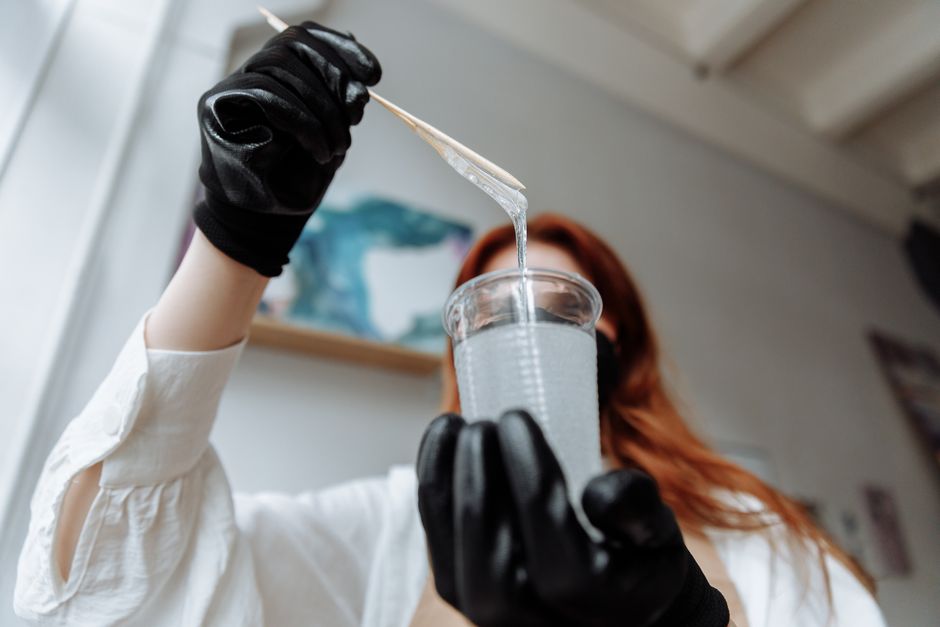
Getting epoxy out of your hair depends entirely on whether it is still wet or already cured. Wet epoxy can often be removed with oil or a solvent before it hardens. Cured epoxy is far more difficult and usually requires cutting out the affected strands. The longer epoxy sits, the harder it becomes, so acting quickly matters.
How To Get Epoxy Out Of Hair Wet Or Cured?
The answer changes completely based on the state of the resin. Wet epoxy is still a liquid or a soft gel. In this state, it has not formed its final chemical bonds. You can break those weak physical bonds with oils or solvents. Cured epoxy has hardened into a solid plastic. It will not dissolve in anything you have at home. The only reliable way to remove cured epoxy from hair is to cut it out.
Time is your main advantage. The moment epoxy touches hair, the clock starts. Most epoxy resins begin to set within 20 to 40 minutes of mixing. Full cure takes 24 hours or more, but the resin becomes too stiff to work with long before that. If you catch it early, you have a real chance of saving the hair. If you find it after it has hardened, stop trying to dissolve it and reach for scissors.
What To Do When Epoxy Is Still Wet
Wet epoxy is the best-case scenario. It has not formed its permanent structure yet. Your goal is to break the physical grip it has on the hair shaft without pulling the hair out.
Start with a generous amount of oil. Coconut oil, olive oil, vegetable oil, or baby oil all work well. The oil works by slipping between the epoxy and the hair strand. It does not chemically dissolve the resin, but it reduces the friction enough that the epoxy can slide off.
Work the oil into the affected area with your fingers. Do not rub aggressively. Rubbing can push the epoxy deeper into the hair or spread it to clean strands. Instead, massage gently and let the oil soak in for five to ten minutes. Then use a fine-tooth comb to gently lift the epoxy away from the hair. Start at the bottom of the clump and work upward.
If oil alone is not enough, try a solvent. Isopropyl alcohol (rubbing alcohol) works on wet epoxy. Acetone (nail polish remover) also works and is stronger. Apply the solvent with a cotton ball or cloth. Keep it on the epoxy for a minute or two before trying to comb it out. These solvents are drying to hair and skin, so use them only on the affected area and wash your hair thoroughly afterward.
Do not use heat. A hair dryer will accelerate the curing process. The heat speeds up the chemical reaction that turns liquid resin into solid plastic. Warm water is also risky. Stick to cool or room-temperature treatments.
How To Remove Cured Epoxy From Hair
Once epoxy has fully hardened, the situation changes completely. Cured epoxy is a cross-linked polymer. It has formed permanent chemical bonds that no household product can break. Acetone will soften some cured epoxies, but it will not dissolve them. It may take hours of soaking, and even then, the resin will remain a sticky, gummy mess that is harder to remove than the original hard chunk.
The realistic option for cured epoxy is cutting it out. Find the hardened section and separate the affected strands from the clean hair. Use sharp scissors to cut just above the epoxy clump. You will lose some length, but you will save the rest of your hair.
If the epoxy is on a small section near the ends, you may lose only an inch or two. If it is close to the scalp, you may need to cut more or accept that the strand will need to grow out. Do not attempt to pick or chip cured epoxy off the hair shaft. This will damage the cuticle and cause split ends or breakage.




Solvents That Can Help Soften Cured Epoxy
Some solvents can soften cured epoxy enough to make removal less destructive. Acetone is the most effective household option. It will not dissolve the epoxy completely, but it can make the surface tacky and pliable. This may help you break the bond between the epoxy and the hair shaft.
To try this method, soak a cotton ball in acetone and hold it against the epoxy for several minutes. Do not pour acetone directly on your scalp. It is highly drying and can irritate the skin. After soaking, try to slide the softened epoxy off the hair with your fingers or a comb. If it does not move easily, stop. Forcing it will damage the hair.
Isopropyl alcohol (90% or higher) is a milder option. It works better on partially cured epoxy than on fully cured resin. If the epoxy is still slightly flexible, alcohol may help. If it is rock hard, alcohol will not do much.
Commercial epoxy removers exist, but they are designed for tools and surfaces, not hair. They are not tested for skin or scalp contact. Using them on your hair carries real risk of chemical burns or skin irritation. The evidence does not support recommending them for hair use.
Why Epoxy Bonds So Strongly To Hair
Epoxy resin is a two-part adhesive. It consists of a resin and a hardener. When mixed, they trigger a chemical reaction that forms a dense, cross-linked polymer network. This network is what gives epoxy its strength and durability.
Hair is made of keratin, a protein with a rough, scaly surface. The epoxy flows into the microscopic gaps between these scales. As it cures, it locks into that texture. This is why epoxy holds so well to hair and why simple washing does not remove it. The bond is both chemical and mechanical.
Understanding this helps explain why wet epoxy is easier to remove. Before curing, the resin has not yet formed its cross-linked network. It is still a viscous liquid that can be displaced. Once cured, the network is permanent. No household product can break those bonds without also damaging the hair.
What Not To Do
Several popular internet remedies for removing epoxy from hair are ineffective or dangerous. Avoid these methods.
Do not use a hair dryer or any heat source. Heat accelerates the curing process. You will turn a removable wet mess into a permanent solid clump.
Do not use petroleum jelly or heavy grease. These can make the hair slippery, but they do not break the epoxy bond. They also leave a residue that is difficult to wash out.
Do not use bleach or hair dye remover. These chemicals are not designed to break down epoxy. They will damage your hair and scalp without softening the resin.
Do not pull or yank on the epoxy. This will stretch and break the hair strands. You will end up with broken, damaged hair even if you remove the epoxy.
Do not try to dissolve cured epoxy in water. Epoxy is waterproof. Water will not penetrate it or weaken its grip on the hair.
When To See A Professional
If the epoxy is close to the scalp or if a large section of hair is affected, consider seeing a professional. A hairdresser has experience with adhesive removal and can assess whether any strands can be saved. They also have better scissors and can make a clean cut that leaves your hair looking intentional rather than jagged.
If epoxy is on the scalp itself, wash the area gently with warm soapy water. Do not scrub. If the epoxy is on the skin, it will eventually wear off as the skin sheds its outer layer, which takes about two to four weeks. Do not peel or pick at it, as this can damage the skin.
If you accidentally get epoxy in your eye, flush with water immediately and seek medical attention. This is a medical emergency, not a home treatment situation.
Frequently Asked Questions
Can vinegar remove epoxy from hair?
No. Vinegar is a weak acid and does not break down cured epoxy resin. It may help remove some wet residue, but it will not dissolve hardened epoxy.
Will nail polish remover damage my hair?
Acetone nail polish remover can dry out and damage hair, especially with prolonged contact. Use it only on the affected area and wash your hair thoroughly afterward.
How long does it take for epoxy to cure in hair?
Most epoxy resins begin to set within 20 to 40 minutes and reach full hardness within 24 hours. Once it has hardened, cutting is the only reliable removal method.
Can I wash epoxy out of my hair with shampoo?
No. Regular shampoo will not remove epoxy, wet or cured. Oil or solvent is needed for wet epoxy, and scissors are needed for cured epoxy.
