
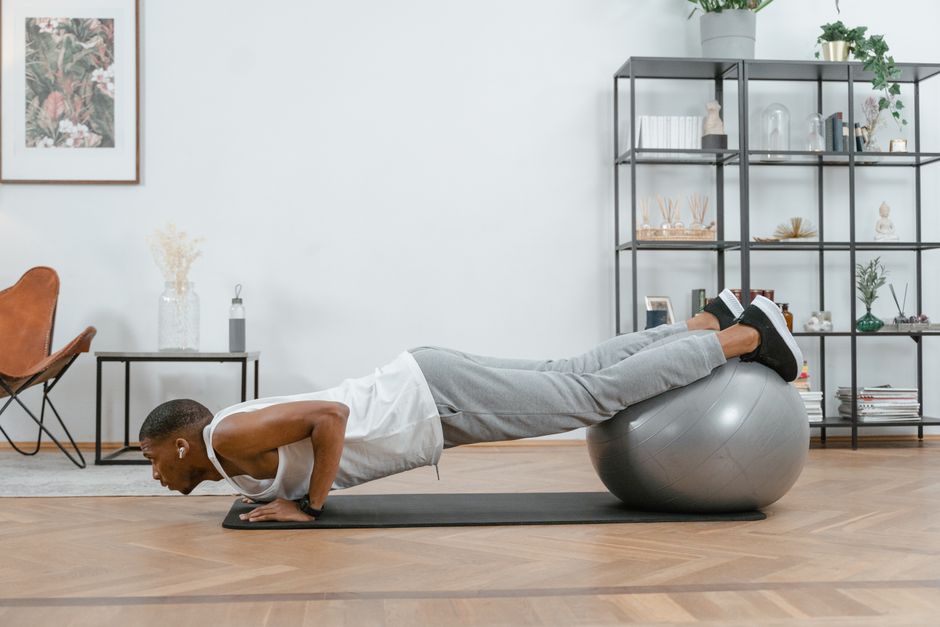
Push-ups are one of the most effective bodyweight exercises you can do. They build strength in your chest, shoulders, triceps, and core. Getting better at them is not about willpower alone. It is about training smart, using the right variations, and being consistent over time.
To get better at push-ups, you need to practice them regularly. You also need to build strength in the specific muscles that push-ups use. This means working on your chest, shoulders, triceps, and core. You should also pay attention to your form. Good form prevents injury and ensures you are actually working the right muscles.
What Muscles Do Push-Ups Actually Work?
Push-ups are a compound exercise. This means they work multiple muscle groups at the same time. The primary muscles are the pectoralis major in your chest, the anterior deltoids in your shoulders, and the triceps on the back of your arms.
Your core also works hard during a push-up. Your abdominal muscles and lower back contract to keep your body in a straight line. Even your leg muscles activate to help stabilize you. Understanding this helps you see why push-ups are so efficient. You are training your whole upper body and your core in one movement.
If you want to get better at push-ups, you need to strengthen all of these areas. A weak core will cause your hips to sag. Weak triceps will make it hard to lock out the top of the movement. Training the whole chain matters more than just doing more push-ups.
How To Get Better At Push Ups With These Workouts
The fastest way to improve is to follow a structured plan. You cannot just do push-ups until you fail every day and expect steady progress. You need variety and progressive overload. Progressive overload means gradually making the exercise harder over time.
Start by figuring out how many good push-ups you can do right now. Do not count sloppy reps. A good push-up means your body stays straight, your chest lowers to just above the floor, and you push back up fully. Once you know your number, you can build a plan around it.
If you can do fewer than 5 push-ups, start with wall push-ups or incline push-ups. If you can do 10 to 20, work on volume and tempo. If you can do more than 20, focus on harder variations like decline push-ups or weighted push-ups. Matching the workout to your level is the key to getting better.
How Many Push-Ups Should You Do Per Day?
There is no magic number that works for everyone. Doing push-ups every single day can lead to overuse injuries in your shoulders and wrists. Your muscles need time to recover and grow stronger.
A better approach is to train push-ups 3 to 4 times per week. This gives your muscles a day of rest between sessions. On each training day, aim for 3 to 5 sets. The number of reps per set depends on your current strength level.
If you are a beginner, you might do 3 sets of 5 to 8 reps. If you are intermediate, 4 sets of 10 to 15 reps works well. Advanced athletes can do 5 sets of 20 or more reps. The goal is to leave 2 to 3 reps in the tank on each set. You should not be failing on every set.
Some research suggests that higher push-up volume is linked to better cardiovascular health. But that does not mean you should do hundreds of push-ups every day. Quality matters more than quantity. A few perfect push-ups build more strength than many sloppy ones.





What Are The Best Push-Up Variations For Building Strength?
Different variations target different muscles and challenge your body in new ways. Adding variations to your routine prevents plateaus. A plateau happens when your body adapts to the same exercise and stops improving.
Incline push-ups are the best starting point. Place your hands on a bench, table, or wall. The higher the surface, the easier the push-up. As you get stronger, use a lower surface. This variation builds confidence and proper form before you attempt full push-ups.
Knee push-ups are another good option for beginners. Keep your body straight from your knees to your shoulders. This reduces the load on your upper body while still working the same muscles. Do not let your hips sag or pike up.
Decline push-ups are harder than standard push-ups. Place your feet on a bench or step. Your upper body carries more of your weight. This variation builds upper chest strength and shoulder stability.
Diamond push-ups place your hands close together under your chest. This variation shifts more work to your triceps. Strong triceps are essential for lockout strength in standard push-ups.
Plyometric push-ups involve pushing off the floor so your hands leave the ground. These build explosive power. Only attempt these after you can do 15 to 20 clean standard push-ups.
How Important Is Form And Technique?
Form is everything. Poor form leads to injury and limits your progress. Many people do push-ups with their hips sagging or their head dropping forward. Both mistakes reduce the effectiveness of the exercise.
Start in a high plank position. Your hands should be slightly wider than shoulder-width apart. Your fingers should point forward or slightly outward. Your body should form a straight line from your head to your heels.
Brace your core as if you are about to take a punch. Squeeze your glutes to keep your hips stable. Lower your body until your chest is just above the floor. Your elbows should angle back at about 45 degrees from your body. Do not let them flare straight out to the sides.
Press through your palms to push your body back up. Exhale as you push. Keep your neck neutral by looking at a spot on the floor about a foot in front of your hands. This keeps your spine aligned.
Lowering slowly is just as important as pushing up. Take about 2 seconds to lower and 1 second to push up. This controlled tempo builds more strength and keeps your joints safe.
What Other Workouts Help With Push-Up Strength?
Push-ups alone can build strength, but adding other exercises helps you improve faster. Compound lifts like the bench press build the same muscles. Dumbbell presses and shoulder presses also contribute to push-up strength.
Triceps work is especially important. Close-grip bench presses, tricep dips, and overhead tricep extensions build the muscles that lock out your push-up. Strong triceps are often the difference between 10 and 20 push-ups.
Core training is also essential. Planks, dead bugs, and hollow body holds teach you to keep your body rigid during push-ups. A strong core prevents your hips from sagging and transfers power from your legs to your arms.
Some research suggests that isometric holds are effective for building strength. Holding a push-up position at the bottom for 10 to 20 seconds builds endurance in the muscles you need most. Add these to your routine once or twice per week.
How Long Does It Take To See Results?
Most people see noticeable improvement within 4 to 6 weeks of consistent training. This timeline assumes you are training 3 to 4 times per week and using proper form. You may see small gains in the first 2 weeks as your nervous system learns the movement pattern.
Muscle growth takes longer. Visible changes in chest and arm size typically appear after 8 to 12 weeks of consistent strength training. Strength gains come before size gains. Your body adapts by recruiting more muscle fibers before it builds new muscle tissue.
If you are not seeing progress after 6 weeks, check your routine. Are you pushing yourself close to failure? Are you giving your muscles enough rest? Are you eating enough protein? Any of these factors can stall your progress.
Sleep also matters. Your body releases growth hormone during deep sleep. This hormone is essential for muscle repair. Aim for 7 to 9 hours of quality sleep per night when you are training consistently.
How To Avoid Common Push-Up Mistakes
The most common mistake is letting your hips sag. This happens when your core is weak or you are tired. It puts unnecessary stress on your lower back. If you notice your hips dropping, end the set. Do not push through with bad form.
Another mistake is flaring your elbows out to 90 degrees. This position puts your shoulder joints under excessive stress. Keep your elbows at about 45 degrees from your body. This is safer for your shoulders and still works your chest effectively.
Moving too fast is also a common error. Fast push-ups use momentum instead of muscle. They also increase your risk of injury. Slow down and control each rep. You will build more strength and get better results.
Finally, do not neglect your warm-up. Cold muscles are more prone to injury. Spend 5 minutes warming up your shoulders, wrists, and chest before your push-up workout. Arm circles, wrist rotations, and light band work are all effective.
Frequently Asked Questions
How many push-ups should I do a day to get better?
Train push-ups 3 to 4 times per week instead of every day. Your muscles need rest days to recover and grow stronger.
Can I get better at push-ups without doing push-ups?
Yes, you can build push-up strength with bench presses, dumbbell presses, tricep extensions, and core work. These exercises strengthen the same muscles used in push-ups.
Why can I only do a few push-ups?
You likely lack upper body strength or core stability. Start with incline push-ups or knee push-ups and build up gradually with consistent training.
How long does it take to go from 10 to 20 push-ups?
Most people can double their push-up count in 6 to 8 weeks with consistent training 3 times per week. Progress depends on your starting strength, recovery, and training quality.
