
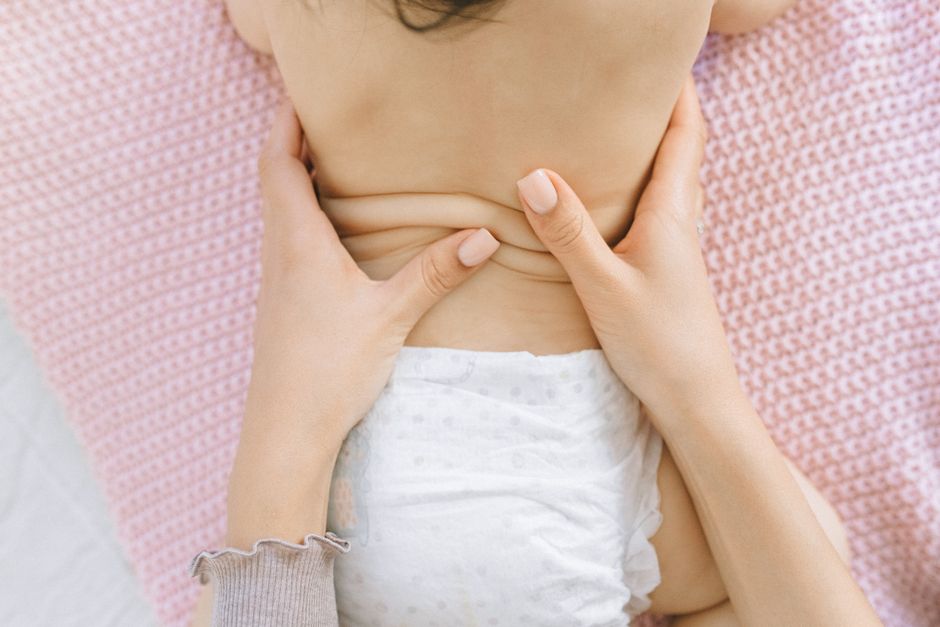
Baby hiccups are common, harmless, and usually stop on their own within a few minutes. You do not need to do anything to make them go away. If you want to help your baby feel more comfortable, the most reliable steps are to pause the feeding, hold your baby upright, and burp them gently. Most home remedies you may have heard about either do not work or are not safe for infants.
Why Do Babies Get Hiccups So Often?
Hiccups happen when the diaphragm — the dome-shaped muscle under the lungs — contracts suddenly. That contraction pulls air in and snaps the vocal cords shut, which creates the familiar “hic” sound.
In newborns, this reflex fires easily. The diaphragm is still maturing, and the nerve pathways that control breathing are not fully developed. Feeding is one of the most common triggers. When a baby takes in milk, the stomach fills and presses upward against the diaphragm. Swallowed air does the same thing. Both can set off the reflex.
Some babies hiccup before they are even born. Ultrasound studies have documented fetal hiccups, which tells us this is a normal part of development rather than a sign of a problem. Many newborns hiccup several times a day. Some do it after nearly every feed.
There is also a theory that hiccups in infants help clear air from the stomach or play a role in early breathing development. That idea is plausible but not firmly established. What is clear is that occasional hiccups in a healthy baby are not a medical concern.
What Actually Helps Baby Hiccups Go Away?
Time is the most reliable answer. A typical bout of infant hiccups lasts a few minutes and resolves without intervention.
If your baby seems uncomfortable or is trying to feed through the hiccups, a few simple steps can help:
- Pause the feeding. Stop for a minute or two and let the hiccups settle before offering more milk.
- Hold your baby upright. Keep them vertical against your shoulder or sitting supported on your lap. This takes some pressure off the diaphragm.
- Burp gently. Pat or rub the back to release swallowed air. Trapped air is one of the main triggers, so this often shortens the episode.
- Try a pacifier. The sucking motion can sometimes interrupt the reflex. This is a comfort measure, not a proven treatment.
- Wait it out. If your baby is calm and breathing normally, there is nothing that needs fixing.
You may notice that hiccups stop on their own right around the time you try something. That timing can make a remedy seem more effective than it is. This is worth remembering before you credit any single trick.
What Should You Not Do for Baby Hiccups?
Several popular remedies are unsafe for infants. Do not use them, even if a friend or a video online suggests otherwise.
- Do not give water. Babies under 6 months should not be given water. It can interfere with how their body handles sodium and, in rare cases, cause serious harm. This guidance comes from established pediatric recommendations.
- Do not pull on the tongue or press on the eyeballs. These are old folk methods with real risk of injury.
- Do not startle or scare your baby. This does not reliably stop hiccups and can be distressing.
- Do not give honey. Honey is not safe for babies under 1 year because of the risk of infant botulism.
- Do not use gripe water or gas drops as a hiccup cure. There is no clinical evidence that these products stop hiccups. Some products marketed for infants have also been the subject of safety warnings.
The reason these remedies linger is that hiccups stop on their own anyway. When something happens right before they stop, it feels like the cause. That is a coincidence, not a cure.
When Do Hiccups in Babies Become a Concern?
Hiccups alone are almost never a sign of illness. The pattern matters more than the hiccups themselves.
Talk to your baby’s doctor if you notice any of the following:
- Hiccups that last for hours without stopping, especially if they happen often.
- Hiccups along with spitting up forcefully, arching the back, or crying during feeds. These can point to reflux or another feeding issue.
- Hiccups with breathing that looks labored, fast, or unusual.
- Hiccups with poor feeding, weight gain problems, or unusual sleepiness.
- Hiccups that seem to cause distress rather than mild annoyance.
These signs do not mean something is seriously wrong. They mean a doctor should take a look. In most cases, the cause turns out to be something manageable, like reflux or a feeding technique that needs adjusting.
How Can You Prevent Hiccups During Feeding?
You cannot prevent all hiccups, but you can reduce how often they happen around feeds. Most of the strategies come down to limiting swallowed air and keeping the stomach from getting overly full.
- Burp partway through the feed. If your baby takes a bottle, pause every few ounces. If you breastfeed, switch sides and burp in between.
- Check the bottle nipple flow. A nipple that is too fast or too slow can cause your baby to gulp air. Match the flow to your baby’s pace.
- Feed before your baby gets frantic. A very hungry baby tends to gulp, which pulls in more air.
- Keep your baby upright for a short time after feeding. This helps with digestion and may reduce pressure on the diaphragm.
- Avoid overfeeding. A very full stomach presses on the diaphragm. Follow your baby’s cues for when they are done.
Even with perfect technique, some babies will still hiccup. That is normal. Feeding habits can shift the frequency, but they cannot eliminate a reflex that is part of normal infant development.
Do Hiccups Mean Something Is Wrong With My Baby?
No. Hiccups in a healthy baby are not a sign of a health problem.
They are a normal reflex, and they become less frequent as your baby grows. The diaphragm matures, feeding becomes more efficient, and the nervous system that controls breathing settles down. Many parents notice a clear drop in hiccups somewhere in the first several months, though the exact timing varies from baby to baby.
There is one common worry worth addressing directly. Some parents hear that hiccups are linked to reflux. The relationship is real but often overstated. Reflux can trigger hiccups in some babies, and hiccups can sometimes accompany a reflux episode. But hiccups alone, without spitting up, arching, or feeding trouble, do not suggest reflux. Most babies who hiccup do not have reflux at all.
The takeaway is simple. If your baby is feeding well, gaining weight, and comfortable, hiccups are just hiccups. You do not need to treat them. You can hold your baby, burp them, and let the reflex run its course.
Frequently Asked Questions
How long do baby hiccups usually last?
Most episodes last a few minutes and stop on their own. If hiccups last for hours or happen very often, mention it to your baby’s doctor.
Can I give my newborn water to stop hiccups?
No. Babies under 6 months should not be given water, because it can disrupt the balance of sodium in their body. Offer a feed or a pacifier instead.
Are baby hiccups a sign of reflux?
Hiccups can sometimes happen with reflux, but hiccups alone do not mean your baby has it. Signs like forceful spitting up, arching the back, or crying during feeds are what point toward reflux.
Do gripe water or gas drops stop baby hiccups?
There is no clinical evidence that these products stop hiccups. Hiccups usually stop on their own, which can make any remedy seem like it worked.
