
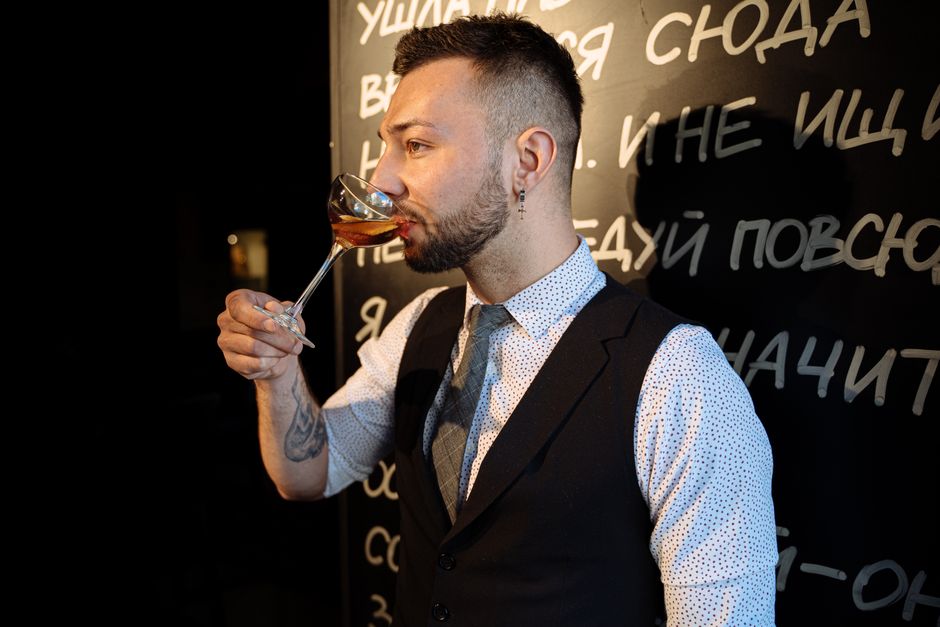
Alcohol on your breath comes from alcohol itself — not from what you drank or how strong it was. After a drink, a small amount of ethanol passes from your blood into your lungs and leaves your body every time you exhale. That is the smell. You cannot rinse it away, because it is coming from inside you, not sitting on your tongue. What you can do is slow the smell down, cover it honestly, and stay safe while your body clears the alcohol at its own fixed pace.
Why Does Alcohol Make Your Breath Smell?
Most of the alcohol you drink is broken down in your liver. A small share — roughly a few percent — leaves the body unchanged through your breath, sweat, and urine. That unchanged alcohol is what people smell.
This matters because it explains why mouthwash does not work for long. You are not cleaning a surface. You are trying to mask a gas that keeps arriving from your bloodstream with every exhale.
There is a second layer to the smell. Alcohol dries out your mouth and reduces saliva. A dry mouth lets odor-causing bacteria multiply, and those bacteria add their own smell on top of the alcohol. So a drink can leave you with two odor problems at once: ethanol on the breath and a dry, bacteria-heavy mouth.
Some drinks also carry their own aroma compounds. Dark spirits, beer, and wine contain congeners and other flavor molecules that can linger. These add to the smell, but they are not the main event. The main event is the alcohol leaving your lungs.
How Long Does Alcohol Stay on Your Breath?
There is no single number, because it depends on how much you drank, your body weight, your sex, your liver health, and whether you ate. What is well established is the general direction: the more you drink, the longer alcohol stays in your blood, and the longer it keeps showing up on your breath.
As a rough frame, the body clears alcohol at a fairly steady rate. For most people, that is on the order of one standard drink per hour. A standard drink in the US is 12 ounces of regular beer, 5 ounces of wine, or 1.5 ounces of distilled spirits. This rate is not something you can speed up.
That last point is the one people resist. Coffee, cold showers, food, exercise, and fresh air do not increase how fast your liver processes alcohol. They can make you feel more alert. They do not remove alcohol from your blood or your breath. Feeling sober and being sober are different things.
So if you had three drinks, you should expect alcohol to be detectable on your breath for a good while after the last one — often several hours, longer if you drank more or drank on an empty stomach. If you drank heavily, it can persist well beyond that.
Does Mouthwash or Gum Actually Help?
Mouthwash and gum are temporary cover, nothing more. They can reduce the smell for a short window, usually minutes rather than hours, because the alcohol on your breath keeps coming back from your lungs.
Alcohol-based mouthwash has a specific drawback. It dries your mouth further, which can make the bacterial part of the problem worse once the mint fades. If you use mouthwash, an alcohol-free version is the better choice for this purpose.
Chewing gum helps in a smaller way by stimulating saliva, which moistens your mouth and briefly reduces bacteria. Sugar-free gum is the sensible pick. Neither gum nor mouthwash changes your blood alcohol level, and neither will help you pass a breath test if you have been drinking.
One thing worth knowing: some breath test devices can be affected by mouthwash that contains alcohol, because the alcohol in the rinse is still in your mouth right after you use it. This is a separate issue from whether you are actually impaired, and it is why testers usually wait before sampling.
What Helps at Least a Little?
Nothing here removes alcohol from your system. These steps reduce the smell or the dry-mouth problem, and that is the honest limit.
- Drink water. It moistens your mouth and helps with the dry-mouth side of the smell.
- Eat something. Food does not speed up alcohol clearance, but eating before and during drinking slows how fast alcohol enters your bloodstream in the first place.
- Brush your teeth and tongue. This addresses the bacterial layer, not the ethanol layer.
- Use alcohol-free mouthwash. Same reasoning — it helps the mouth without adding dryness.
- Chew sugar-free gum. It stimulates saliva and gives short-lived cover.
What does not work, despite being widely believed: coffee, energy drinks, cold showers, splashing water on your face, and “sobering up” with food after the fact. These change how you feel. They do not change how much alcohol is in your blood or on your breath.
Can You Get Alcohol Off Your Breath Fast?
No. There is no fast method that removes alcohol from your breath, because the smell tracks your blood alcohol level, and your body clears alcohol at a rate you cannot speed up. The only thing that reliably reduces the smell is time.
This is where a lot of viral advice falls apart. Videos and posts promising quick fixes — a spoonful of this, a bite of that, a certain breathing trick — do not have evidence behind them. If a method claims to clear alcohol from your breath in minutes, the claim is not supported.
If your goal is to not smell like alcohol at an event, the reliable approach is to drink less, drink more slowly, eat beforehand, and give yourself real time before you need to be around other people. Everything else is cover, and cover fades.
The Safety Point That Matters Most
The reason this topic deserves care is that breath is a poor measure of impairment. You can still smell like alcohol while your blood alcohol is falling, and you can feel fine while your blood alcohol is still high enough to affect your driving, judgment, and reaction time.
Alcohol impairs coordination, reaction time, and decision-making well before you feel obviously drunk. This is not a matter of opinion — it is a consistent finding across decades of research on how alcohol affects the brain and body.
So the practical rule is simple and worth stating plainly: do not use how your breath smells, or how you feel, to decide whether it is safe to drive. In the US, it is illegal to drive with a blood alcohol concentration of 0.08% or higher for adults 21 and over, and impairment begins below that level. If you have been drinking, the safe choice is not to drive.
If you are trying to sober up a friend, the same logic applies. Coffee and cold air will not do it. Time is the only thing that will. If someone is confused, vomiting repeatedly, breathing slowly, or hard to wake, that is a medical emergency — call for help rather than waiting it out.
Frequently Asked Questions
How long does alcohol stay on your breath?
It usually fades over several hours, depending on how much you drank and your body. Heavier drinking can keep alcohol on your breath much longer, and the rate cannot be sped up.
Does coffee sober you up?
No. Coffee can make you feel more alert, but it does not lower your blood alcohol level or clear alcohol from your breath.
Does mouthwash get rid of alcohol breath?
Only briefly. It covers the smell for a short time, and alcohol-based mouthwash can dry your mouth and make the odor worse once the mint fades.
Can you smell alcohol on your own breath?
Usually not well. Your sense of smell adapts to your own breath, so other people often notice it before you do.
