
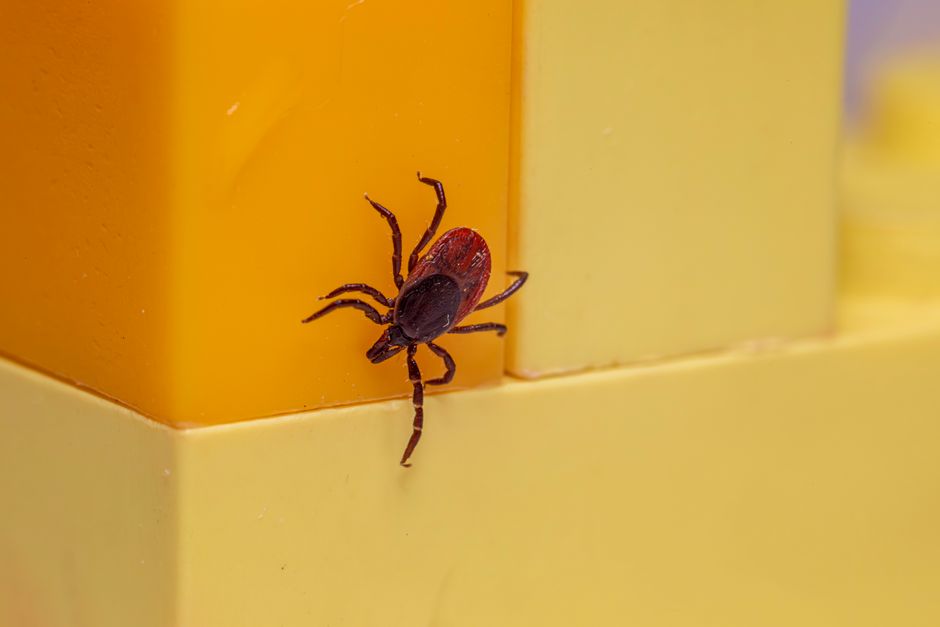
No home remedy gets a tick to back out on its own. Ticks do not reverse course when you apply heat, nail polish, petroleum jelly, alcohol, or a match. They stay attached until they are physically removed or drop off after feeding. The only reliable method is to pull the tick straight out with fine-tipped tweezers.
This matters because a tick that stays attached longer has more time to transmit certain diseases. Prompt, correct removal is the step that counts. The folk methods you may have heard about mostly waste time and can make things worse.
How To Get A Tick To Back Out Does It Work?
It does not work. No substance or trick makes a tick detach itself and back out of your skin.
A tick anchors itself with a mouthpart called the hypostome, which has backward-facing barbs. It also uses a cement-like substance to hold onto the skin. That grip is built for staying put. The tick has no mechanism to reverse and let go because of a stimulus like heat or a chemical.
The advice to smother or irritate a tick has been passed around for decades. It is still repeated online and in old first-aid lore. The problem is that it does not remove the tick, and it can cause harm.
When a tick is stressed by heat, chemicals, or smothering, it may regurgitate its stomach contents into the bite. That is the opposite of what you want. Some research suggests this can increase the chance of transmitting certain pathogens. So these methods are not just useless. They may raise risk.
The Centers for Disease Control and Prevention is clear on this point. It advises against heat, nail polish, and petroleum jelly, and recommends mechanical removal with tweezers instead.
Why Do People Think These Home Remedies Work?
The methods persist because ticks sometimes do come off on their own after a person tries something. That creates a false cause-and-effect.
A tick that has finished feeding will drop off by itself, usually after several days. If someone applies a remedy and the tick detaches soon after, it may simply have been done feeding. The remedy gets the credit it did not earn.
There is also a strong instinct to avoid touching the tick. People reach for household products because pulling a tick out feels unpleasant. That instinct is understandable. It is also the reason bad advice survives.
One clarifying point worth knowing: a tick does not burrow its whole body into your skin. It inserts its mouthparts and the rest of the body stays visible. So you are not trying to coax something out of deep tissue. You are removing a small animal that is gripping the surface.
What Is the Correct Way to Remove a Tick?
Use fine-tipped tweezers and pull straight up with steady, even pressure. This is the method public health agencies recommend and it works.
Here are the steps:
- Use fine-tipped tweezers so you can grab close to the skin.
- Grasp the tick as close to the skin surface as you can.
- Pull upward with steady, even pressure. Do not twist or jerk.
- If the mouthparts break off and stay in the skin, remove them with tweezers if you can do so cleanly. If not, leave them and let the skin heal.
- Clean the bite area and your hands with rubbing alcohol, soap and water, or an antiseptic after removal.
- Dispose of the live tick by putting it in alcohol, placing it in a sealed bag or container, wrapping it tightly in tape, or flushing it down the toilet.
Do not crush a tick with your bare fingers. That can expose you to whatever the tick is carrying.
If you develop a rash or fever within several weeks of removing a tick, see a doctor. Tell them about the tick bite and roughly when it happened. That information helps with diagnosis.
What Happens If You Use Heat, Nail Polish, or Petroleum Jelly?
These methods do not reliably remove a tick, and they can increase the chance the tick transmits infection.
A match or hot object held near the tick can burn your skin. It can also agitate the tick into regurgitating. Nail polish and petroleum jelly are meant to smother the tick, but ticks breathe slowly and can survive being coated for a long time. In practice the tick often stays attached.
Alcohol and essential oils have the same problem. They may irritate the tick without making it let go, and irritation is exactly what can trigger the regurgitation you want to avoid.
The table below sums up the difference.
| Method | Does it remove the tick? | Concern |
|---|---|---|
| Fine-tipped tweezers, straight pull | Yes, reliably | Minimal if done correctly |
| Heat or a match | No | Can burn skin and agitate the tick |
| Nail polish or petroleum jelly | No | Smothering is slow and unreliable |
| Alcohol or oils | No | May irritate the tick without detaching it |
Why Does Speed Matter When Removing a Tick?
The longer a tick stays attached, the greater the chance it can pass on certain pathogens. Removing it quickly is the single most useful thing you can do.
For Lyme disease, the best available evidence indicates that transmission generally requires the tick to be attached for a substantial period, often described as more than a day. A tick that is removed within the first several hours is much less likely to have transmitted the bacteria. This is why prompt removal matters more than any home trick.
Not every tick carries disease, and not every bite leads to illness. But you cannot tell by looking whether a tick is infected. So the practical approach is to remove any attached tick as soon as you find it.
Different tick species and different diseases have different transmission timelines. The general principle holds across them: less time attached means lower risk.
How Do You Prevent Tick Bites in the First Place?
Prevention comes down to reducing exposure and checking yourself carefully afterward. No prevention method is perfect, but the steps below are well supported.
- Avoid wooded and brushy areas with tall grass, and walk in the center of trails.
- Use an EPA-registered insect repellent according to its label directions.
- Wear light-colored clothing so ticks are easier to spot.
- Check your body, clothing, and gear after being outdoors.
- Shower soon after coming inside, which can help wash off unattached ticks and gives you a chance to check your body.
- Check children and pets carefully, including behind the ears and along the hairline.
Ticks can be very small, especially in their younger stages, so a careful full-body check is worth the time. Many people find ticks in warm, hidden areas like the armpits, groin, and scalp.
The Bottom Line
Nothing makes a tick back out on its own. The reliable method is a steady straight pull with fine-tipped tweezers, close to the skin. Skip the heat, nail polish, and petroleum jelly. They do not work and may increase risk. Remove ticks quickly, clean the area, and watch for symptoms in the weeks that follow.
Frequently Asked Questions
Does putting nail polish on a tick make it back out?
No. Nail polish does not make a tick detach, and smothering methods are not recommended. Use fine-tipped tweezers to pull it straight out instead.
How long does a tick have to be attached to transmit disease?
For Lyme disease, the best evidence indicates transmission generally requires the tick to be attached for a substantial period, often more than a day. Removing a tick promptly reduces the chance of transmission.
What if the tick’s head breaks off and stays in my skin?
Remove the mouthparts with tweezers if you can do so cleanly, then clean the area. If you cannot remove them easily, leave them and let the skin heal.
Should I see a doctor after a tick bite?
See a doctor if you develop a rash or fever within several weeks of the bite. Tell them about the bite and roughly when it happened.
