
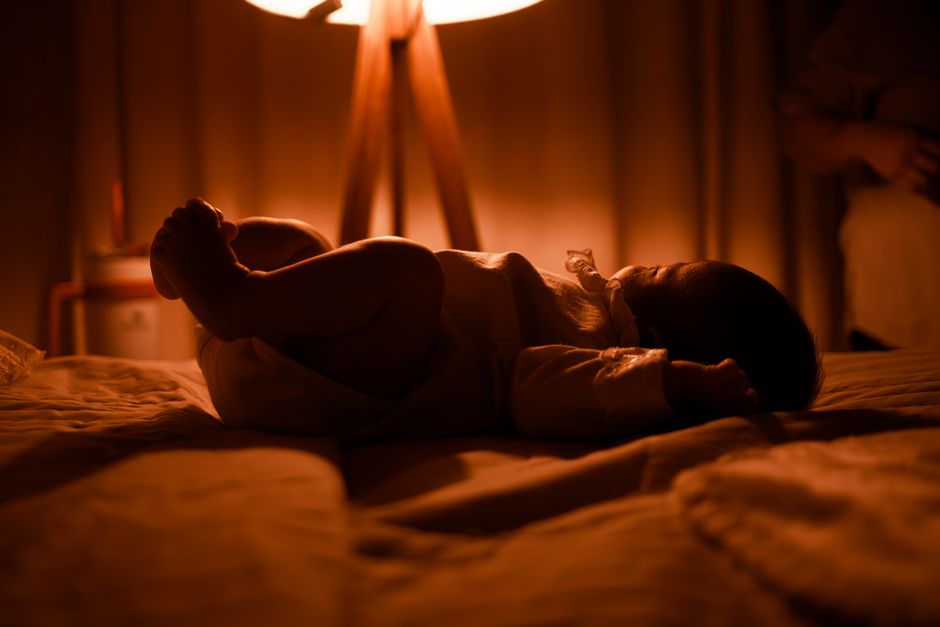
Newborn sleep is a cycle of short stretches, not a single long night. The most direct answer is that you cannot make a newborn sleep through the night in the way an older baby or adult does. Their brains and stomachs are not wired for it yet. What you can do is build the conditions that help them fall back asleep quickly after their natural wake-ups, which over time leads to longer stretches for everyone.
Why Do Newborns Wake Up So Often at Night?
Newborns have tiny stomachs that empty quickly. Breast milk or formula digests in about one to two hours. This means they genuinely need to eat frequently, day and night. The American Academy of Pediatrics states that most newborns need to eat every two to three hours for the first few weeks.
Their sleep cycles are also much shorter than adult cycles. Adults cycle through sleep stages roughly every 90 minutes. Newborns cycle every 50 to 60 minutes. At the end of each cycle, they enter a light sleep phase where they can easily wake. This is normal. It is not a problem to fix.
Another factor is that newborns have not yet developed their circadian rhythm, the internal clock that tells the body when to be awake and when to sleep. This rhythm starts to form at around six to eight weeks. Until then, day and night feel the same to them.
What Actually Helps a Newborn Sleep Longer at Night?
Research shows that daytime feeding frequency matters for night sleep. A study in the journal Pediatrics found that newborns who fed more during the day tended to have slightly longer sleep stretches at night. This is commonly called “feeding on demand” during the day. The idea is that if the baby gets enough calories before evening, they may wake less from hunger at night.
Swaddling is one of the few techniques with consistent evidence behind it. A review in the Journal of Pediatrics found that swaddled infants woke less often and slept longer than unswaddled infants. The key is to swaddle securely but not too tightly around the hips, which can cause hip dysplasia. Stop swaddling as soon as the baby shows signs of rolling over, usually around two months.
White noise also helps. A study published in the Archives of Disease in Childhood showed that continuous white noise helped infants fall asleep faster and stay asleep longer. The noise mimics the constant sound they heard in the womb. Keep the volume at a safe level — under 50 decibels, which is about the sound of a quiet shower.
How To Get A Newborn To Sleep At Night And Stay Asleep Without Sleep Training
Sleep training methods like “cry it out” are not recommended for newborns. The American Academy of Pediatrics advises against any form of sleep training before four to six months. Newborns cannot self-soothe in the way older babies can. Their nervous systems are not developed enough.
Instead, focus on responsive settling. When your newborn wakes at night, respond quickly. Feed them, change them if needed, and put them back down drowsy but awake when possible. This helps them learn to connect sleep cycles on their own over time, without the stress of prolonged crying.
Another approach is to keep night interactions as boring as possible. Use a dim red light for feedings and diaper changes. Red light does not suppress melatonin production like white or blue light does. Do not talk, sing, or play. The message is clear: night is for sleeping, not for socializing.





What Is the Difference Between Night Wakings and Sleep Problems?
This is a crucial distinction that many new parents do not hear. Night wakings are normal. Sleep problems are when the baby cannot get back to sleep without help every single time. A healthy newborn may wake every one to three hours but then settle back down quickly after being fed or comforted. A sleep problem looks like prolonged crying that does not stop with basic soothing.
Some babies have what is called “colic,” which is persistent crying for more than three hours a day, three days a week, for three weeks. The cause is not fully understood, but it is not a sleep problem in the usual sense. Colic usually resolves on its own by three to four months.
If your baby consistently wakes and cannot be comforted within 20 minutes, or if they seem to be in pain, talk to your pediatrician. Reflux, milk protein intolerance, or ear infections can cause sleep disruption that looks like normal waking but is actually a medical issue.
| Type of Waking | Typical Duration | Response Needed |
|---|---|---|
| Normal newborn waking | Every 1-3 hours | Feed or comfort, then back to sleep |
| Cluster feeding at night | 2-3 hours of frequent feeding | Let baby feed, expect longer sleep after |
| Prolonged crying with soothing | Over 20-30 minutes | Check for discomfort or medical cause |
| Waking after 4 months | Every 3-4 hours possible | May need gentle sleep coaching |
What Common Mistakes Make Newborn Sleep Worse?
Many parents accidentally create sleep associations that are hard to break later. A sleep association is anything the baby needs to fall asleep. If the only way your baby falls asleep is being rocked or nursed, they will need that same thing every time they wake up in the night.
This does not mean you should never rock your baby. It means you should vary how you put them down sometimes. Let them fall asleep in a bassinet after being drowsy. Let them suck on a pacifier instead of the breast or bottle. The goal is to give them multiple ways to settle, not just one.
Another mistake is keeping the nursery too warm. The AAP recommends a room temperature between 68 and 72 degrees Fahrenheit. Overheating is a known risk factor for Sudden Infant Death Syndrome (SIDS). Dress the baby in one more layer than you would wear comfortably. If the room is warm, a onesie and a light sleep sack is enough.
Some parents also try to keep the baby awake all day in hopes they will sleep better at night. This backfires. An overtired baby has higher levels of cortisol, a stress hormone, which makes it harder to fall asleep and stay asleep. Newborns need 14 to 17 hours of sleep in a 24-hour period. Short naps during the day are normal and necessary.
Does How To Get A Newborn To Sleep At Night And Stay Asleep Change as They Grow?
Yes, and the changes happen faster than most people expect. By six to eight weeks, many babies start to have a longer sleep stretch at night, often four to five hours. By three months, some babies can sleep six-hour stretches. By six months, about half of babies can sleep through the night, defined as six to eight hours.
These are averages. Some babies take longer. Some babies sleep through at two months. Neither is a sign of good parenting or bad parenting. It is largely temperament and biology.
What does change is your approach. At around four months, you can start gentle sleep coaching if you choose. This means putting the baby down drowsy but awake and waiting a few minutes before responding to fussing. The goal is to give them a chance to self-settle. Research in the journal Sleep found that these methods reduce night wakings without causing long-term harm to the parent-child bond.
Common Misconceptions About Newborn Night Sleep
One widespread myth is that adding rice cereal to a bottle will help a baby sleep longer. The American Academy of Pediatrics strongly advises against this. It is a choking hazard and has no proven benefit for sleep. A study in Pediatrics found no difference in sleep duration between babies who got cereal and those who did not.
Another myth is that formula-fed babies sleep better than breastfed babies. Some studies suggest formula-fed babies may sleep slightly longer stretches in the first few months because formula takes longer to digest. But the difference is small, usually about 30 to 45 minutes. Breastfeeding has too many other benefits to switch for sleep alone.
A third misconception is that you should never wake a sleeping baby during the day. While it is true that newborns need a lot of sleep, they also need to eat regularly. If your baby is sleeping more than four hours at a time during the first few weeks, you should wake them to feed until they have regained their birth weight. After that, you can let them sleep longer.
Frequently Asked Questions
How long does it take for a newborn to sleep through the night?
Most babies do not sleep through the night until they are at least three to six months old. “Through the night” for a baby means a stretch of five to six hours, not a full eight hours.
Is it safe to let a newborn cry it out?
No, cry-it-out methods are not recommended for newborns. The American Academy of Pediatrics advises against any form of sleep training before four to six months of age.
Does swaddling really help newborns sleep?
Yes, research shows swaddling can help newborns sleep longer and wake less often. Stop swaddling once the baby shows signs of rolling over, usually around two months.
Should I use white noise for my newborn at night?
Yes, continuous white noise at a safe volume under 50 decibels can help newborns fall asleep and stay asleep by mimicking sounds from the womb.
