
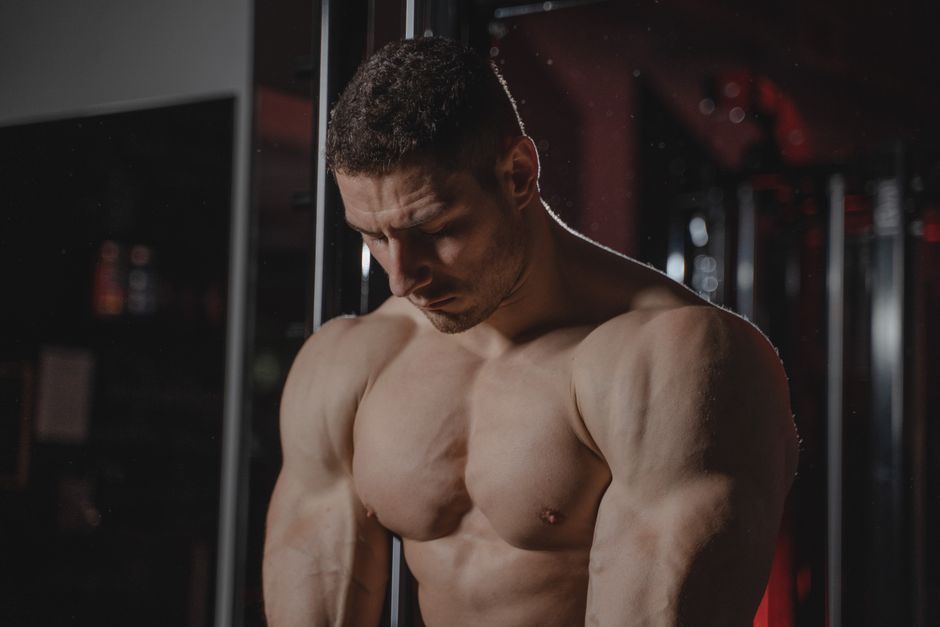
Building a bigger chest comes down to three things: training the chest muscles through a full range of motion with enough weekly volume, eating enough protein and calories to support muscle growth, and recovering enough between sessions to let that growth happen. No supplement, gadget, or single exercise replaces those fundamentals. The chest is a muscle group like any other — it responds to progressive overload, not shortcuts.
What follows is an honest look at what the evidence supports, what it doesn’t, and where most people go wrong.
How Does Muscle Growth Actually Work?
Muscle grows through a process called hypertrophy. When you train a muscle against resistance, you create mechanical tension and a degree of muscle damage. In the hours and days afterward, the body repairs and reinforces the tissue, adding contractile proteins if it has the raw materials and the signal to do so.
Three factors drive that signal. Mechanical tension is the biggest one — how much load you place on the muscle and how hard the muscle has to work. Muscle damage plays a smaller role. Metabolic stress, the burning feeling from rep work, contributes but is not the main driver.
This matters because it tells you what to prioritize. Heavy, controlled work through a full range of motion is the engine of growth. Chasing a pump alone won’t build the same muscle. The pump feels productive, and it isn’t useless, but it is not the primary stimulus.
Hypertrophy also takes time. Noticeable changes in muscle size typically take weeks to months of consistent training, not days. Anyone promising rapid chest growth is selling something.
How To Get A Huge Chest: The Training Principles That Matter
The chest is made up of the pectoralis major, a large fan-shaped muscle with fibers running in different directions, and the smaller pectoralis minor underneath. To train it well, you need movements that load it through a stretch and a strong contraction, and you need enough total weekly work.
Here are the principles that hold up across the research:
- Train through a full range of motion. Lowering the weight until you feel a stretch in the chest, then pressing back up, produces more growth than short, partial reps. This is one of the more consistent findings in hypertrophy research.
- Use progressive overload. Gradually add weight, reps, or sets over time. A muscle that is never asked to do more will not grow more.
- Get enough weekly volume. Most people build chest muscle with roughly 10 to 20 hard sets per week. Beginners do well at the lower end. More is not automatically better, and very high volumes become hard to recover from.
- Train close to failure. Sets taken within a few reps of failure stimulate growth well. You do not need to grind out every set to absolute failure, but leaving many reps in the tank on every set limits the stimulus.
- Cover the angles. Flat pressing, incline pressing, and fly-style movements each emphasize the chest slightly differently. You do not need dozens of exercises, but a mix of a horizontal press, an incline press, and a stretch-focused movement covers the muscle well.
One clarification worth making: the idea that you can “shape” the inner or outer chest with specific exercises is not supported. You can grow the muscle as a whole and emphasize upper versus lower portions somewhat, but you cannot spot-reduce or reshape a muscle’s outline through exercise selection.
Which Exercises Build the Chest Best?
No single exercise is mandatory, but some are more efficient than others. Compound presses let you load the chest heavily, and isolation movements let you train it through a stretch with less involvement from the shoulders and triceps.
Exercises that reliably load the chest include the barbell bench press, dumbbell bench press, incline press variations, dips, push-ups, cable and dumbbell flyes, and machine chest presses. Dumbbells and cables have an advantage in that they let you bring your hands together and get a strong contraction, and they allow a deeper stretch than a barbell in many cases.
The best exercise is the one you can progress on safely and consistently. A well-known point that surprises people: the bench press is often limited by the shoulders and triceps before the chest is fully fatigued. That is one reason adding flyes or a machine press after your main press can help you get more quality chest work in.
How Much Protein and Food Do You Need?
Muscle growth requires enough total calories and enough protein. If you eat too little, you can train perfectly and still see little change.
General sports nutrition guidance puts protein intake for people building muscle at roughly 1.6 to 2.2 grams per kilogram of body weight per day, which is about 0.7 to 1 gram per pound. Protein intake above roughly that range does not appear to add further muscle-building benefit for most people.
Calories matter too. A modest calorie surplus supports muscle gain, though beginners and people carrying more body fat can build muscle closer to maintenance. A large surplus mostly adds fat, not extra muscle.
No clinical guidelines set specific protein targets for every individual, and needs vary with body size, training, age, and health status. People with kidney disease or other medical conditions should get individual guidance from a clinician rather than applying general numbers.
How Often Should You Train Your Chest?
Training the chest about twice per week is a reasonable default for most people. When weekly volume is matched, spreading it across two sessions generally works as well as or slightly better than cramming it into one, and it tends to be easier to recover from.
That said, frequency is less important than total weekly volume and effort. Someone doing three solid chest sessions a week and someone doing two can both make progress if the weekly work and recovery are in place.
Recovery is the part people skip. Muscle is built between sessions, not during them. Sleep, food, and spacing hard chest sessions far enough apart to recover all matter. Soreness is not a reliable measure of a good workout, and being sore every single session usually means you are doing too much or recovering too little.
What About Supplements and “Chest Growth” Products?
Most supplements marketed for chest growth have little to no evidence behind them. Creatine monohydrate is the exception with the strongest support — it is one of the most studied sports supplements and can modestly support strength and muscle gains when combined with training. Protein powder is simply a convenient way to hit your protein target, not a magic ingredient.
Products promising to “target the chest,” “activate dormant muscle,” or produce rapid size gains have no clinical evidence confirming those claims. Neither do most fat-burning or “chest sculpting” devices. Save your money and put it toward food and a gym membership.
There is also no supplement that substitutes for training. The stimulus has to come from resistance work; supplements at most support the process around it.
What Mistakes Slow Chest Growth Down?
Most plateaus come from a short list of fixable problems. Training with too little effort, never adding weight or reps, using a partial range of motion, and eating too little are the usual suspects.
Another common one is program-hopping. Switching routines every few weeks makes it hard to apply progressive overload, because you never get good enough at one program to push it. Consistency over months beats novelty over weeks.
Finally, comparison is a trap. Chest size is heavily influenced by genetics, frame, and how your body stores and builds muscle. Two people can train identically and end up looking different. The goal is your own steady progress, not someone else’s photo.
Frequently Asked Questions
How long does it take to build a bigger chest?
Most people see noticeable changes after several weeks to a few months of consistent training and adequate eating. Significant size gains typically take months of steady work, not days or weeks.
Can you build chest muscle at home without a gym?
Yes, with enough resistance and progression. Push-up variations, dips, and resistance bands can build chest muscle if you keep making the movements harder over time.
Do you need to train to failure to grow your chest?
No. Training close to failure on most sets stimulates growth well. Going to absolute failure on every set is not required and can make recovery harder.
Is the bench press enough to build a big chest?
It can build significant chest muscle, but many people benefit from adding incline work and a stretch-focused movement like flyes. The bench press alone often leaves the chest under-stimulated relative to the shoulders and triceps.
