
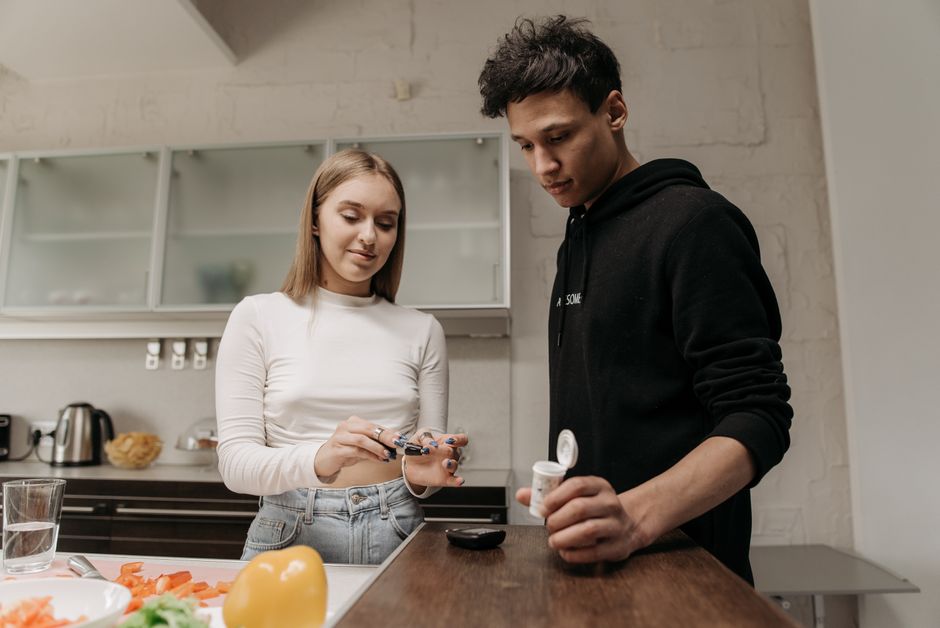
You can get a continuous glucose monitor two ways in the US now. One is over the counter — you buy a sensor at a pharmacy or online without a prescription, then run it through the maker’s app on your phone. The other is by prescription, which is how most insurance coverage works and how you get the versions with the most features. Which route fits you depends on why you want the device and whether you plan to use it to make treatment decisions.
The over-the-counter option is genuinely new. For years every CGM required a prescription. That changed when the FDA cleared the first OTC sensor for adults who do not use insulin. It is a real shift in access, and it comes with real limits worth understanding before you spend money.
What Is a Continuous Glucose Monitor and How Does It Work?
A CGM is a small wearable sensor that measures glucose in the fluid just under your skin, called interstitial fluid, and sends readings to your phone or a receiver every few minutes. It does not measure blood directly. That distinction matters for how you read the numbers.
Most sensors use a thin filament inserted under the skin, usually on the back of the upper arm or the abdomen depending on the brand. A small transmitter or the sensor itself sends data wirelessly. You see a current glucose value, a trend arrow showing whether glucose is rising or falling, and a graph of the last several hours.
Because the sensor reads interstitial fluid rather than blood, the reading lags behind a fingerstick blood glucose meter. The lag is typically several minutes, and it can grow when glucose is changing quickly. This is why CGM readings and fingerstick readings do not always match exactly — and why the lag is not a defect. It is physiology.
CGMs also report something fingersticks cannot: time in range. That is the percentage of the day your glucose stays within a target band. For many adults the commonly cited target band is 70 to 180 mg/dL, though your own targets should come from your clinician, not a general article.
How To Get A Continuous Glucose Monitor OTC Or Rx?
The OTC route is the simplest. You buy a sensor without a prescription, either at a pharmacy counter or through an online retailer, and you activate it with the manufacturer’s smartphone app. No office visit, no insurance approval, no clinician involved. The first OTC CGM cleared by the FDA was a 14-day sensor for adults age 18 and older who do not take insulin.
The prescription route starts with a clinician — a primary care doctor, an endocrinologist, or another provider who manages your care. They write the order, and you fill it through a pharmacy or a durable medical equipment supplier. Prescription CGMs are the only route that insurance typically covers, and they include the systems designed to pair with insulin pumps and to send alerts for low glucose.
Some practical differences between the two paths:
- Cost: OTC sensors are paid out of pocket, typically as a monthly or per-sensor purchase. Prescription sensors may be covered by insurance depending on your plan and diagnosis.
- Features: Prescription systems generally offer more — alarms, sharing with caregivers, integration with insulin delivery. OTC sensors are simpler by design.
- Who it is for: OTC labeling targets adults who do not use insulin. Prescription CGMs serve people with diabetes across a much wider range of situations.
- Support: The prescription path usually includes a clinician who helps interpret the data. The OTC path leaves interpretation to you.
One point people often miss: buying an OTC sensor does not make you someone’s patient. If you have diabetes and want to act on the readings — adjust medication, change insulin, alter eating in a medical way — that belongs in a conversation with a clinician. The device is a tool. The decisions are clinical.
Who Qualifies for an OTC CGM?
The FDA clearance for the first OTC CGM covers adults 18 and older who do not use insulin. That includes people with prediabetes, people with type 2 diabetes managed without insulin, and people with no diabetes at all who are simply curious about their glucose patterns.
It does not cover children. It does not cover people who take insulin. It is not a replacement for a blood glucose meter in situations where a meter is needed, and it is not cleared to diagnose diabetes. If you suspect you have diabetes or prediabetes, a CGM is not the test — standard lab testing is.
This is where a lot of marketing gets ahead of the evidence. Companies selling OTC sensors to health-conscious adults often imply the device will help you “optimize” your metabolism. The honest position: no large trials have shown that CGM use in people without diabetes produces meaningful long-term health improvements. The data can be interesting. Whether it changes outcomes is unproven.
Who Qualifies for a Prescription CGM?
Prescription CGMs are used across a wide range of diabetes care. They are well established for people with type 1 diabetes, and for people with type 2 diabetes who use insulin. Research consistently shows that CGM use in these groups improves glucose control and reduces low glucose events compared with fingerstick testing alone.
Coverage is the sticking point. Insurance plans vary in what they require — often a diagnosis, sometimes a history of low glucose events, sometimes documentation that you check glucose regularly. Medicare and many commercial plans cover CGMs for people who meet their criteria, but the criteria differ. The reliable move is to ask your insurer directly what they require before your clinician writes the order.
Some clinicians also prescribe CGMs for people with type 2 diabetes who do not use insulin, and for people with prediabetes. The evidence here is thinner than for insulin users. It is a reasonable clinical choice in some cases, but it is not the same strength of evidence. If a provider offers it, that is a judgment call, not a guideline mandate.
How Much Does a CGM Cost?
OTC sensors are typically sold as a monthly supply or individual sensors, and the out-of-pocket cost is usually in the range of tens of dollars per sensor depending on the brand and where you buy. Because pricing changes and varies by retailer, check current prices directly rather than relying on any figure you read online, including this one.
Prescription CGM costs depend heavily on insurance. With coverage, your share might be a copay. Without coverage, the cash price for a prescription system and its sensors can run substantially higher than the OTC route — often several times more per month. That gap is one reason the OTC option exists.
If cost is the deciding factor, ask your clinician’s office whether they can check your plan’s CGM coverage before you commit. Many offices do this routinely. It saves a surprise bill.
What Are the Limits of CGM Data?
A CGM shows patterns. It does not explain them. A spike after a meal could reflect the food, the timing, sleep, stress, illness, or the sensor itself. Reading a graph without context can lead people to conclusions the data does not support.
Accuracy matters too. Every CGM has some margin of error, and the FDA evaluates that against established standards. Readings can drift on the first day of a sensor, and compression on the sensor site during sleep can cause false low readings. If a number looks wrong, confirm with a fingerstick before acting on it — especially if you take insulin and the reading suggests low glucose.
There is also a subtler limit. Glucose variability is normal. Non-diabetic people have spikes after meals. Seeing those spikes for the first time can be alarming when nothing is wrong. A CGM is a window into normal physiology as much as a warning system. Knowing that ahead of time prevents a lot of unnecessary worry.
Do You Need a Prescription to Buy a CGM?
No, not for OTC sensors. The over-the-counter versions are sold without a prescription to adults 18 and older who do not use insulin. Everything else — the systems with alarms, pump integration, and the widest insurance coverage — still requires a prescription.
That split is the practical answer to the whole question. If you want simple access and are paying yourself, OTC works. If you have diabetes and want the device to inform treatment, or want insurance to help pay, the prescription path is the one to take. And if you are unsure which fits, start with your clinician. They can tell you what your plan covers and whether a CGM is appropriate for your situation at all.
Frequently Asked Questions
Can I buy a continuous glucose monitor without a prescription?
Yes. OTC continuous glucose monitors are sold without a prescription to adults 18 and older who do not use insulin. You buy the sensor and activate it with the manufacturer’s app.
Does insurance cover a continuous glucose monitor?
Many plans cover prescription CGMs for people who meet their criteria, often those with diabetes who use insulin. Coverage rules vary by insurer, so confirm your plan’s requirements before your clinician writes the order.
Can a CGM diagnose diabetes?
No. CGMs are not cleared to diagnose diabetes or prediabetes. Diagnosis requires standard lab testing ordered by a clinician.
Are OTC and prescription CGMs the same device?
No. OTC sensors are simpler by design, while prescription systems generally add alarms, caregiver sharing, and insulin pump integration. The two categories are cleared for different users and purposes.
