
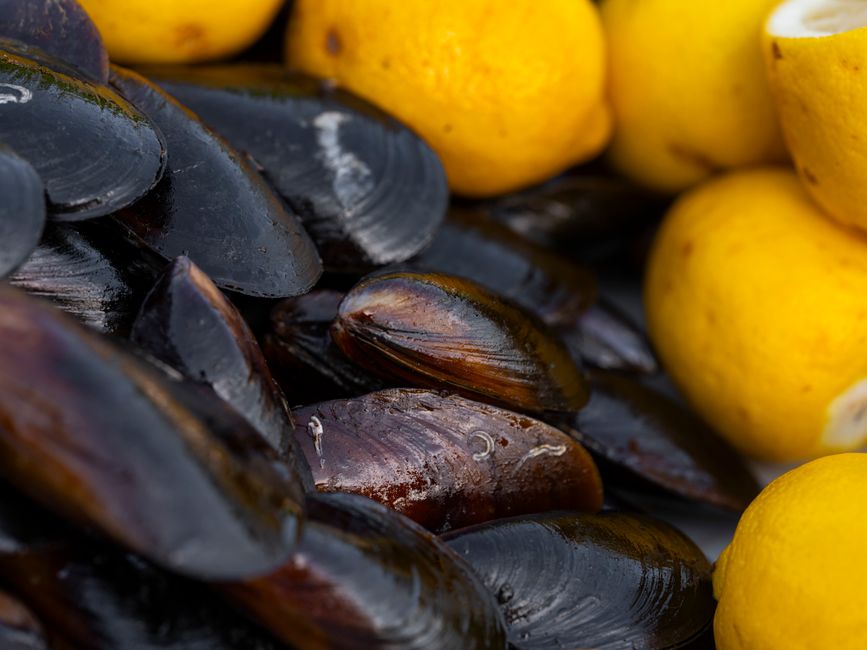
Freezing mussels is a practical way to save money and reduce food waste, but doing it wrong can ruin both the texture and the safety of the seafood. The key rule is simple: freeze live mussels in their shells, or freeze cooked mussel meat, but never freeze mussels that have already died before cooking. You can freeze raw mussels in the shell successfully, but you must clean them first and expect the texture to soften after thawing. Cooked mussels freeze well too, whether left in the shell or removed as meat, and they often keep a better texture than their raw counterparts.
Can You Freeze Raw Mussels In The Shell?
Yes, you can freeze raw mussels in the shell, but the process requires care. The mussels must be alive when they go into the freezer. A dead mussel is a breeding ground for bacteria, and freezing does not kill bacteria—it only pauses their growth.
Before freezing, scrub the shells under cold running water to remove sand, barnacles, and debris. Pull off the fibrous “beard” that sticks out of the shell. Discard any mussels that are already open and do not close when tapped. These are dead and unsafe to freeze.
Once cleaned, place the live mussels in a freezer-safe bag or airtight container. Remove as much air as possible before sealing. Raw mussels in the shell will keep for about one to two months in a standard freezer at 0°F (-18°C) or colder.
When you thaw raw frozen mussels, cook them the same day. Do not refreeze them after thawing. The texture will be softer than fresh mussels because ice crystals rupture the delicate muscle fibers. This is normal and does not mean the mussels are spoiled.
How To Freeze Cooked Mussels
Cooked mussels freeze better than raw ones in most cases. Cooking firms the meat slightly, which helps it survive the freezing process with a more acceptable texture.
Start by cooking the mussels using your preferred method—steaming in wine or broth is the most common. Discard any mussels that do not open during cooking. These are dead and should not be eaten. Let the cooked mussels cool completely at room temperature, but do not leave them out for more than two hours total.
Once cooled, you have two options. You can freeze the mussels still in their shells, or you can remove the meat and freeze it alone. Freezing shell-on cooked mussels takes more space but keeps the presentation intact for later use in pastas or paella. Freezing just the meat is more compact and easier to portion.
Pack the mussels in freezer bags or rigid containers. If you froze them in the shell, leave a little headspace. Remove excess air from bags to prevent freezer burn. Label the package with the date. Cooked mussels will maintain quality for about two to three months in the freezer.
Should You Freeze Mussels In Their Cooking Liquid?
Freezing mussels in their cooking liquid is an option, but it is not always the best choice. The liquid can dilute the flavor of the meat and make the texture waterlogged when thawed.
If you plan to use the mussels in a soup, chowder, or stew later, freezing them in the broth is convenient. The liquid acts as a protective barrier against freezer burn. Just remember that the liquid will expand as it freezes, so leave room in the container.
For most other uses, freezing mussels dry in a sealed bag is preferable. You can strain and freeze the cooking liquid separately in an ice cube tray. This gives you flavorful stock for sauces without compromising the texture of the mussel meat itself.





How Long Do Frozen Mussels Last?
Frozen mussels stay safe to eat indefinitely if kept at a constant 0°F (-18°C). Freezing stops bacterial growth, so food safety is not the main concern with long storage. Quality is the issue.
Over time, frozen mussels develop freezer burn—dry, discolored patches where moisture has evaporated from the surface. This affects texture and taste but does not make the food dangerous.
For best quality, use raw frozen mussels within one to two months and cooked frozen mussels within two to three months. These timelines are based on standard home freezer conditions. A chest freezer that opens less frequently maintains more stable temperatures and can preserve quality closer to the longer end of those ranges.
Always label your packages with both the date and whether the contents are raw or cooked. Frozen mussels look similar once frozen, and you do not want to guess later.
How To Thaw Frozen Mussels Safely
The safest way to thaw frozen mussels is in the refrigerator overnight. Place the sealed bag or container on a plate to catch any drips. A pound of mussels typically takes 8 to 12 hours to thaw in the fridge.
If you are short on time, you can thaw mussels in a bowl of cold water. Keep the mussels in their sealed bag and submerge them in cold water. Change the water every 30 minutes. Smaller portions thaw in about an hour using this method.
Never thaw mussels on the counter at room temperature. The outer edges warm up quickly while the center stays frozen, creating conditions where bacteria can multiply. Never use hot water either—this partially cooks the outer meat and can make it rubbery.
Cooked mussels can be added directly to hot dishes without thawing. Drop frozen cooked mussels into simmering sauces or soups in the last few minutes of cooking. This avoids the texture loss that comes from a separate thawing step.
Signs Your Frozen Mussels Have Gone Bad
Frozen mussels that have spoiled will give you clear signals. Trust your senses. An ammonia-like or strongly fishy smell after thawing means the mussels are past their prime and should be discarded.
Check the texture. Fresh mussel meat is firm and slightly springy. Spoiled mussel meat becomes slimy, mushy, or excessively soft. This is not the same as the softer texture that comes from freezing—spoiled mussels feel noticeably wrong.
Look at the color. Healthy mussel meat ranges from pale cream to light orange depending on the species. Gray, green, or darkened meat suggests spoilage. If the shells are cracked or broken, bacteria may have entered before freezing.
When in doubt, throw it out. Food poisoning from spoiled shellfish is serious and can cause severe gastrointestinal illness. The cost of replacing a bag of mussels is far less than a hospital visit.
Can You Refreeze Mussels After Thawing?
No. Refreezing mussels after they have thawed is not recommended. Each freeze-thaw cycle damages the cell structure further, turning the meat into a mushy paste.
More importantly, refreezing increases food safety risk. During thawing, bacteria that survived the freezing process begin to multiply. Refreezing does not kill these bacteria—it only pauses their growth again. When the mussels thaw a second time, the bacterial load will be higher.
If you bought a large batch of mussels and know you will not use them all at once, divide them into meal-sized portions before freezing. This way you only thaw what you need and never face the temptation to refreeze leftovers.
Fresh Mussels Vs. Frozen Mussels: What Changes
Freezing changes mussels in predictable ways. The most noticeable difference is texture. Ice crystals puncture the cell walls of the meat, and when thawed, the mussels release more liquid and feel softer. This is why frozen mussels work best in cooked dishes like pasta, paella, and soups rather than raw preparations.
Flavor holds up well in freezing. Properly frozen mussels retain most of their briny, sweet seafood taste. Some people find frozen mussels even more convenient because they are already cleaned and ready to cook.
One thing freezing does not do is improve quality. Freeze only the freshest mussels you can find. Mussels that are already past their prime will not taste better after a month in the freezer—they will taste worse.
Frequently Asked Questions
Can you freeze mussels in the shell?
Yes, both raw live mussels and cooked mussels can be frozen in the shell. Clean raw mussels thoroughly and freeze them alive; cooked mussels should cool completely before freezing.
How long can mussels stay in the freezer?
Raw mussels keep for one to two months, and cooked mussels keep for two to three months at 0°F (-18°C). They remain safe beyond these times but lose quality and texture.
Do frozen mussels need to be defrosted before cooking?
Cooked frozen mussels can go directly into hot dishes without thawing. Raw frozen mussels should thaw in the refrigerator overnight or in cold water for about an hour before cooking.
Why are my frozen mussels rubbery after cooking?
Rubbery texture usually comes from overcooking, not from freezing itself. Frozen mussels cook faster than fresh ones, so add them at the end of cooking and heat only until warmed through.
