
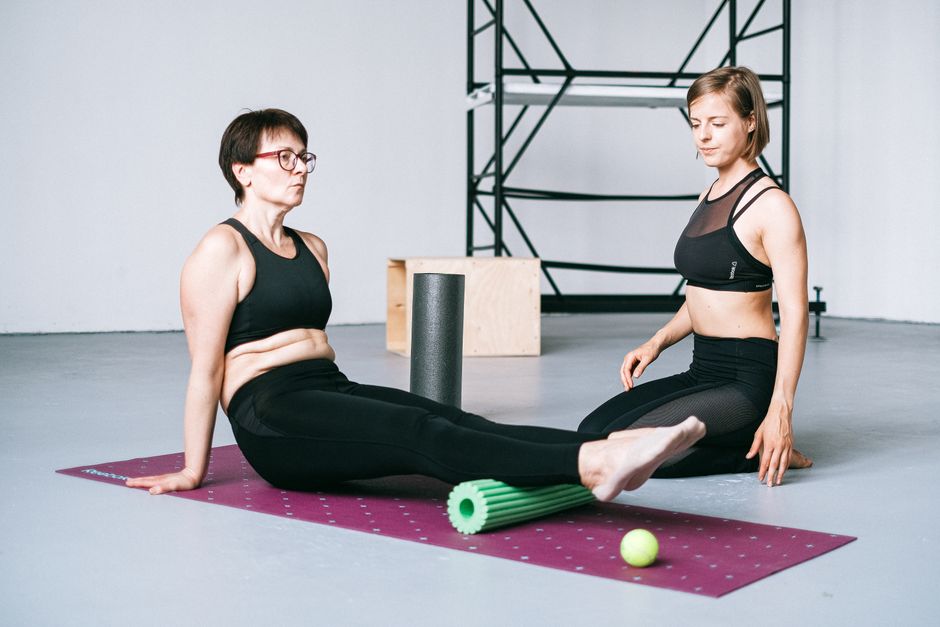
Foam rolling your calves means rolling slowly over the muscle with steady body weight, pausing on tight spots, and keeping the roller below the knee and above the ankle. Most people use a foam roller for about one to two minutes per calf, either before activity to warm up or after activity to wind down. The technique matters more than the time you spend.
Your calves do a lot of quiet work. Every step you take loads the gastrocnemius and soleus, the two main muscles that form the calf. When those muscles stay tight, they can pull on the Achilles tendon and change how your foot strikes the ground. Foam rolling is one way to work on that tightness at home.
What Does Foam Rolling Actually Do to Your Calves?
Foam rolling does not lengthen your muscles or break up scar tissue, despite what a lot of fitness marketing claims. What it does is create pressure and movement that can temporarily change how the muscle feels and how much range of motion you have.
When you press a roller into a muscle, you stimulate sensory receptors in the tissue. That input can reduce the sensation of tightness for a short period. Research on self-myofascial release generally shows small, short-term increases in flexibility — often lasting minutes, not hours or days.
One point worth clearing up: the term “myofascial release” implies you are releasing the fascia, the connective tissue that wraps muscle. No imaging study has shown a foam roller physically separates or remodels fascia. The measurable effects are more likely neurological — your nervous system responding to pressure and movement.
That does not make it useless. A muscle that feels less tight can move more comfortably. But it is a temporary effect, not a permanent fix.
How To Foam Roll Your Calves Techniques Timing?
Good technique comes down to position, pressure, and pace. Here is how to set up.
- Position: Sit on the floor with the roller under one calf. Place your other leg on top or on the floor to control how much weight you put on the roller.
- Support: Use your hands behind you to take some load off. The more weight you shift onto the roller, the more intense the pressure.
- Pace: Roll slowly, about one inch per second. Fast rolling mostly skims the surface.
- Pauses: When you find a tender spot, stop and hold for 20 to 30 seconds. Breathe. Let the sensation settle.
- Coverage: Roll from just below the knee to just above the ankle. Then rotate your leg slightly inward and outward to reach the sides of the calf.
Keep the roller off the back of the knee and off the Achilles tendon. Both areas are more vulnerable to pressure than the muscle belly.
On timing: there is no single correct answer. Some people roll before a workout to prepare. Others roll after to wind down. Some do both. The evidence does not clearly favor one approach over another, so pick what fits your routine and stick with it.
How Long Should You Foam Roll Each Calf?
One to two minutes per calf is a reasonable range for most people. Spending 10 minutes on one calf is not better — it just adds soreness.
If you are new to foam rolling, start with 30 seconds per calf. Your muscles may feel tender the next day, similar to the soreness after a new workout. That soreness usually fades as your tissue adapts to the pressure.
More pressure is not the goal. A roller that hurts sharply is not working better than one that feels firm but manageable. Sharp pain is a signal to ease off.
If you are rolling to manage a specific issue like tightness after running, consistency matters more than duration. A short session most days tends to be more useful than one long session once a week.


When Should You Foam Roll — Before or After Exercise?
Both work, and they serve slightly different purposes.
Before exercise, a short session of about one minute per calf can help you feel looser and move through a fuller range. It will not prevent injury — no solid evidence shows foam rolling reduces injury risk.
After exercise, rolling can help reduce the feeling of tightness while your muscles cool down. Some studies suggest it may slightly reduce delayed-onset muscle soreness, though results vary and the effect is modest at best.
If you can only do one, rolling after exercise tends to fit more people’s routines. But if rolling before helps you move better during your workout, do that instead. The best timing is the one you will actually keep doing.
Common Foam Rolling Mistakes To Avoid
Most problems come from doing too much, too hard, or in the wrong spot.
- Rolling too fast: Speed reduces the pressure your tissue receives. Slow down.
- Pressing too hard: Pain does not equal progress. If you are gritting your teeth, back off.
- Rolling the wrong areas: Avoid the knee joint, the Achilles tendon, and any area with an open wound or recent injury.
- Skipping the soleus: The soleus sits lower and deeper than the gastrocnemius. To reach it, bend your knee while rolling.
- Rolling an acute injury: If you have a strain, tear, or sharp pain, do not roll it. See a clinician first.
One detail many people miss: bending your knee changes which muscle you target. With a straight leg, you mostly work the gastrocnemius. With a bent knee, the soleus takes more of the load. If your lower calf feels tight, try the bent-knee position.
Who Should Be Careful With Foam Rolling?
Foam rolling is generally low risk for healthy adults, but it is not right for everyone.
Talk to a doctor or physical therapist before rolling if you have a blood clotting disorder, varicose veins, nerve pain in the leg, or a recent muscle or tendon injury. People with diabetes who have reduced sensation in their feet and lower legs should be especially cautious, because they may not feel excessive pressure.
If you are pregnant, check with your clinician first. No clinical guidelines specifically address foam rolling during pregnancy, so it is best to get individual advice rather than assume it is fine.
Avoid rolling directly over bony areas, joints, and the spine. The calf muscle belly is a safe area to work. The structures around it — the knee, the ankle, and the Achilles tendon — are not.
Does Foam Rolling Replace Stretching?
No. They do different things and work well together.
Static stretching lengthens a muscle under a sustained hold. Foam rolling applies pressure and movement. Some research suggests the two combined can improve flexibility more than either alone, though the differences are small.
If your goal is flexibility, a routine that includes both is reasonable. If your goal is simply to feel less tight before a run, a short roll may be enough.
Neither one will fix a problem that comes from how you move, how much you train, or how you recover. If calf tightness keeps coming back, it may be worth looking at your training load, your footwear, and your running or walking mechanics rather than just rolling harder.
Frequently Asked Questions
How long should I foam roll my calves?
About one to two minutes per calf is enough for most people. Longer sessions do not add clear benefit and may leave you sorer.
Should I foam roll before or after running?
Either works, and the evidence does not clearly favor one over the other. Roll before if it helps you move better, or after if you want to wind down.
Can foam rolling hurt your calves?
It can cause temporary soreness, especially when you are new to it. Sharp pain or pain that lasts more than a few days is a sign to stop and check with a clinician.
Does foam rolling actually loosen tight calves?
It can reduce the feeling of tightness and briefly improve range of motion, but the effect is temporary. It does not permanently lengthen the muscle.
