
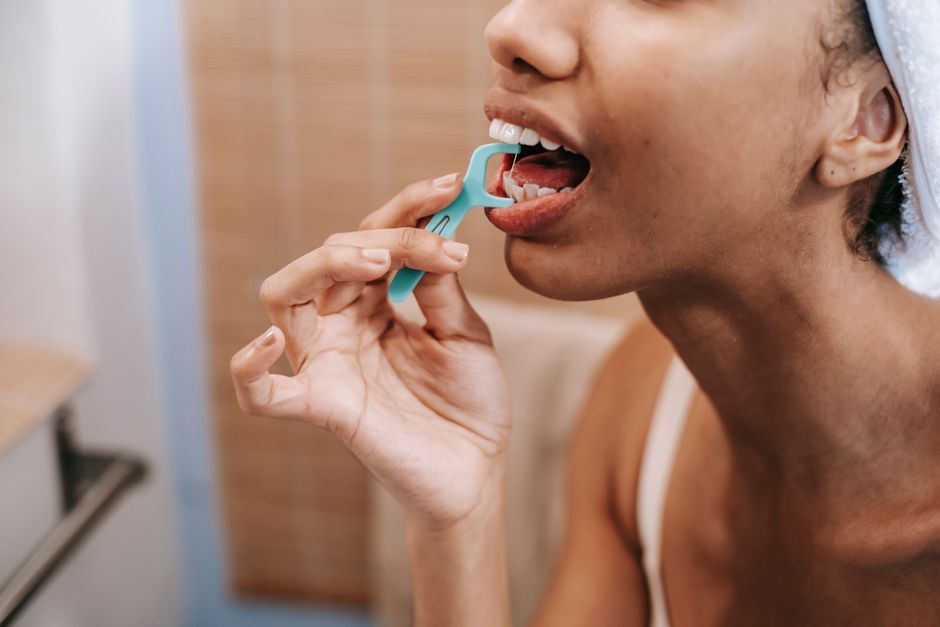
A permanent retainer is a thin wire bonded behind your front teeth, usually the lower ones, to keep them from drifting back after braces. Flossing around it is not optional and it is not impossible. There are four practical methods: thread floss under the wire with a floss threader, use a superfloss product with a stiff end, use an interdental brush to clean between teeth and under the wire, or use a water flosser to rinse the area. Most orthodontists recommend cleaning under and around the wire at least once a day.
Why Flossing With A Permanent Retainer Matters More Than You Think
The wire itself does not cause problems. What causes problems is what collects around it.
Plaque and food debris build up along the wire and between the teeth it spans. Because the wire sits close to the gum line, that buildup sits in a spot that is easy to miss with a normal toothbrush. Over time, this raises the risk of two specific problems: tooth decay at the gum line and gingivitis, which is inflammation of the gums.
There is a detail many people do not realize: the teeth most likely to develop decay when you have a bonded retainer are the ones the wire is attached to. The bonding material that holds the wire can create a small ledge where plaque collects. This is why cleaning under the wire, not just between the teeth, matters.
Gum disease and decay around a permanent retainer can also loosen the bond. If the wire comes loose, teeth can shift. So good cleaning protects both your teeth and the retainer itself.
Method 1: Floss Threader
A floss threader is a small plastic loop, usually shaped like a needle with a big eye. You thread a piece of regular floss through the loop, then pass the loop under the wire. Once the floss is under the wire, you floss the two teeth on either side normally.
This is the most common method and the one most orthodontists show patients first. It uses ordinary floss, so there is nothing special to buy beyond the threaders themselves.
The downside is time. You have to rethread for every gap along the wire. For a retainer spanning six front teeth, that means threading several times each session. Many people find it takes a few weeks to get fast at it.
Technique matters here. Wrap the floss around each tooth in a C shape and slide it gently under the gum line. Do not snap the floss against the gum. Move it up and down along the side of each tooth a few times.
Method 2: Superfloss and Similar Products
Superfloss is a pre-cut strand with three sections: a stiff end that works like a needle, a spongy middle section, and a regular floss tail. You push the stiff end under the wire, then use the spongy part to clean under the wire and the regular floss to clean between teeth.
This removes the threading step. The stiff end does the work of the threader. For many people this is faster and easier than a separate threader and floss.
The spongy section is the part that sets superfloss apart. It is thicker than regular floss and is designed to sweep under the wire where a thin strand might slide past debris. Some clinicians recommend it specifically for cleaning around bridges, braces, and permanent retainers for this reason.
The trade-off is cost. Superfloss costs more per use than a threader plus regular floss, and you use a fresh strand each time. Some people keep both on hand: superfloss for the retainer area and regular floss for the rest of the mouth.





Method 3: Interdental Brushes
An interdental brush is a tiny brush, sometimes called a proxabrush or interdental brush, sized to fit between teeth. You slide it under the wire and between each pair of teeth, then move it back and forth.
These brushes clean the sides of teeth and sweep under the wire at the same time. For people whose teeth have small gaps after orthodontic treatment, an interdental brush can be the fastest option of all.
Sizing is the catch. Interdental brushes come in several widths, and the right size depends on the space between your teeth. Too small and it does not clean well. Too large and it will not fit without forcing, which can irritate gums. A dental hygienist can tell you which size fits your mouth.
Interdental brushes do not replace floss everywhere. They clean between teeth and under the wire, but they cannot wrap around a tooth the way floss does. Many dental professionals suggest using them alongside floss rather than instead of it.
Method 4: Water Flosser
A water flosser, also called an oral irrigator, shoots a thin stream of water between teeth and along the gum line. You aim the tip at the area under the wire and let the water flush out debris.
This is the easiest method for people who struggle with threading or who have dexterity issues. It is also gentle on gums and takes less hand coordination than floss.
Here is where honesty matters. The evidence on water flossers compared with string floss is mixed. Some studies suggest water flossers reduce gingivitis and bleeding similar to floss. Other research indicates string floss removes plaque from tooth surfaces more thoroughly. No strong consensus says a water flosser alone is as good as floss for every purpose.
What most dental professionals say: a water flosser is a useful addition, not a full replacement, especially around a permanent retainer. It can rinse the area well but may not scrape plaque off the tooth surface the way floss does. If you use only a water flosser, tell your dentist so they can check those teeth closely at your next visit.
Which Method Should You Use?
There is no single best method for everyone. The best one is the one you will actually do every day.
Here is a simple comparison to help you think it through:
| Method | Best for | Main drawback |
|---|---|---|
| Floss threader | Lowest cost, uses regular floss | Slow, requires threading each gap |
| Superfloss | Speed and thorough cleaning under the wire | Higher cost per use |
| Interdental brush | Small gaps between teeth, quick cleaning | Must match your tooth spacing |
| Water flosser | Dexterity problems, gentle gum care | May not remove plaque as well as floss |
Many people combine methods. A common routine is superfloss or a threader for the retainer teeth, plus a water flosser to rinse the area afterward. Some add an interdental brush for the gaps.
Whatever you choose, aim to clean the retainer area at least once a day. Twice is better if you tend to build up plaque quickly. Your dentist or hygienist can look at your specific retainer and tell you what is working.
Common Mistakes That Damage Teeth and Retainers
Most problems with permanent retainers come from small habits, not big ones.
- Snapping floss against the gum. Push floss down gently and slide it under the gum line. A hard snap can cut or bruise gum tissue.
- Skipping the area because it is annoying. The teeth behind the wire are the ones most at risk. Skipping them is the fastest way to a cavity there.
- Using too much force with an interdental brush. If it will not slide in easily, it is the wrong size. Forcing it can push the wire or irritate gums.
- Assuming a water flosser does everything. It rinses well but may not scrape plaque off tooth surfaces. Pair it with floss if you can.
- Ignoring a loose wire. If the wire feels loose or a bond breaks, see your orthodontist. Do not try to fix it yourself.
One more point worth knowing: permanent retainers can last for years, but they are not permanent in the way the name suggests. The bonding material can wear down, and the wire can break. Regular dental visits let your dentist check the wire and the teeth around it.
Frequently Asked Questions
Can I use regular floss with a permanent retainer?
Yes, but you need a floss threader to get the floss under the wire. Regular floss alone cannot pass under a bonded retainer without one.
How often should I floss with a permanent retainer?
Most orthodontists recommend cleaning around the retainer at least once a day. If you build up plaque quickly, twice a day may be better.
Is a water flosser enough for a permanent retainer?
Not on its own for most people. A water flosser rinses the area well, but string floss removes plaque from tooth surfaces more thoroughly, so many dental professionals suggest using both.
What happens if I do not floss around my permanent retainer?
Plaque builds up along the wire and between the teeth it spans, raising the risk of decay and gum inflammation. The teeth bonded to the wire are often the ones most affected.
