
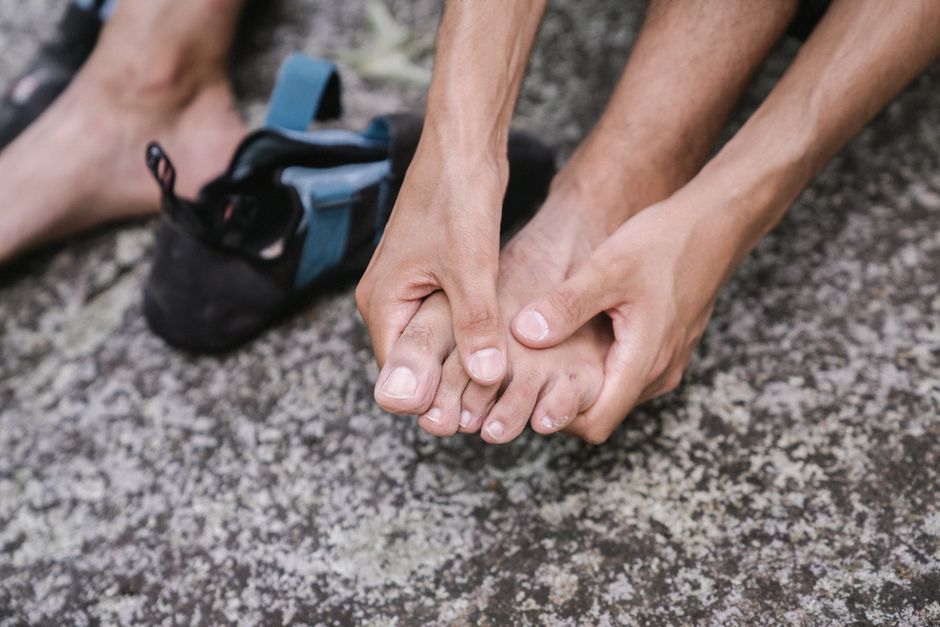
Sore feet are a common problem that can usually be fixed by treating the cause, resting, and wearing better shoes. Most sore feet happen from overuse, ill-fitting footwear, or conditions like plantar fasciitis. Relief often starts with ice, gentle stretching, and supportive shoes. To prevent sore feet, choose shoes that fit well, increase activity slowly, and do regular foot exercises.
What Causes Sore Feet?
Feet have 26 bones, 33 joints, and over 100 muscles and tendons. They take your full body weight with every step. So aches and pains are common.
The most frequent causes include:
- Overuse – Standing for hours, walking more than usual, or starting a new exercise routine.
- Improper footwear – Shoes that are too tight, too flat, or worn out. High heels shift weight forward and strain the ball of the foot.
- Plantar fasciitis – Pain under the heel, especially with the first steps in the morning. The thick band of tissue on the bottom of the foot gets inflamed.
- Flat feet or high arches – Your foot shape changes how weight is distributed. This can strain muscles and joints.
- Arthritis – Osteoarthritis or rheumatoid arthritis can affect the small joints in the feet, causing stiffness and pain.
- Stress fractures – Tiny cracks in the foot bones from repeated impact. Common in runners and people who suddenly increase activity.
- Bunions, hammertoes, and calluses – Structural issues that cause pressure points and pain.
How to Get Immediate Relief for Sore Feet
When your feet hurt right now, you want quick help. The RICE method works for many types of foot pain.
Rest – Stop the activity that caused the pain. Sit down. Keep weight off the sore foot as much as possible.
Ice – Apply an ice pack wrapped in a thin cloth for 15 to 20 minutes. Do this several times a day. Ice reduces inflammation and numbs the area.
Compression – An elastic wrap can support the foot and limit swelling. Do not wrap too tight. If your toes turn blue or feel numb, loosen it.
Elevation – Prop your foot up on a pillow or stool so it is above hip level. This helps fluid drain and reduces swelling.
Over-the-counter pain relievers like ibuprofen or naproxen can help with pain and inflammation. Use them according to the label directions. Do not use them for more than a few days without checking with a doctor.
Gentle stretching can also provide relief. A simple calf stretch — lean against a wall with one leg back and the heel down — loosens the Achilles tendon and takes pressure off the foot.
How to Fix Sore Feet Long-Term
Long-term relief depends on what is causing the pain. For many people, fixing sore feet means changing their footwear and daily habits.
Choose better shoes. Look for shoes with good arch support, a cushioned sole, and a wide toe box. Replace athletic shoes every 300 to 500 miles or when the sole wears unevenly. Avoid flat shoes like flip-flops for long walks or standing.
Consider orthotics. Over-the-counter insoles can help if you have flat feet or high arches. Custom orthotics, prescribed by a podiatrist, are designed for your specific foot shape. Some studies suggest custom orthotics reduce pain in plantar fasciitis and other conditions.
Strengthen your feet. The small muscles in your feet can get weak from wearing supportive shoes all the time. Try these exercises:
- Towel curls – Place a towel on the floor and use your toes to scrunch it toward you.
- Marble pickups – Use your toes to pick up marbles from the floor and drop them into a bowl.
- Calf raises – Stand on the edge of a step, lower your heels, then rise up on your toes. This strengthens the calf and the arch.
Stretch regularly. Tight calf muscles pull on the Achilles tendon and can worsen foot pain. Stretch your calves twice a day. Stretch your plantar fascia by pointing your toes and pulling them back toward your shin.
Addressing weight can also help. Excess body weight increases the force on your feet. A 5-pound weight loss can reduce the pressure on each foot by 20 to 30 pounds with every step.





How to Prevent Sore Feet
Prevention is simpler than treatment. Many cases of sore feet can be avoided with consistent habits.
Wear well-fitting shoes. Have your feet measured every time you buy shoes. Foot size can change with age and weight. Shop for shoes later in the day when feet are slightly swollen.
Gradually increase activity. If you are starting a new exercise, increase distance or time by no more than 10 percent per week. This gives your feet time to adapt.
Use proper technique. In running or walking, land on your midfoot rather than your heel. This reduces impact on the heel and arch. A running coach or physical therapist can analyze your gait.
Take breaks. If you stand for long hours, sit down for a few minutes every hour. Shift your weight from foot to foot. Use an anti-fatigue mat if you stand at a work station.
Keep feet flexible. Roll the bottom of your foot over a frozen water bottle or a tennis ball for a few minutes each day. This massages the plantar fascia and improves circulation.
When to See a Doctor for Sore Feet
Most sore feet get better with rest and home care. But some symptoms need medical attention.
See a doctor if:
- The pain is severe or does not improve after two weeks of home care.
- You cannot put weight on the foot.
- There is swelling that does not go down with ice and elevation.
- You have numbness, tingling, or a burning sensation.
- The foot looks deformed or you heard a popping sound at the time of injury.
- You have diabetes, peripheral artery disease, or a condition that reduces blood flow to the feet.
- You have a fever along with foot pain — this could be a sign of infection.
A podiatrist can diagnose the exact cause and recommend treatments such as physical therapy, prescription orthotics, or in some cases, corticosteroid injections. Surgery is rarely needed and is usually a last resort.
How To Fix Sore Feet Causes Relief And Prevention?
This one question covers everything. The answer is not a single fix but a combination of smart choices.
Causes range from overuse and poor shoes to medical conditions like plantar fasciitis or arthritis. Relief starts immediately with rest, ice, compression, and elevation. Long-term relief comes from addressing the root cause — whether that is better shoes, stronger feet, or a change in activity. Prevention relies on wearing supportive footwear, increasing activity gradually, and staying consistent with stretching and strengthening exercises.
No single method works for everyone. If your foot pain persists despite these steps, a podiatrist can help you find a personalized solution.
Frequently Asked Questions
What is the fastest way to relieve sore feet?
The fastest relief usually comes from ice and rest. Apply ice for 15-20 minutes and keep weight off the foot for a few hours.
Can walking barefoot cause sore feet?
Yes, walking barefoot on hard surfaces can strain the muscles and fascia in your feet, especially if you are not used to it. Gradually increase barefoot time to let your feet adapt.
Are flat shoes or high heels worse for your feet?
Both can cause problems in different ways. Flat shoes with no arch support can stress the plantar fascia, while high heels shift weight forward and can cause pain in the ball of the foot and shorten the Achilles tendon over time.
When should I worry about foot pain?
Worry when the pain is severe, lasts more than two weeks with home care, or comes with swelling, numbness, or a fever. See a doctor in these situations.
