
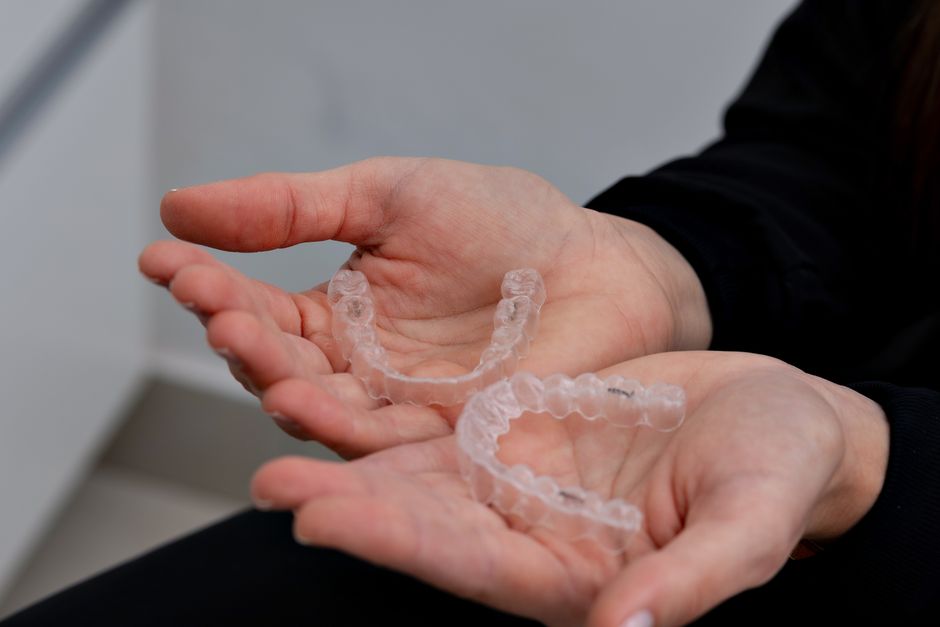
One crooked tooth can be a source of frustration, but the honest answer is that you cannot permanently straighten it “fast” without braces or aligners. Teeth move through a biological process that takes time, typically months to years, because the bone around the tooth root must remodel gradually. While you can achieve cosmetic masking quickly with dental bonding or veneers, any true physical straightening requires a controlled orthodontic force applied over a sustained period.
Why Can’t You Straighten a Tooth Quickly?
Your tooth is not fixed rigidly in the jawbone. It sits in a socket held by a network of fibers called the periodontal ligament. When steady pressure is applied to a tooth, the bone on the compressed side is resorbed by cells called osteoclasts, while new bone forms on the tension side. This process is called bone remodeling.
Bone remodeling is slow. It generally moves a tooth about one millimeter per month under proper orthodontic force. Speeding this up risks damaging the tooth root, the surrounding bone, or the nerve inside the tooth. No method exists that safely accelerates this biological limit beyond a small margin.
What Can You Do Fast? Cosmetic Masking Options
If the goal is to make the tooth look straight rather than physically move it, a dentist can complete cosmetic treatments in a single visit. These options do not straighten the tooth root; they change the appearance of the crown.
Dental bonding is the most common quick fix. A dentist applies a tooth-colored composite resin to the crooked tooth, sculpting it to blend with neighboring teeth. The procedure takes 30 to 60 minutes per tooth and lasts several years with good care. It is affordable compared to other cosmetic work and requires no alteration of the natural tooth structure beyond light etching.
Porcelain veneers are a longer-lasting but more invasive option. A thin shell of ceramic is bonded to the front of the tooth. To fit properly, the dentist must remove a thin layer of enamel from the tooth surface. This is permanent — once enamel is removed, the tooth will always need a veneer or crown. Veneers can last 10 to 15 years but cost significantly more than bonding.
Both options effectively “fix” the visual problem in one appointment. They do not fix the alignment of the root in the bone.
What About Clear Aligners for a Single Tooth?
Clear aligners like Invisalign can correct a single crooked tooth without traditional metal braces. This is a real orthodontic treatment, not a fast fix. Most single-tooth corrections take 3 to 6 months of consistent wear.
You must wear the aligners 20 to 22 hours per day, removing them only to eat, drink anything other than water, and brush. Each aligner is worn for about one to two weeks before moving to the next in the series. The total timeline depends on how far the tooth needs to move and how your bone responds.
Some companies sell “direct-to-consumer” aligners where you take your own impressions at home and receive aligners by mail without in-person supervision. This approach carries real risks. Without a dentist or orthodontist monitoring tooth movement, you cannot detect root damage, bone loss, or teeth shifting in unintended directions. Several dental organizations have warned against unsupervised orthodontics. If you choose aligners, work with a licensed professional who examines your teeth and gums first.





What Are the Risks of DIY or Rapid Straightening Methods?
Viral videos and online hacks suggest using rubber bands, dental floss, or household objects to push a tooth into place. These methods are dangerous and should never be attempted.
Applying uncontrolled force with a rubber band can push the tooth out of its socket or cut into the gum tissue. The band can slip under the gum line, where it is invisible and causes severe infection. In serious cases, this leads to tooth loss.
Even professionally applied force that is too heavy causes problems. The tooth root can be resorbed, meaning the body breaks down the root structure itself. The nerve inside the tooth can die, requiring root canal treatment. The supporting bone can be permanently damaged. Orthodontists are trained to apply the correct force for your specific tooth and bone density.
How To Fix One Crooked Tooth Without Braces Fast: The Realistic Timeline
If you want physical movement of the tooth, the fastest safe option is clear aligners under professional supervision. For a single tooth, expect a minimum of 3 months and often closer to 6 months.
If you need a solution this week, dental bonding is the only realistic answer. It is a same-day procedure with no waiting period. The trade-off is that bonding does not change the position of the tooth in the jaw — it only changes what the tooth looks like from the outside.
Some people combine approaches. A dentist may place bonding on a mildly crooked tooth while aligners gradually correct a more severely rotated tooth elsewhere in the mouth. Discuss this with your dentist to see if it fits your situation.
When Is a Crooked Tooth a Health Problem?
A single crooked tooth is often purely cosmetic, but it can cause real issues. A rotated or tilted tooth can create tight spaces where plaque and food trap, increasing the risk of cavities and gum disease. It can also cause uneven wear on the tooth surface over years of chewing.
If the crooked tooth is causing pain, sensitivity, or difficulty cleaning, this points to a functional problem that deserves professional attention. See a dentist for an examination. They will take X-rays to check the root position and the health of the bone around the tooth.
In rare cases, a tooth that suddenly becomes crooked in adulthood is a sign of an underlying issue. Gum disease can loosen teeth and cause them to drift. A cyst or tumor in the jaw can push teeth out of position. If your tooth was straight and recently shifted, do not assume it is cosmetic — get it checked.
What Does Treatment Cost?
Costs vary widely by location, dentist, and the complexity of your case. Dental bonding for a single tooth typically ranges from $300 to $600 per tooth. Porcelain veneers range from $900 to $2,500 per tooth. Professional clear aligner treatment for a single tooth or minor correction generally ranges from $1,800 to $3,500.
Dental insurance rarely covers cosmetic bonding or veneers. Some plans cover a portion of orthodontic treatment for adults, but many cap the benefit at a low amount or exclude adult orthodontics entirely. Ask your dentist for a written treatment plan with itemized costs before committing.
Can You Prevent a Crooked Tooth From Getting Worse?
You cannot stop natural tooth drift entirely, but you can slow it. Wear a retainer if your dentist prescribed one. Retainers hold teeth in position after any orthodontic treatment, and they also help stabilize teeth that have shifted over time.
Address bruxism — teeth grinding or clenching — if you have it. Grinding applies abnormal forces to teeth and can worsen crowding or rotation. A night guard worn while sleeping protects the teeth and the supporting bone.
Maintain good gum health. Periodontal disease is a leading cause of tooth movement in adults over 40. If the bone supporting the teeth weakens, teeth shift more easily. Regular brushing, flossing, and professional cleanings reduce this risk.
Frequently Asked Questions
Can a dentist straighten one tooth without braces?
Yes, a dentist can use clear aligners to physically move a single tooth, but it takes several months. For a same-day cosmetic fix, dental bonding or a veneer changes the appearance without moving the tooth.
Is it safe to push a crooked tooth with my finger?
No. Applying pressure with your finger or any object applies uncontrolled force that can damage the root, the nerve, or the bone supporting the tooth. Professional orthodontic treatment is the only safe way to move teeth.
How long does dental bonding last on a crooked tooth?
Dental bonding typically lasts 3 to 10 years with good oral hygiene and regular dental visits. Bonding can chip or stain over time and may need repair or replacement.
Will a crooked tooth get more crooked as I age?
Teeth can continue to shift throughout life, especially in the lower front teeth. This is a normal part of aging, but gum disease, tooth grinding, and missing teeth can accelerate the movement.
