
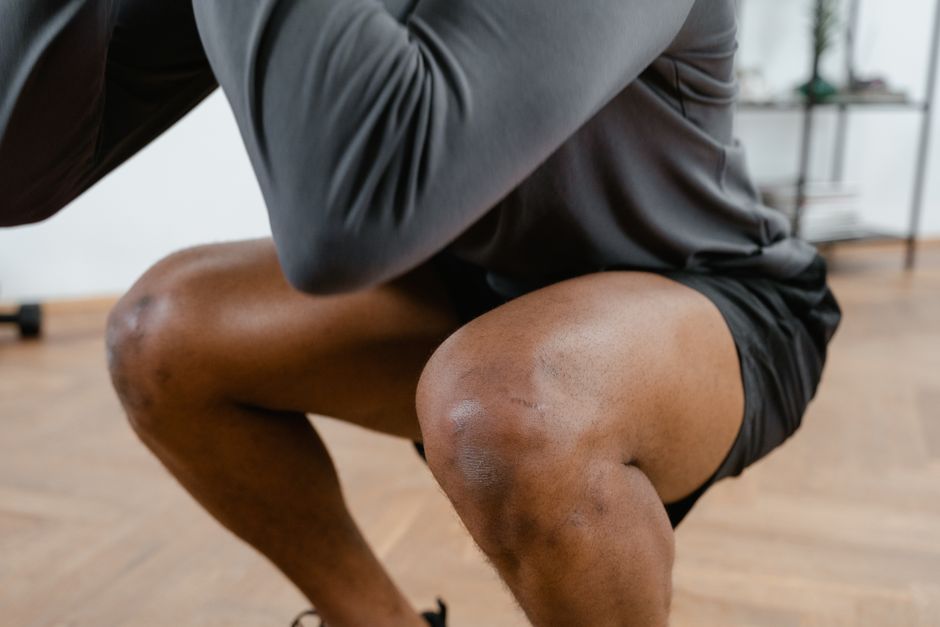
Hypermobile knees bend further than normal because the ligaments that hold the joint together are looser than average. You can fix the instability with a two-part approach: targeted strengthening exercises that build the muscles around the knee, and bracing or taping that provides temporary support while you build that strength. Exercise is the long-term solution; bracing is a short-term tool, not a permanent fix.
What causes hypermobile knees?
Your knee relies on four main ligaments to keep the bones in line. When these ligaments are more elastic than usual, the joint has a larger range of motion. This is called joint hypermobility.
Some people have naturally loose ligaments due to genetics. Others develop knee hypermobility after an injury that stretched or tore a ligament. Conditions like Ehlers-Danlos syndrome can also cause widespread joint looseness, but most people with hypermobile knees do not have a connective tissue disorder. They simply have flexible joints.
Hypermobility itself is not always a problem. Many people with flexible knees never experience pain or instability. Problems arise when the muscles around the knee are too weak to control the extra motion. Strong muscles act as a dynamic brace, holding the joint steady even when ligaments are loose.
How To Fix Hypermobile Knees Exercises And Bracing?
The most effective approach combines strength training with temporary external support. Exercises rebuild the muscle control that your loose ligaments cannot provide. Bracing gives you stability during the early phase of rehabilitation, when your muscles are still too weak to protect the joint.
Think of the knee like a tent. Ligaments are the ropes — they hold the structure but they stretch. Muscles are the poles — they provide the actual rigidity. If your ropes are loose, you need stronger poles. Exercise builds those poles. A brace is like adding a temporary extra rope while the poles get stronger.
Which exercises actually help hypermobile knees?
The goal is not to stretch the knee. Stretching makes hypermobility worse. The goal is to strengthen the quadriceps, hamstrings, glutes, and calf muscles — the four muscle groups that cross or surround the knee joint.
Quadriceps strengthening is the foundation. The quadriceps are the large muscles on the front of your thigh. They control how your kneecap tracks and they resist the knee bending backward. Straight leg raises and wall sits are excellent starting points because they build strength without putting weight directly through the joint.
Hamstring strengthening matters just as much. The hamstrings run down the back of your thigh and cross behind the knee. They help prevent the knee from hyperextending. Hamstring curls — whether lying, seated, or using a resistance band — target these muscles directly.
Glute exercises are often overlooked but they are critical. Your glutes control hip rotation and position. When your hips are weak, your knees compensate by rotating inward, which puts stress on the knee joint. Bridges, clamshells, and lateral band walks all strengthen the glutes and improve knee alignment.
Calf raises finish the picture. The calf muscles cross the back of the knee and contribute to stability during walking and running. Simple standing calf raises or seated calf raises work well.
Start with low resistance and high repetitions. Focus on controlled movement — slow and deliberate, not fast and sloppy. You want to feel the muscle working, not the joint straining. If an exercise causes sharp pain, stop. Dull muscle fatigue is normal. Joint pain is not.
How often should you exercise hypermobile knees?
Consistency beats intensity for hypermobile joints. Two to three sessions per week is a reasonable starting point for most people. This gives your muscles adequate recovery time while still providing enough stimulus to build strength.
Each session should include exercises from each muscle group. A typical session might take 20 to 30 minutes. Rest one full day between sessions targeting the same muscles.
Progression matters. When an exercise feels easy — meaning you can complete all repetitions with good form and no muscle fatigue — increase the resistance slightly. Small incremental increases are safer than large jumps. A physical therapist can help you determine the right starting resistance and progression rate for your specific situation.
Expect to see meaningful improvement in 8 to 12 weeks of consistent training. Some people notice changes sooner. Others need longer. Muscle strength builds gradually, and the timeline varies from person to person based on their starting strength and how consistently they train.
Do knee braces help hypermobility?
Knee braces can help, but only in specific situations. A brace provides external support that limits how far the knee can bend or move. For someone with severe instability, a brace can prevent the knee from giving way during daily activities. For someone with mild hypermobility, a brace may be unnecessary.
Compression sleeves are the lightest option. They provide warmth and proprioceptive feedback — meaning they help your brain sense where your knee is in space. This improved awareness can reduce the chance of accidental hyperextension. However, compression sleeves do not physically prevent the knee from bending too far.
Hinged braces are more substantial. They have metal or plastic supports on the sides that limit range of motion. Some have adjustable stops that prevent the knee from extending past a certain angle. These braces are useful during the early stages of rehabilitation or for people with significant instability.
Patellar straps or knee sleeves with cutouts around the kneecap can help if your pain is located specifically around the kneecap. These apply pressure to the patellar tendon, which can reduce strain on the kneecap during activity.
Kinesiology tape is another option. Some physical therapists use tape to provide sensory feedback and light support. Research on tape for knee hypermobility is limited, and results vary. Some people find it helpful. Others notice no difference.
When should you use a brace?
Use a brace during activities that provoke instability. If your knee gives way when you walk on uneven ground, wear the brace then. If it feels unstable during exercise, wear it during your workout. If it feels fine during normal daily activities, you do not need to wear it all day.
Wearing a brace constantly can be counterproductive. Your muscles need to work to build strength. If a brace does all the stabilizing work, your muscles never learn to do it themselves. This is why bracing is best viewed as a temporary tool, not a permanent solution.
A common strategy is to wear a brace during the first 4 to 6 weeks of an exercise program. As your strength improves, gradually reduce brace use. Start by removing it during low-risk activities like sitting or lying exercises. Then remove it during walking. Eventually, you may only need it for high-risk activities like running or sports.
If you are unsure whether a brace is right for you, ask a physical therapist or sports medicine doctor. They can assess your specific instability pattern and recommend the appropriate type of support.
What should you avoid with hypermobile knees?
Avoid exercises that force the knee into extreme ranges of motion. Deep squats, especially with heavy weights, can push a hypermobile knee past its safe range. Full-depth lunges can do the same. If you do squat or lunge, use a partial range of motion that stays within your comfortable limits.
Avoid stretching your knees. Many people with hypermobility also have tight hamstrings and feel the urge to stretch them. But stretching a hypermobile joint is counterproductive. It increases laxity and can worsen instability. If your hamstrings feel tight, strengthening them is more beneficial than stretching them.
Avoid high-impact activities until your muscles are strong enough to control the joint. Running, jumping, and pivoting sports place significant stress on the knee. When you do return to these activities, start gradually and pay attention to how your knee responds.
High-impact activities are not permanently off-limits for most people with hypermobile knees. They simply require adequate muscle strength first. A physical therapist can help you determine when your knee is ready for higher-level activities.
When should you see a doctor?
See a doctor if your knee is painful, swollen, or gives way frequently. See a doctor if the instability developed after a specific injury. See a doctor if you have hypermobility in multiple joints along with pain, because this may indicate a connective tissue disorder that requires specialized care.
A physical therapist is often the best first step for hypermobile knees. They can assess your specific muscle weaknesses and design a personalized exercise program. They can also teach you proper form and help you progress safely.
If you have already tried exercise and bracing for several months without improvement, a doctor may recommend imaging to check for structural damage. Cartilage wear, meniscus tears, and ligament damage can all cause knee instability that does not respond to conservative treatment alone.
In rare cases, surgery may be considered for severe ligament laxity that does not improve with rehabilitation. Surgery is typically a last resort after months of failed conservative treatment. Most people with hypermobile knees improve significantly with exercise alone.
Frequently Asked Questions
Can you fix hypermobile knees without surgery?
Yes, most people improve significantly with targeted strengthening exercises and temporary bracing. Surgery is rarely needed and is usually reserved for severe cases that do not respond to months of rehabilitation.
Are squats bad for hypermobile knees?
Full-depth squats with heavy weights can be risky because they push the knee into extreme flexion. Partial squats within a comfortable range of motion are generally safe and effective for building quadriceps strength.
How long does it take to strengthen hypermobile knees?
Most people notice meaningful improvement within 8 to 12 weeks of consistent exercise. Full strength gains can take longer, and maintaining the strength requires ongoing training.
Should I wear a knee brace all day for hypermobility?
No, wearing a brace all day can weaken your muscles by doing their work for them. Use a brace only during activities that cause instability and remove it when your knee feels stable.
