
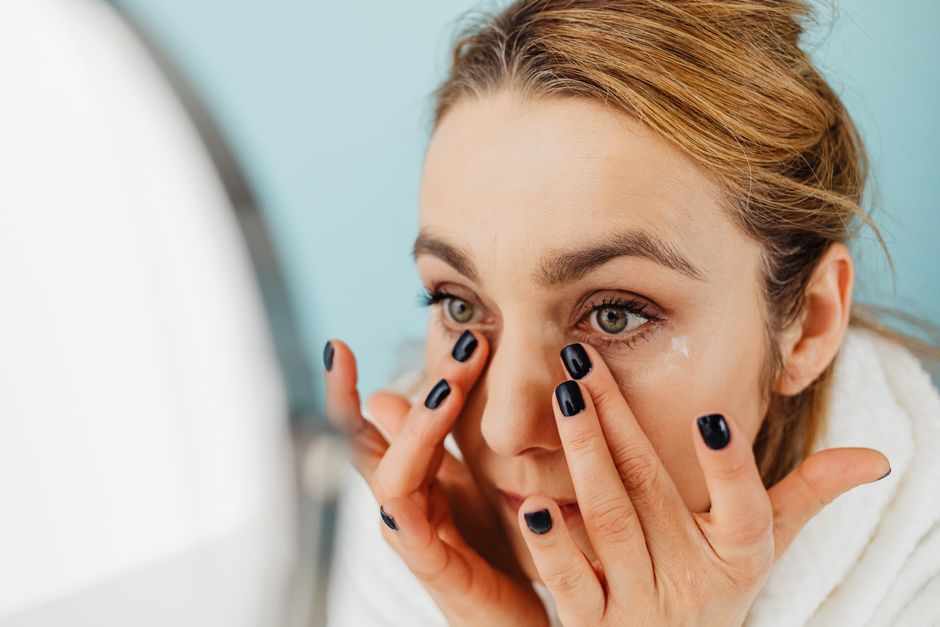
Hooded eyes happen when a fold of skin from the brow or upper eyelid hangs over the crease, making the lid look smaller and the brow bone feel heavy. You cannot “fix” the underlying anatomy without surgery, but you can reduce how hooded your eyes look with makeup, brow shaping, and eyelid exercises, and you can treat the cause directly with procedures if the hooding is significant. The steps below cover both what works temporarily and what changes the structure itself.
What Actually Causes Hooded Eyes?
Hooded eyes are mostly genetic. The skin of the upper lid is thin and loosely attached, and in some people there is simply more of it, or the brow sits lower, so the fold drapes over the crease. This is a normal facial variation, not a defect, and it is common across every population.
Age changes the picture. As skin loses collagen and elastin, it stretches and sags. The levator muscle that lifts the lid can weaken, and fat pads around the eye can shift or bulge. All of this can make eyes that were never hooded start to look that way.
There is a distinction worth knowing. A true hooded eye has skin folding over the crease. Ptosis is different — it is a droop of the eyelid margin itself, caused by a weak lifting muscle or a nerve problem. Ptosis can be present from birth or develop later, and it is a medical issue rather than a cosmetic one. If one eyelid has dropped noticeably and recently, that warrants a doctor’s assessment rather than a makeup fix.
How To Fix Hooded Eyes With Makeup
Makeup does not change the anatomy, but it changes how the eye reads in photos and in person. The goal is to redirect attention upward and outward and to stop shadow from pooling in the fold.
- Prime the lid first. Hooded lids crease and transfer shadow onto the brow bone within hours. An eyelid primer helps product stay where you put it.
- Skip heavy shimmer on the lid. Shimmer catches light in the fold and emphasizes the hood. Matte and satin finishes recede.
- Place shadow above the crease, not in it. Apply a mid-tone shade slightly higher than your natural crease so it stays visible when your eye is open.
- Use a thin, tight line. A thick liner eats the visible lid space. A fine line along the lash roots keeps the eye looking open.
- Lift the outer corner. A soft upward sweep of shadow or liner at the outer edge draws the eye up and out.
- Curl lashes and use a lengthening mascara. Lashes that point up and out open the eye visually. Waterproof formulas resist transfer onto the hood.
- Shape the brow with an arch. A brow with a defined arch and a lifted tail creates space above the eye. A flat, low brow drags the whole area down.
None of this is permanent. It is a daily technique, and it works best when the products suit the shape of your specific lid.
Can Eyelid Exercises Reduce Hooded Eyes?
No clinical evidence confirms that eyelid exercises change hooded eyes. The hooding is caused by skin, fat, and muscle position, and no exercise routine has been shown in controlled trials to lift or tighten that tissue.
Some people report that facial exercises make the area feel firmer. That is plausible in the short term because muscle engagement can change resting tone slightly, but it is not the same as removing excess skin. The evidence here is limited, and anyone promising dramatic results from exercises alone is overstating what is known.
What exercises cannot do is reverse stretched skin or reposition a low brow. If hooding is mild and mostly about muscle tone, some people find facial massage and targeted movement helpful for how the area feels. If hooding is structural, exercise will not change it.
What About Creams and Serums for Hooded Eyes?
No cream has been shown to lift hooded eyelids. Eye creams can hydrate the skin and temporarily plump fine lines, which can make the area look smoother, but they do not tighten loose skin or change the position of the fold.
Ingredients like retinoids and peptides have some evidence for improving skin texture and fine lines over time. That is a different claim from lifting a hood. Be cautious with anything marketed as an “eyelid lift” cream — the language is marketing, not a description of demonstrated effect.
One practical point: the skin around the eye is thin and absorbs products readily. Strong actives can irritate it. If you use a retinoid near the eye, use a low concentration and watch for stinging or redness.
When Is Surgery the Right Option for Hooded Eyes?
Surgery is the only approach that changes the structure of a hooded eye. An upper eyelid blepharoplasty removes excess skin and sometimes a small amount of fat, and it can tighten the muscle. It is a well-established procedure with a long track record.
It is not a small decision. Blepharoplasty is surgery with risks — scarring, asymmetry, dry eye, and rarely, difficulty closing the eye. Results depend heavily on the surgeon’s assessment of your anatomy and on whether the hooding is from skin, fat, or a low brow. A brow lift addresses a low brow, and choosing the wrong procedure for your anatomy can produce a poor result.
Some clinicians also use botulinum toxin to soften the brow position or reduce the pull that contributes to hooding. This is common practice, but it is not a substitute for surgery when excess skin is the main issue, and results vary. Anyone considering these options should have a proper consultation with a qualified specialist rather than relying on before-and-after photos alone.
How Do You Work With Hooded Eyes Day to Day?
Most people with hooded eyes do not need treatment at all. It is a shape, not a condition. The practical work is in how you present the eye and in noticing changes that matter.
Watch for a few things that are not cosmetic. A sudden droop in one eyelid, double vision, or a lid that will not open fully deserves medical attention. So does hooding that appears quickly rather than gradually. These can point to a nerve or muscle problem rather than normal anatomy.
For everyday comfort, keep the lid area moisturized, protect it from sun with sunglasses and sunscreen, and avoid rubbing the eyes, which stretches thin skin over time. Sleep and hydration affect how puffy or crepey the area looks on any given day.
If hooding is interfering with your vision — some people with significant hooding find their upper field of view is blocked — that is a reason to see an eye doctor. Visual field obstruction from drooping lids is a recognized clinical issue, and it is assessed differently from cosmetic concern.
Frequently Asked Questions
Can hooded eyes be fixed without surgery?
You can reduce how hooded your eyes look with makeup, brow shaping, and eyelid care, but no non-surgical method changes the underlying skin and structure. Surgery is the only approach that removes excess skin.
Are hooded eyes genetic?
Yes, hooded eyes are largely genetic and are a normal variation in eyelid shape. Age can make existing hooding more pronounced as skin loses elasticity.
Do eyelid exercises actually work?
No clinical evidence confirms that eyelid exercises lift hooded eyes. Some people report firmer-feeling skin, but controlled trials have not shown structural change.
When should I see a doctor about hooded eyes?
See a doctor if one eyelid droops suddenly, if you have double vision, or if the hooding blocks your vision. Gradual hooding that has been present for years is usually not a medical concern.
