
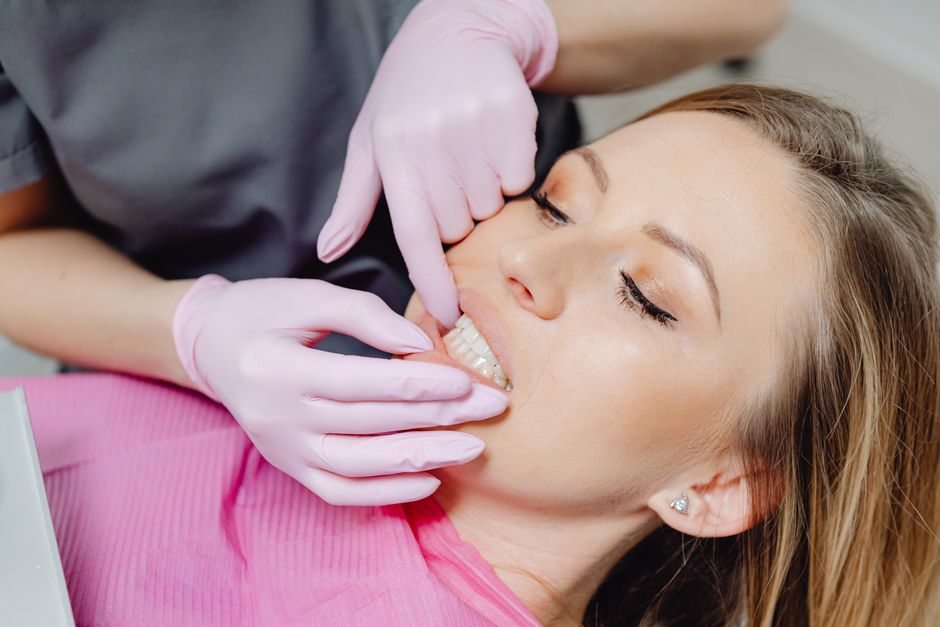
Crooked teeth can be straightened at almost any age, and the main options are braces, clear aligners, and — for some cases — removable retainers or limited cosmetic work. Costs in the US range widely, from roughly a few thousand dollars for clear aligners to more than double that for complex orthodontic treatment, and dental insurance typically covers little or none of adult treatment. The right choice depends on how misaligned your bite is, not just how your front teeth look.
Why Do Teeth Become Crooked In The First Place?
Most crooked teeth come down to a mismatch between the size of your teeth and the size of your jaw. If the jaw is small relative to the teeth, they crowd, overlap, or get pushed out of line as they erupt.
Genetics plays a large role. The shape of your jaw, the size of your teeth, and how they fit together all run in families. Losing baby teeth early, thumb sucking past the age of about four, and prolonged pacifier use can also affect how permanent teeth come in. In adults, teeth can shift over time even if they were straight before — a slow drift that continues throughout life.
Gum disease matters more than most people realize. Advanced periodontal disease damages the bone that holds teeth in place, and teeth can move when that support weakens. This is one reason adults sometimes notice their teeth crowding in their forties or fifties after years of stability.
It helps to separate two things that get lumped together. Crowding is about how teeth sit in the arch. A malocclusion is about how the upper and lower teeth meet — overbite, underbite, crossbite, or open bite. Some people have straight-looking front teeth but a bite problem that still needs attention. Others have mild crowding that is purely cosmetic. A dentist or orthodontist can tell the difference, and that distinction shapes both the treatment and the cost.
What Are the Main Treatment Options for Crooked Teeth?
There are three broad categories: fixed braces, clear aligners, and — for specific limited situations — removable appliances or cosmetic approaches. Each works by applying controlled force over time so the bone around the tooth remodels and the tooth moves into a new position.
That remodeling is the key mechanism. The bone doesn’t just bend. Pressure on one side of the tooth causes bone to be broken down there and built up on the other side. This is why orthodontic movement takes months, not days, and why teeth can shift back if retainers aren’t worn afterward.
Traditional Metal Braces
Metal braces use brackets bonded to each tooth, connected by a wire that applies steady pressure. They remain the most reliable option for complex cases — severe crowding, significant bite problems, and rotations that aligners struggle with. Treatment commonly runs 18 to 24 months for moderate cases, though complex cases take longer. They are visible, which is the main drawback for many adults.
Ceramic and Lingual Braces
Ceramic braces use tooth-colored brackets that are less noticeable than metal. Lingual braces sit on the back of the teeth and are essentially invisible from the front. Both work similarly to metal braces. Ceramic brackets can be more fragile and may stain, and lingual braces are generally more expensive and harder to keep clean. Not every orthodontist offers lingual treatment.
Clear Aligners
Clear aligners are custom-made plastic trays worn over the teeth, replaced on a schedule to gradually shift them. They are removable, nearly invisible, and easier to clean around than fixed braces. The trade-off is compliance: aligners generally need to be worn most of the day, removing them only to eat and brush. If they aren’t worn as directed, treatment stalls or fails.
Aligners work well for mild to moderate crowding and many bite issues. For complex cases — significant rotations, large gaps, or certain bite corrections — fixed braces are often more predictable. Some companies now market direct-to-consumer aligners without an in-person exam. That model has real limits: without imaging and an exam, underlying bite problems and gum disease can go undetected, and the fit of the aligners may be poor. Professional supervision is not a formality here.
Removable Retainers and Limited Approaches
Removable retainers can correct very minor relapse — small shifts after previous orthodontic work — but they are not a substitute for full treatment of significant crowding. Cosmetic options like bonding, veneers, or contouring can improve the appearance of mildly uneven front teeth. These do not move teeth or fix a bite, and they are not a substitute for orthodontic treatment where a bite problem exists.
How Much Do Crooked Teeth Treatments Cost?
Costs vary enormously by region, provider, and case complexity, so treat any figure as a general range rather than a quote. In the US, traditional metal braces commonly fall in the range of roughly $3,000 to $7,000. Clear aligners from a professional typically run in a similar range, sometimes a bit lower for simple cases and higher for complex ones. Ceramic braces and lingual braces generally cost more than metal.
These are broad ballpark figures. A single-city comparison can show a 50% spread or more between providers, and complex cases with bite correction, extractions, or longer treatment push costs upward. Always get a written treatment plan with the total price before committing.
What the price usually includes — or should be clarified in writing:
- Records: X-rays, photos, and digital scans
- The appliance itself and all adjustment visits
- Retainers after treatment (sometimes billed separately)
- Emergency visits for broken brackets or wires
- Whether a retainer replacement plan is included
One cost that catches people off guard: retainers are not optional. Teeth drift back without them, and replacement retainers are an ongoing expense for life. Ask about that upfront.
Does Dental Insurance Cover Braces or Aligners?
For adults, dental insurance usually covers little or none of orthodontic treatment. Many plans exclude adult orthodontics entirely, and those that include it often cap lifetime orthodontic benefits at a fixed dollar amount — commonly around $1,000 to $2,000 — which rarely covers the full cost.
Coverage is more common for children, often when a plan includes orthodontic benefits and treatment is deemed medically necessary. Even then, plans frequently cover only a percentage and impose age limits. The specifics vary plan to plan, so read the orthodontic section of your policy rather than assuming.
Flexible spending accounts and health savings accounts can often be used for orthodontic treatment, which effectively lowers the cost with pre-tax dollars. Many orthodontists also offer in-house payment plans with monthly installments. It is worth asking about both.
How Long Does It Take to Straighten Crooked Teeth?
Treatment time depends on how far the teeth need to move and how complex the bite correction is. Mild crowding with aligners can be finished in several months. Moderate cases with braces commonly take around 18 to 24 months. Complex cases involving bite correction, extractions, or significant movement can run two to three years or longer.
Adult treatment tends to take somewhat longer than adolescent treatment because the bone is less actively remodeling, though adults can still move teeth effectively. Age is not a barrier — the biology of tooth movement works throughout life. What matters more is the health of the gums and bone supporting the teeth, which is why a periodontal check matters before starting.
After active treatment, retention is lifelong. This is not a sales tactic. Teeth drift throughout life, and without a retainer, even a perfect result will gradually relapse. Most orthodontists recommend a fixed wire bonded behind the front teeth, a removable retainer, or both.
What Are the Risks and Things to Consider Before Starting?
Orthodontic treatment is generally safe and well established, but it is not risk-free. The most common issues are root resorption (shortening of tooth roots), gum inflammation during treatment, and relapse afterward. Root resorption is usually minor and not clinically significant, but it can be more pronounced in some people, which is one reason periodic X-rays are taken.
Gum health deserves serious attention in adults. Moving teeth through inflamed gums is problematic, so treating any active gum disease before starting orthodontics is standard practice. Poor oral hygiene during treatment — especially with fixed braces — raises the risk of decay and gum problems around the brackets.
Talk through these points with your provider before committing:
- Whether your case is better suited to braces or aligners, and why
- What the total cost includes and what it does not
- The retention plan and the cost of replacement retainers
- Whether any underlying bite or gum issue needs treatment first
- Realistic treatment length for your specific case
The single most useful step is a proper in-person exam with imaging. A visual glance at your front teeth cannot tell you whether your bite needs correcting or whether your gums can support movement. That exam is what turns a general cost range into an actual plan.
Frequently Asked Questions
Can adults still get their teeth straightened?
Yes. Teeth can be moved at any age because the bone remodeling process that allows movement works throughout life. Adults often need a gum and bone check first, and treatment may take somewhat longer than in teenagers.
Are clear aligners as effective as braces?
For mild to moderate crowding and many bite issues, aligners work well when worn as directed. For complex cases with significant rotations or bite correction, fixed braces are generally more predictable.
How much do braces cost without insurance?
Traditional metal braces commonly fall in a broad range of roughly $3,000 to $7,000 in the US, depending on region and case complexity. Clear aligners and ceramic braces often fall in a similar range, with lingual braces costing more.
Do teeth stay straight after treatment?
Only with retention. Teeth drift throughout life, so a fixed wire, a removable retainer, or both are typically needed long-term to hold the result. Retainers are a lifelong commitment, not a temporary step.
