
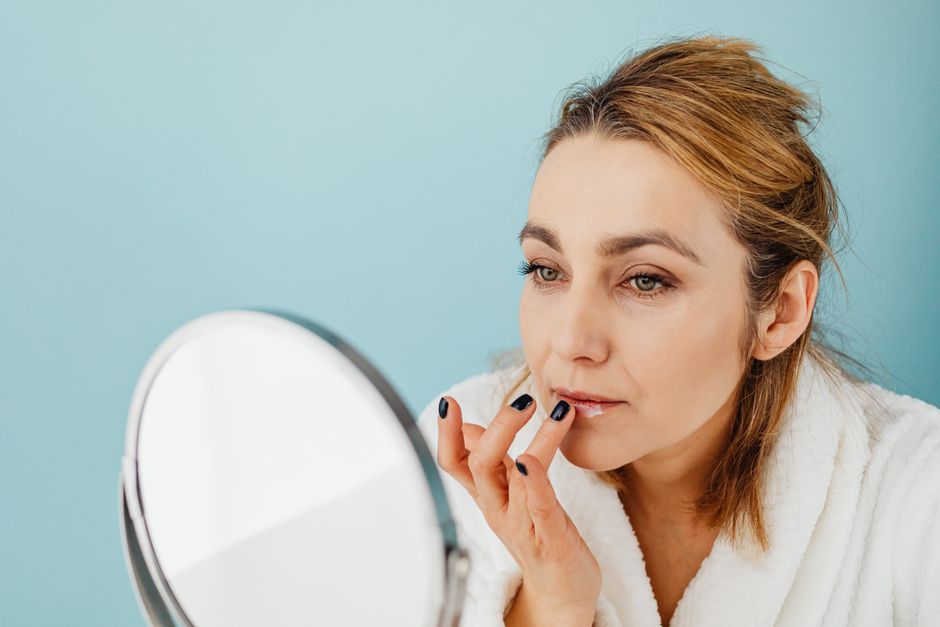
Cracked lips heal fastest when you stop the moisture loss and stop the irritation at the same time. That means protecting the lip barrier with a plain ointment, keeping your hands off the cracks, and fixing whatever is drying your lips out in the first place. Most split lips improve within a few days once you do those three things consistently. If they keep coming back, the cause is usually something you are still doing, not something you are missing.
Why Do Lips Crack So Easily?
Lips crack more easily than the rest of your skin because they are built differently. The outer layer of your lips is much thinner than the skin on your face. It has fewer layers of dead cells to shield it, and it lacks the oil glands and hair follicles that help keep other skin waterproof.
That means lips lose moisture to the air almost constantly. They have no built-in oil supply to replace what evaporates. When the air is dry, when you breathe through your mouth, or when you lick your lips, that loss speeds up.
Saliva is the trap most people fall into. It feels soothing for a moment, then it evaporates and takes more moisture with it. Saliva also contains enzymes meant for digesting food, and those enzymes can irritate already-thin lip tissue. The more you lick, the drier your lips get, and the more you want to lick them again.
Cold weather, low humidity, indoor heating, and sun exposure all pull moisture from lips. So does anything that dries the body out from the inside, including some medications. The result is the same: the barrier fails, the surface splits, and the crack opens along the line where your lips move most.
How To Fix Cracked Lips Fast And Keep Them Healed?
Fix the barrier first, then remove the trigger. Healing does not come from a special ingredient. It comes from sealing moisture in and giving the tissue time to repair without being pulled open again.
Start with a plain, thick ointment. Petroleum jelly is the standard example. It does not add water to your lips. It sits on top and blocks moisture from escaping, which is exactly what a cracked barrier needs. Apply it often, not just once. Every time your lips feel dry, add another layer.
Timing matters more than people expect. Apply ointment before bed, because mouth breathing and overnight air pull moisture for hours. Apply before you go outside in cold or windy weather. Apply before and after meals, since eating and drinking strip whatever was on your lips.
Stop licking, biting, and picking. This is the hardest part and the most important. Every time you pull at a loose flap of skin, you reopen the crack underneath and reset the healing clock. If a piece of skin is hanging, leave it. It will come off on its own.
Do not peel. Do not scrub. Do not exfoliate cracked lips, even with a gentle product. Exfoliation is for healthy lips that need smoothing. On a cracked lip it removes the thin protective layer you are trying to rebuild.
Drink water through the day. This does not directly moisturize your lips, but it supports the body’s overall hydration, and dehydration makes dry tissue worse. Keep a glass nearby and sip rather than waiting until you feel thirsty.
If your lips are cracked at the corners, at the point where the upper and lower lip meet, that is a different problem. It is often called angular cheilitis. The skin there splits and can stay raw for weeks. It can involve a yeast or bacterial component, and plain ointment alone may not clear it. A clinician can tell the difference and treat it properly. Do not assume corner cracks are simple dryness.
Which Lip Products Actually Help And Which Make It Worse?
The best product for cracked lips is the simplest one. Thick occlusives that seal in moisture do the job. Products with added fragrance, flavor, menthol, camphor, or exfoliating acids can sting cracked tissue and sometimes make irritation worse.
Watch for ingredients that create a temporary tingle. That cooling or tingling feeling is often menthol or camphor. It feels like it is working, but it does nothing to repair the barrier and can irritate broken skin.
Watch for flavored balms too. A pleasant taste can encourage you to lick your lips, which starts the drying cycle again.
| Product type | What it does | Best for |
|---|---|---|
| Petroleum jelly | Seals moisture in, blocks irritants | Cracked, raw lips |
| Plain thick balm (no scent) | Seals and adds a little emollient | Daily prevention |
| Balm with menthol or camphor | Tingles, no barrier repair | Not recommended for cracks |
| Flavored or scented balm | May trigger licking and irritation | Not recommended for cracks |
| Exfoliating lip scrub | Removes surface skin | Healthy lips only |
One non-obvious point: a balm that feels like it disappears in minutes is probably too thin for cracked lips. You want something that stays put. If you have to reapply every few minutes, the product is not holding a seal.
Lip balm with sunscreen is worth using for prevention, especially if you spend time outdoors. Sun damage dries and damages lip tissue over time. This matters more for long-term lip health than for healing an active crack.




What Causes Cracked Lips That Keep Coming Back?
If your lips heal and then split again within days, something is still working against them. The most common culprits are ongoing habits and ongoing exposure.
- Chronic lip licking, often without noticing
- Mouth breathing, including from a stuffy nose or sleep habits
- Dry indoor air from heating or air conditioning
- Cold, windy, or low-humidity weather
- Not drinking enough water
- Products with irritating ingredients
- Medications that dry the body, such as some acne treatments and antihistamines
Some medical conditions also cause persistent cracked lips. These are less common but worth knowing about. They include certain nutritional deficiencies, thyroid conditions, and inflammatory skin conditions that affect the lips. If your lips stay cracked for weeks despite good care, or if you have other symptoms, that is a reason to see a clinician rather than keep guessing.
One condition to know about is cheilitis, which simply means inflammation of the lips. It has many causes, from irritation to infection to allergy. The name describes the problem, not the reason for it, so it does not tell you what to do on its own.
When Should You See A Doctor About Cracked Lips?
Most cracked lips are a nuisance, not a medical problem. They respond to basic care within a few days. Certain signs mean it is time to get help instead of waiting it out.
See a clinician if a crack bleeds repeatedly, if it does not improve after a couple of weeks of consistent care, or if it keeps returning in the same spot. Persistent sores that do not heal deserve a professional look, because a small number of lip lesions need to be checked for more serious causes.
Also seek care if you notice signs of infection, such as spreading redness, swelling, warmth, pus, or increasing pain. Cracks at the corners of the mouth that will not heal are another reason to get checked, since these often need specific treatment.
If cracked lips come with other symptoms, such as fatigue, weight changes, or skin problems elsewhere, mention all of it. The lips can be a visible sign of something happening in the rest of the body.
How Do You Prevent Cracked Lips From Coming Back?
Prevention is mostly about keeping the barrier intact before it fails. Once you know your triggers, it becomes a routine rather than a fix.
Keep a plain ointment within reach and use it before your lips feel dry, not after. Apply it before bed, before going outside, and before meals. Making it automatic is what keeps lips from cracking in the first place.
Break the licking habit. This is the single biggest change for most people. If you lick your lips without realizing it, notice when it happens. It often spikes during stress, in dry rooms, or when your lips already feel dry.
Add moisture to the air if you live or work in a dry space. A humidifier in the bedroom can help, especially in winter. Keep water nearby and drink through the day.
Use lip products with sunscreen when you are outdoors for extended periods. Protect your lips from wind and cold with a scarf or a high collar when the weather is harsh.
If a medication seems to be drying your lips, do not stop it on your own. Talk to your prescriber about whether that is expected and what can be done.
Frequently Asked Questions
How fast do cracked lips heal?
Most cracked lips improve within a few days with consistent ointment and no licking or picking. Cracks that stay open for more than two weeks should be checked by a clinician.
Is Vaseline good for cracked lips?
Yes. Petroleum jelly seals moisture in and blocks irritants, which is exactly what a cracked lip barrier needs. It works best applied often, including before bed and before going outside.
Why do my lips keep cracking no matter what I use?
Ongoing habits like lip licking, mouth breathing, or dry air usually keep the cycle going. If cracks persist for weeks despite good care, see a clinician to rule out other causes.
Can dehydration cause cracked lips?
Dehydration can make dry tissue worse, including your lips. Drinking enough water supports overall hydration, but sealing the lip barrier with ointment is what directly helps healing.
