
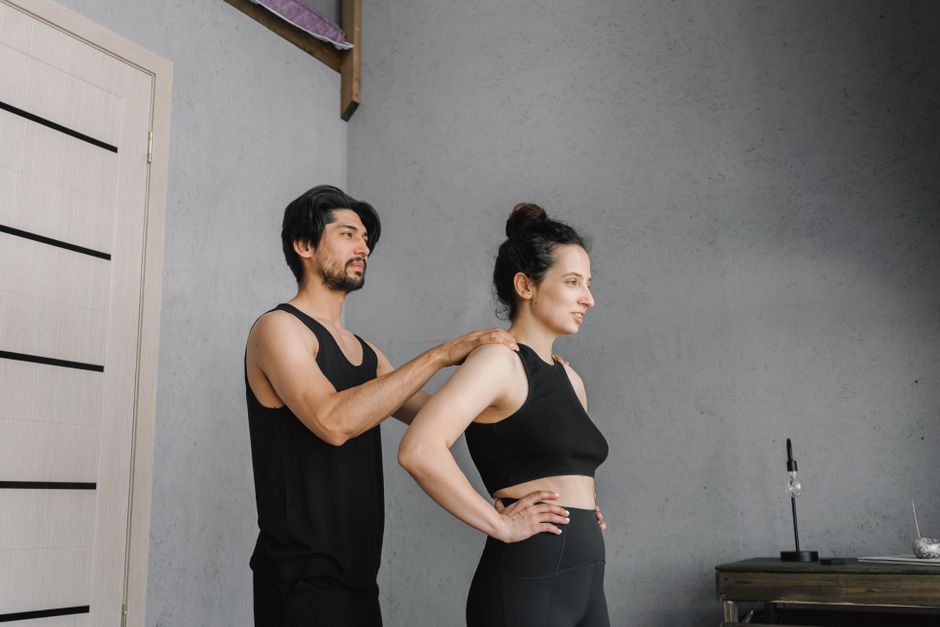
Cervical lordosis is the natural inward curve of your neck. It can be reduced, flattened, or reversed, and the right exercises depend on why that happened. For most people, a physical therapist-guided program of neck and upper-back strengthening, posture changes, and stretching helps restore a more normal curve. But no exercise can fix a curve caused by injury, surgery, or a structural problem, and some people have no symptoms at all.
The word “fix” needs some honesty here. Research on whether exercises can change the actual shape of the curve is mixed. What is better supported is that exercise and posture work can reduce the neck pain and stiffness often linked to a flattened curve. That distinction matters before you start any program.
What Does Cervical Lordosis Actually Mean?
Cervical lordosis is the normal forward-facing curve of the seven bones in your neck, called the cervical spine. Seen from the side, the neck curves gently inward toward the front of the body. This curve is not decorative. It helps the spine absorb shock and keep your head balanced over your shoulders.
When the curve becomes straighter than normal, clinicians call it loss of cervical lordosis, straightened cervical lordosis, or sometimes a “military neck.” In some cases the curve bends the opposite way, which is called kyphosis or a reversed curve. These are descriptions of the shape of the spine, not a disease on their own.
Here is a point many people miss. A flattened curve on an X-ray does not automatically mean something is wrong. Curve measurements vary widely between healthy people, and some people with a straight neck have no pain at all. Others with a perfectly normal curve have significant neck pain. The curve is one piece of information, not a diagnosis by itself.
What Causes a Straightened or Reversed Cervical Curve?
Muscle tension and posture are the most common contributors, but they are not the only ones. The curve can change for several reasons, and often more than one is involved.
- Muscle imbalance and poor posture. Long hours with the head forward or looking down can tighten the front of the neck and weaken the deep muscles that support the curve.
- Whiplash and neck injury. A sudden force can strain muscles and ligaments and change how the neck holds itself.
- Muscle spasm. Painful tightening of neck muscles can temporarily pull the spine straighter.
- Degenerative changes. Wear on the discs and joints of the neck, more common with age, can affect the curve.
- Surgery. Some neck surgeries change the shape of the spine, sometimes on purpose.
- Structural conditions. Rarely, underlying bone or spinal conditions are responsible.
This matters for treatment. A curve changed by muscle tension may respond well to exercise and posture work. A curve changed by surgery or a structural condition usually will not, and forcing aggressive stretching in those cases could cause harm. This is why a proper assessment comes before any exercise plan.
How To Fix Cervical Lordosis Exercises And Treatment
There is no single exercise that restores the curve for everyone, and anyone promising a guaranteed fix is overselling. What the evidence does support is a structured approach that targets the muscles around the neck and upper back, guided by a clinician who has examined you.
A physical therapist typically builds a program around a few goals. The first is loosening tight structures at the front of the neck and upper chest. The second is strengthening the deep muscles that support the curve and the muscles between the shoulder blades. The third is retraining posture and how you hold your head during daily tasks.
Exercises Commonly Used
These are examples of exercises that appear in clinical practice. They are not a prescription, and a therapist should confirm which are right for you. Stop any exercise that causes sharp pain, numbness, or dizziness.
- Chin tucks. Sit or stand tall and gently draw your chin straight back, as if making a double chin. Hold briefly and release. This targets the deep muscles at the front of the neck.
- Neck extension strengthening. Lying face down with the head supported, you lift and hold the head slightly against gravity. This works the muscles along the back of the neck.
- Shoulder blade squeezes. Pull your shoulder blades together and down, holding for a few seconds. This supports the upper back, which affects how the neck is positioned.
- Chest and front-of-neck stretching. Gentle stretches for tight chest and neck muscles help reduce the pull that flattens the curve.
- Upper-back strengthening. Rows and similar movements build the muscles that help hold your shoulders and head in a better position.
Consistency matters more than intensity. These exercises are usually done in short sets, often daily or most days, and progress is measured over weeks, not days. A therapist will adjust the program as your strength and symptoms change.
Posture and Daily Habits
Exercise alone rarely helps if your daily habits keep pulling the neck forward. Adjusting your screen height, taking regular breaks from looking down at a phone, and setting up your workstation so your head sits over your shoulders all support the work you do in therapy. These changes are simple but easy to skip.
Can Exercises Actually Change the Curve?
The evidence here is mixed, and it is worth being clear about that. Some studies suggest that targeted exercise can improve the measured curve over time, while others find little or no change in the actual shape of the spine even when pain improves.
What is better supported is the effect on symptoms. Exercise and posture training have reasonable evidence for reducing neck pain and improving function in people with posture-related neck problems. So the realistic goal is often less pain, better movement, and stronger supporting muscles, with the curve itself possibly improving and possibly not.
This is not a reason to skip exercise. It is a reason to measure success by how you feel and function, not only by what an X-ray shows. If your pain is improving but the curve looks the same, the program is still working.
When Exercise Is Not the Right Answer
Some situations need medical care before any exercise program. See a doctor promptly if you have neck pain after a significant injury, or if you notice any of the following.
- Numbness, tingling, or weakness in your arms or hands
- Pain that radiates down an arm
- Loss of coordination or trouble walking
- Severe headache with a stiff neck, or fever with neck pain
- Neck pain after a fall or car accident
These signs can point to nerve involvement or other conditions that need proper evaluation. Exercise is not the first step in those cases. A clinician can also tell you whether your curve change is something exercise can influence or whether it is structural and not something to “fix.”
Other Treatments for Neck Pain Linked to Curve Changes
Exercise is usually the foundation, but it is not the only option. Some clinicians recommend manual therapy, such as hands-on mobilization, alongside exercise for neck pain. The evidence for manual therapy on its own is limited, and it is generally used as an addition to active exercise rather than a replacement.
Heat, gentle activity, and over-the-counter pain relief are commonly used for short-term comfort. For persistent or severe pain, a doctor may discuss other options. Surgery is reserved for specific problems such as nerve compression that does not improve, and it is not a treatment for a flattened curve on its own.
Be cautious with devices and gadgets marketed to “restore your curve.” Neck traction pillows, posture braces, and similar products are widely sold, but no strong clinical evidence confirms they correct cervical lordosis. Some people find them comfortable, but comfort is not the same as a proven fix.
Frequently Asked Questions
Can cervical lordosis be fixed permanently?
For curve changes caused by muscle tension and posture, a guided exercise program can improve symptoms and sometimes the curve itself, but results vary and are not guaranteed to be permanent. Structural curve changes from injury or surgery usually cannot be reversed with exercise.
How long does it take to see results from neck exercises?
Most people notice changes in pain and movement over several weeks of consistent exercise, though the timeline varies widely. Changes in the actual curve, when they happen at all, generally take longer and are not guaranteed.
Is a straight neck curve serious?
A straightened curve is common and often causes no symptoms, so it is not automatically serious. It is worth a medical evaluation if it comes with pain, numbness, weakness, or follows an injury.
Can a pillow or neck brace fix cervical lordosis?
No strong clinical evidence confirms that pillows or braces correct the curve. Some people find them comfortable for support, but they should not replace exercise and assessment by a clinician.
