
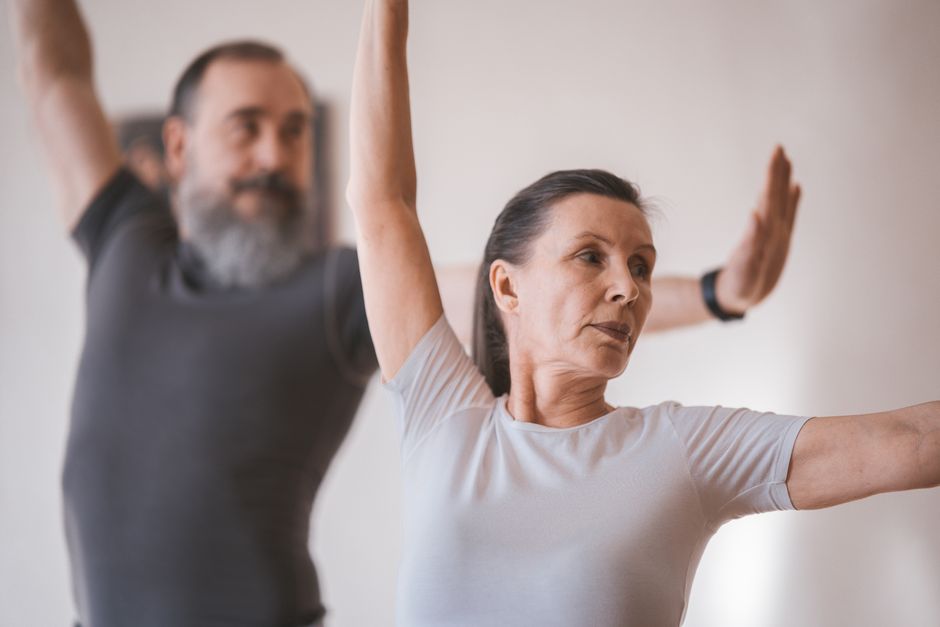
Balance problems can come from many places — the inner ear, the nerves in your feet, your vision, your muscles, or the brain systems that tie them together. The fix depends on the cause, but one thing holds true across most cases: balance is a skill the body maintains through use, and specific exercises can retrain it. This guide covers the common causes, the exercises with the best evidence behind them, and when a balance problem needs medical attention.
What Causes Balance Issues?
Your sense of balance comes from three systems working together. The inner ear (vestibular system) senses head position and movement. Your eyes provide visual information about where you are in space. And proprioception — sensory signals from muscles, joints, and the soles of your feet — tells you where your body parts are. The brain and cerebellum integrate all three.
A problem in any one of these systems, or in how the brain processes their signals, can throw off balance. That is why balance issues have so many possible causes.
Common causes include:
- Inner ear disorders. Benign paroxysmal positional vertigo (BPPV) is one of the most common causes of vertigo. Tiny calcium crystals dislodge and move into the wrong part of the inner ear canal, causing brief spinning with head movement. Vestibular neuritis (inflammation of the vestibular nerve) and Meniere’s disease also cause balance problems.
- Age-related changes. Muscle strength, vision, inner ear function, and nerve conduction all tend to decline with age. This makes balance problems more common in older adults, though they are not an unavoidable part of aging.
- Peripheral neuropathy. Damage to nerves in the feet — often from diabetes — reduces the sensory feedback the brain relies on for balance.
- Medications. Some medications, including certain blood pressure drugs, sedatives, and antidepressants, can cause dizziness or affect balance. This is a common and often overlooked cause in older adults.
- Low blood pressure on standing. Orthostatic hypotension — a drop in blood pressure when you stand up — causes lightheadedness and can lead to falls.
- Neurological conditions. Stroke, Parkinson’s disease, multiple sclerosis, and cerebellar disorders can all affect balance.
- Vision problems. Poor vision or incorrect eyeglass prescriptions can affect balance, since the eyes provide critical spatial information.
- Muscle weakness and deconditioning. Weak legs and core muscles make it harder to correct for small losses of balance.
Some causes are temporary and resolve on their own. Others need treatment. Identifying the cause is the first step, and that usually means a medical evaluation.
When Should You See a Doctor About Balance Problems?
See a doctor promptly if balance problems come with sudden onset, severe headache, weakness or numbness on one side, difficulty speaking, vision changes, chest pain, or fainting. These can signal a stroke or another serious condition and need emergency evaluation.
For balance problems that develop gradually or come and go, it is still worth seeing a doctor — especially if you have fallen, feel unsteady most days, or the problem is affecting your daily activities. A primary care doctor can start the evaluation, check medications, and refer you to a specialist such as an ear, nose, and throat doctor (ENT), a neurologist, or a physical therapist who specializes in vestibular rehabilitation.
Do not assume balance problems are just part of getting older. Many causes are treatable. BPPV, for example, can often be resolved with specific repositioning maneuvers performed by a clinician. Medication-related dizziness can sometimes be addressed by adjusting the prescription with your doctor.
What Exercises Help Fix Balance Issues?
Balance exercises work by challenging your balance systems in a controlled way, so the brain learns to compensate and adapt. The best evidence supports vestibular rehabilitation for inner ear-related dizziness and targeted strength and balance training for general balance decline.
Here are exercises commonly used in physical therapy and balance training. Start with the easier ones and progress as you feel steady. Use a counter or sturdy chair for support when starting out.
Standing balance exercises
- Single-leg stand. Stand on one foot while holding a counter for support. Hold for 10 to 30 seconds, then switch sides. As you improve, try it without holding on.
- Heel-to-toe stand. Stand with one foot directly in front of the other, like on a tightrope. Hold for 10 to 30 seconds. This narrows your base of support and challenges your balance more than standing with feet apart.
- Weight shifting. Slowly shift your weight from one foot to the other, then front to back. This trains your body to sense and correct small shifts.
Walking exercises
- Heel-to-toe walking. Walk in a straight line, placing the heel of one foot directly in front of the toes of the other. This is sometimes called tandem walking.
- Walking with head turns. Walk normally while slowly turning your head side to side. This challenges your balance while your vestibular system is active, which is useful for people recovering from inner ear problems.
Vestibular rehabilitation exercises
If your balance problem comes from an inner ear issue, a physical therapist trained in vestibular rehabilitation can guide specific exercises. These may include gaze stabilization (keeping your eyes fixed on a target while moving your head) and habituation exercises (repeated movements that gradually reduce dizziness).
These exercises are most effective when tailored to your specific problem by a clinician. Self-directed vestibular exercises are widely used, but the evidence is strongest when they are supervised and progressed appropriately.
Strength and flexibility
Leg and core strength support balance. Exercises like sit-to-stand, calf raises, and gentle tai chi have evidence for improving balance and reducing fall risk in older adults. Tai chi in particular has been studied as a balance intervention, and some research suggests it can reduce falls in older adults.
Consistency matters more than intensity. Short daily practice tends to work better than occasional long sessions.
How Long Does It Take to Improve Balance?
Improvement timelines vary widely depending on the cause, your age, and how consistently you practice. Some people notice steadier balance within a few weeks of regular exercise. Others need several months.
Vestibular rehabilitation for inner ear problems often shows improvement over weeks to months, and some people continue to improve for longer. BPPV treated with repositioning maneuvers often resolves quickly — sometimes after one or a few sessions — though it can recur.
There is no single timeline that applies to everyone. If you are not seeing improvement after several weeks of consistent practice, or if your balance is getting worse, talk to your doctor or physical therapist. Progress is not always linear, and some causes need treatment beyond exercise.
What Can You Do to Prevent Falls?
Falls are the leading cause of injury in older adults, and most falls are preventable. Balance training is one part of the picture. The home environment and other factors matter just as much.
Practical steps include:
- Remove loose rugs, clutter, and cords from walkways.
- Install grab bars in the bathroom and use night lights.
- Wear supportive, non-slip shoes rather than walking in socks or slippers.
- Have your vision checked regularly and update prescriptions as needed.
- Review medications with your doctor, especially if you take several.
- Keep physically active to maintain strength and balance.
Some clinicians recommend vitamin D supplementation for older adults at risk of falls, but the evidence on whether it reduces falls is mixed. Ask your doctor whether it is appropriate for you rather than starting it on your own.
If you have fallen or feel unsteady, a falls risk assessment with a physical therapist or your doctor can identify specific weaknesses and reduce your risk.
Can Balance Problems Be Fixed at Home?
Many balance problems can be improved with home exercises, especially general balance decline and strength-related issues. Regular practice of the standing and walking exercises above can help maintain and improve balance.
Some causes need professional treatment. BPPV, for example, is best treated with repositioning maneuvers performed by a trained clinician — doing them incorrectly at home may not help and can occasionally make symptoms worse. Inner ear inflammation and Meniere’s disease often need medical management. And balance problems caused by neurological conditions need specialist care.
Home exercises are a useful part of the picture, but they are not a substitute for diagnosis when the cause is unclear. If you are unsure why your balance is off, get it checked before relying on exercise alone.
Frequently Asked Questions
What is the most common cause of balance problems?
Inner ear disorders, especially benign paroxysmal positional vertigo (BPPV), are among the most common causes of vertigo and balance problems. Age-related changes and medication side effects are also common, particularly in older adults.
Can balance issues be fixed with exercise?
Many balance problems improve with targeted exercises, especially those caused by muscle weakness, deconditioning, or inner ear problems managed with vestibular rehabilitation. Some causes need medical treatment first, so a proper diagnosis matters.
How do you fix balance issues naturally?
Regular balance and strength exercises, staying physically active, and addressing vision and medication issues can all help. There is no single natural fix, because the right approach depends on the cause.
When should I worry about balance problems?
Seek emergency care for balance problems with sudden onset, severe headache, one-sided weakness, trouble speaking, or fainting. For gradual or recurring balance problems, see a doctor for evaluation rather than assuming it is normal aging.
