
A winged scapula is not something you can stretch away or massage out. It happens when the shoulder blade lifts away from the rib cage instead of sitting flat against it, and the fix depends almost entirely on why it’s lifting. In many cases, targeted exercises that strengthen the muscles holding the shoulder blade in place can improve the position and reduce symptoms. But exercises only work for the causes they address, so understanding the underlying reason comes first.
The shoulder blade, or scapula, normally glides along the back of the rib cage. When the muscles that anchor it are weak, injured, or not firing properly, the inner edge or bottom corner can stick out. The right exercise approach depends on which muscle or nerve is involved. That’s why a generic “shoulder blade workout” often fails and a targeted plan works better.
What Actually Causes a Winged Scapula?
There are two broad categories of causes, and they call for very different responses. One is a nerve problem. The other is a muscle control problem. They can look similar from the outside but need to be told apart.
The most recognized nerve cause is damage to the long thoracic nerve, which controls the serratus anterior muscle. This muscle runs from the ribs to the shoulder blade and is a main reason the blade stays flat against the rib cage. When that nerve is injured, the muscle weakens, and the shoulder blade can wing out, especially when you push forward or raise your arm. This is sometimes called a long thoracic nerve injury or serratus anterior palsy.
Other nerve causes involve the spinal accessory nerve, which supplies the trapezius muscle, and the dorsal scapular nerve, which supplies the rhomboids. Each produces a slightly different pattern of winging.
Muscle control problems are more common in everyday life. Poor posture, shoulder injury, overuse, and general deconditioning can leave the stabilizer muscles weak or poorly coordinated. In these cases the nerve is fine but the muscles aren’t doing their job.
Less common causes include structural issues in the shoulder joint, muscle disease, and certain genetic conditions. A winged scapula can also appear after surgery in the shoulder or chest area.
One non-obvious point: a scapula that wings on both sides is more often linked to posture, muscle weakness, or a systemic cause, while winging on one side raises more suspicion for a nerve injury. That difference matters for what comes next.
When Should You See a Doctor Before Starting Exercises?
See a doctor or physical therapist before beginning any exercise program if the winging came on suddenly, followed an injury or surgery, or is accompanied by pain, weakness, or numbness. These signs point toward a nerve or structural cause that exercises alone won’t fix and could worsen if you push the wrong muscles.
Specific reasons to get checked first:
- You cannot raise your arm above shoulder height or push forward with normal strength.
- You have numbness, tingling, or burning in the shoulder, arm, or hand.
- The winging appeared after a viral illness, vaccination, surgery, or trauma.
- You have pain that limits movement.
- The winging is getting worse over weeks.
Nerve injuries need proper diagnosis. A clinician can examine which muscles are weak, and may use imaging or nerve studies to confirm what’s going on. Starting a strengthening program on a weakened nerve-driven muscle is not a substitute for that assessment. If the cause is a nerve injury, some cases recover on their own over months, but recovery depends on the specific nerve and the extent of damage, and it should be monitored by a professional.
How To Fix A Winged Scapula With Exercises
Exercises work by strengthening and retraining the muscles that hold the shoulder blade against the rib cage. The main targets are the serratus anterior, the lower and middle trapezius, and the rhomboids. These muscles pull the blade down and in, keeping it stable.
The key principle is control over load. You are teaching the shoulder blade to stay flat during movement, not just building raw strength. Slow, deliberate reps with attention to the blade position matter more than heavy weight.
Here are exercises commonly used for scapular stabilization. They are general examples, not a personalized prescription. A physical therapist can tailor them to your specific cause.
Serratus Anterior Push-Up (Wall or Incline)
Stand facing a wall or place your hands on a stable surface at an incline. With arms straight, push your hands into the surface so your shoulder blades slide forward and around your rib cage. Hold briefly, then let them return. This targets the serratus anterior, the muscle most tied to winging. Keep the movement small and controlled.
Scapular Push-Up
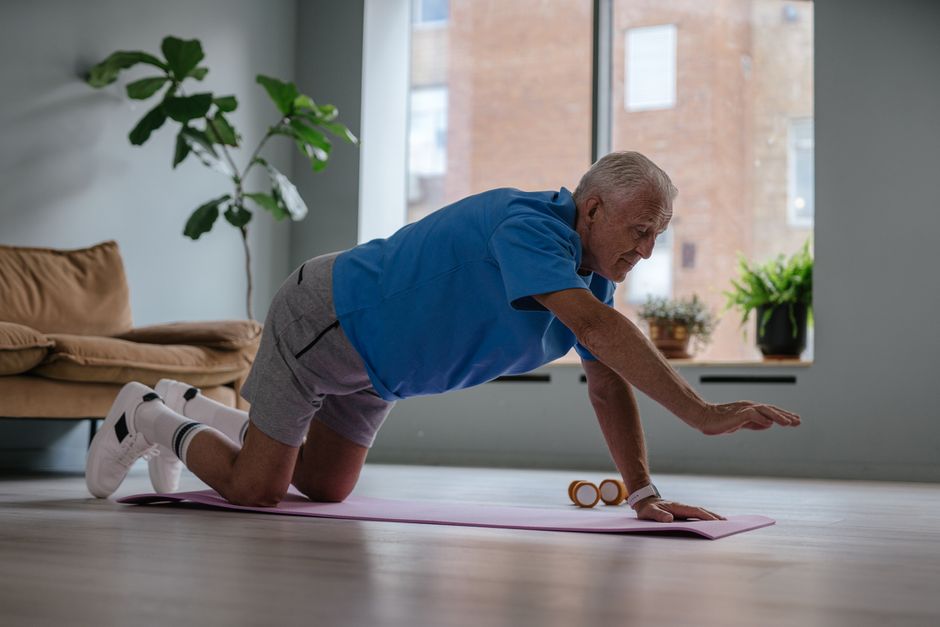
In a push-up or plank position, keep your elbows straight and let your chest sink slightly so your shoulder blades pinch together, then push the floor away so they spread apart. The motion comes from the shoulder blades, not the arms. This builds control of the blade against the rib cage.
Wall Slides
Stand with your back against a wall, arms bent at the elbows and the backs of your hands against the wall. Slide your arms upward while keeping contact with the wall, then lower slowly. This trains the shoulder blade to move in a controlled way along the rib cage and works the lower trapezius.
Prone Y and T Raises
Lie face down and raise your arms into a Y shape, then a T shape, squeezing the muscles between and below the shoulder blades. Keep the neck relaxed. These target the middle and lower trapezius and the rhomboids, which help pull the blade down and in.
Band Pull-Aparts
Hold a light resistance band in front of you with straight arms and pull it apart by squeezing your shoulder blades together. Control the return. This strengthens the muscles that draw the blade toward the spine.
For all of these, start with a few sets of controlled reps and progress gradually. Stop if pain increases. Quality of movement matters more than volume. A physical therapist can adjust the exercises and dosage to your situation.
Why Posture and Daily Habits Matter as Much as the Exercises
Exercise sessions are a small part of your day. How you hold your shoulders the rest of the time shapes whether the muscles you train actually get used. Rounded shoulders and a forward head position place the shoulder blade in a position where the stabilizing muscles are less effective.
Practical adjustments help. Set up your workstation so the screen is at eye level. Take breaks to move and reset your shoulder position. Avoid prolonged slumping. When you carry a bag, switch sides. These habits support the exercise program rather than replace it.
It’s also worth being honest about the evidence here. Posture correction is widely recommended in clinical practice, but the research linking specific postures to pain and winging is not as strong as the marketing around it suggests. The exercises that strengthen the stabilizer muscles have clearer support than claims that a certain sitting position alone will fix winging.
What Results Should You Expect and How Long Does It Take?
Timelines vary widely, and anyone promising a fixed number of weeks is guessing. Muscle strengthening generally takes several weeks of consistent training before you notice a change, and nerve recovery, when it happens, can take many months. The honest position is that progress depends on the cause, your age, your overall health, and how consistently you train.
For muscle-control causes, many people notice improved control and reduced symptoms over weeks to a few months of regular exercise. For nerve-related winging, recovery is slower and less predictable. Some cases improve with time and conservative care. Others need medical evaluation and, in some situations, other treatment. No exercise program guarantees a full fix, and it’s fair to say that some cases of winging do not fully resolve.
Track function rather than appearance. Can you raise your arm without the blade lifting? Does pushing a door feel steadier? Those functional signs matter more than a mirror check.
What Else Can Help Beyond Exercise?
Exercise is the main conservative approach for muscle-control winging, but it isn’t the only tool. Physical therapy often combines strengthening with manual techniques, movement retraining, and guidance on daily activity. A therapist can also identify whether other muscles are compensating and address them.
For nerve-related causes, treatment depends on the specific nerve and severity. Some clinicians recommend activity modification and monitored recovery. In selected cases, other interventions may be considered. These decisions belong with a medical professional who has examined you.
Bracing, taping, and electrical stimulation are sometimes used in clinical settings, but the evidence for these as standalone fixes is limited. They are not proven substitutes for strengthening and proper diagnosis.
What doesn’t have good support: passive treatments alone, such as massage or stretching, as a cure for winging. They may ease symptoms but won’t restore muscle control. The active work of strengthening and retraining is what the evidence supports most.
Frequently Asked Questions
Can exercises fix a winged scapula on their own?
Exercises can improve winging caused by muscle weakness or poor control, but they are not enough when a nerve injury is the cause. Get an assessment first to know which situation applies to you.
How long does it take to fix a winged scapula with exercise?
There is no fixed timeline, and it depends heavily on the cause. Muscle-control cases often improve over weeks to a few months, while nerve-related cases can take much longer and may not fully resolve.
What is the best exercise for a winged scapula?
There is no single best exercise, but serratus anterior work such as the wall push-up plus and scapular push-up is commonly used. The right choice depends on which muscles are weak in your case.
Can a winged scapula be serious?
It can be, especially when it appears suddenly, follows an injury, or comes with weakness or numbness. Those signs suggest a nerve problem that needs medical evaluation rather than exercise alone.
