
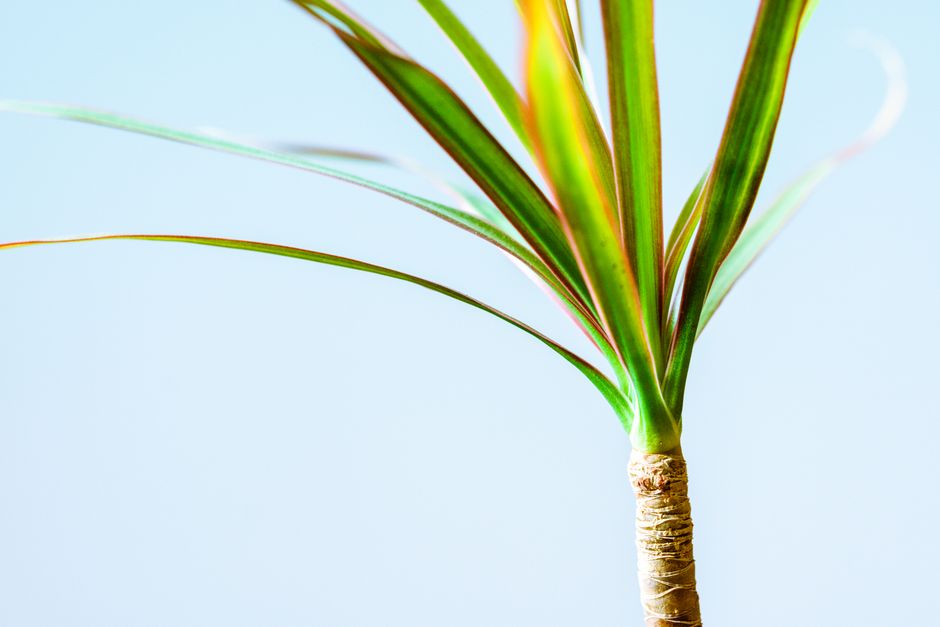
A dracaena that has grown tall and bare with leaves only at the top is a common problem. This happens when the plant loses its lower leaves over time, leaving a long, naked stem. The fix is straightforward: you can prune the cane back to a desirable height, and the plant will push out new growth from the cut point. This process, along with adjusting light and watering habits, will help you restore a fuller, more compact plant.
Why Do Dracaena Plants Become Leggy?
Legginess in dracaena is a natural part of the plant’s growth pattern, but it is often accelerated by the conditions in your home. As the plant matures, the lower leaves naturally age and drop off. This leaves the cane exposed.
Insufficient light is the most common cause. When a dracaena does not receive enough bright, indirect light, it stretches toward the nearest light source. This produces long internodes—the spaces between leaves on the stem—creating a sparse, leggy appearance. The plant is essentially reaching for more energy.
Inconsistent watering can also play a role. While dracaena are forgiving, periods of drought stress can cause leaves to yellow and drop prematurely. If you allow the soil to dry out completely for too long, the plant may shed lower leaves to conserve moisture, leaving the stem bare.
How To Fix A Leggy Dracaena And Encourage Fuller Growth
The most reliable way to fix a leggy dracaena is to prune it. This is not a drastic measure; it is the plant’s natural response to damage. When you cut the cane, the plant breaks dormancy at the nearest node—the small bumps or rings on the stem—and produces new shoots.
To prune, use a clean, sharp knife or pair of pruning shears. Make a straight cut across the cane at your desired height. If you want a shorter, bushier plant, cut it back to about half its current height or lower. The bare stump will remain in the pot and will typically sprout new growth within two to four weeks, depending on the season and light conditions.
Do not throw away the cutting. The top portion you removed can be propagated to create a new plant. Remove the lower leaves from the cutting, leaving a cluster at the top. Place the bare stem in a jar of water or directly into moist potting soil. Roots will form from the nodes that were below the soil or water line. This gives you a second, full plant without any extra cost.
What Kind Of Light Does A Dracaena Need?
Light is the primary factor in preventing regrowth from becoming leggy again. Dracaena prefer bright, indirect light. A spot near an east-facing window or a few feet away from a south or west-facing window is ideal. The goal is to provide plenty of light without exposing the leaves to harsh, direct afternoon sun, which can scorch them.
If you only have low-light areas, the plant will survive, but it will not grow densely. In low light, growth slows dramatically, and the plant is more likely to stretch. If you cannot provide more natural light, consider a full-spectrum grow light. These are effective for maintaining compact growth during darker months or in rooms without adequate windows.
Rotate the pot a quarter turn each time you water. This ensures that all sides of the plant receive equal light. Without rotation, the plant will lean heavily toward the light source, creating a lopsided silhouette.





How Should You Water A Dracaena To Keep It Full?
Watering mistakes are a leading cause of leaf drop in dracaena. These plants prefer to dry out slightly between waterings. The top one to two inches of soil should feel dry to the touch before you water again. When you do water, water thoroughly until it runs out of the drainage holes, and then discard any excess water from the saucer.
Overwatering is a more serious risk than underwatering. Soggy soil deprives the roots of oxygen and can lead to root rot, which causes leaves to yellow and fall off rapidly. If the soil stays wet for long periods, the root system is compromised, and the plant cannot support its foliage.
Dracaena are also sensitive to fluoride and certain salts found in tap water. This sensitivity can cause leaf tips to turn brown or leaves to develop necrotic spots. If you notice this, switch to filtered water, distilled water, or rainwater. This is a simple change that can prevent unnecessary leaf loss and keep the plant looking healthy.
Should You Use Fertilizer On A Leggy Dracaena?
Fertilizer is not the solution for legginess. A plant that is stretching for light will not grow fuller because you feed it more. In fact, fertilizing a stressed plant in low light can burn the roots, as the plant is not actively growing and cannot use the nutrients.
If you have corrected the light situation and pruned the plant, a light feeding during the growing season—spring through summer—can support new growth. Use a balanced, water-soluble houseplant fertilizer diluted to half strength. Apply it once a month during this period. Do not fertilize in the fall and winter when growth naturally slows.
Skip the fertilizer entirely if you have just repotted the plant. Fresh potting soil contains enough nutrients to sustain the plant for several months. Adding fertilizer on top of fresh soil increases the risk of salt buildup, which can damage the roots.
When Is The Best Time To Prune A Dracaena?
Spring is the ideal time to prune a leggy dracaena. The plant is entering its active growth phase, and daylight hours are increasing. Pruning at this time allows the plant to recover quickly and push out new shoots with vigor.
You can prune at other times of the year, but recovery will be slower. If you prune in the middle of winter when light is low, the plant may take much longer to sprout. In some cases, it may wait until spring to break dormancy. This is not harmful, but it requires patience.
Avoid pruning if the plant is already stressed from severe underwatering, pest infestation, or a recent move. The plant needs energy to recover from pruning. If it is already struggling, wait until it shows signs of new growth before making cuts.
How Long Does It Take For New Growth To Appear?
After pruning, new shoots typically appear within two to four weeks under good conditions. These shoots emerge from the top nodes just below the cut. You may see one or several new branches form at the cut site. This is what creates the fuller, bushier look.
The number of new shoots varies. Sometimes only one shoot appears. Other times, two or three will emerge. If you want a denser plant, you can prune one of the new shoots again once it has grown several inches. This encourages further branching, though it does extend the time before the plant looks full again.
Patience is required. The new growth will initially look like small green nubs. They will elongate into leaves over several weeks. Full recovery to a dense, attractive plant can take a few months, but the structural improvement from the pruning is immediate.
Can You Prevent Legginess In A Young Dracaena?
Prevention is easier than correction. For a young dracaena, consistent bright, indirect light is the most important factor. A plant that receives adequate light from the start will grow compactly with leaves spaced closely along the stem.
Do not wait until the plant is severely leggy to act. If you notice the leaf spacing increasing or the lower leaves dropping faster than new ones are forming, adjust the light immediately. Move it closer to a window or add a grow light before the problem worsens.
Regular, light pruning of a young plant can also encourage bushiness. Pinching off the growing tip of a young dracaena will force it to branch from lower nodes. This early intervention creates a multi-stemmed plant that is naturally fuller and less likely to become top-heavy as it matures.
Frequently Asked Questions
Can I cut a dracaena stem all the way to the soil?
Yes, you can cut a dracaena cane down to just a few inches above the soil line. The stump will usually sprout new growth from the nodes, giving you a fresh start.
Will a leggy dracaena grow new leaves on the bare stem?
No, dracaena do not regrow leaves on the old, bare parts of the stem. New leaves only emerge from the top growth point or from new shoots that appear after pruning.
Does a dracaena need direct sunlight to grow fuller?
No, direct sunlight can scorch the leaves. Dracaena need bright, indirect light to grow compactly and avoid becoming leggy.
How often should I rotate my dracaena?
Rotate the pot a quarter turn every time you water. This ensures even light exposure on all sides and prevents the plant from leaning toward the window.
