
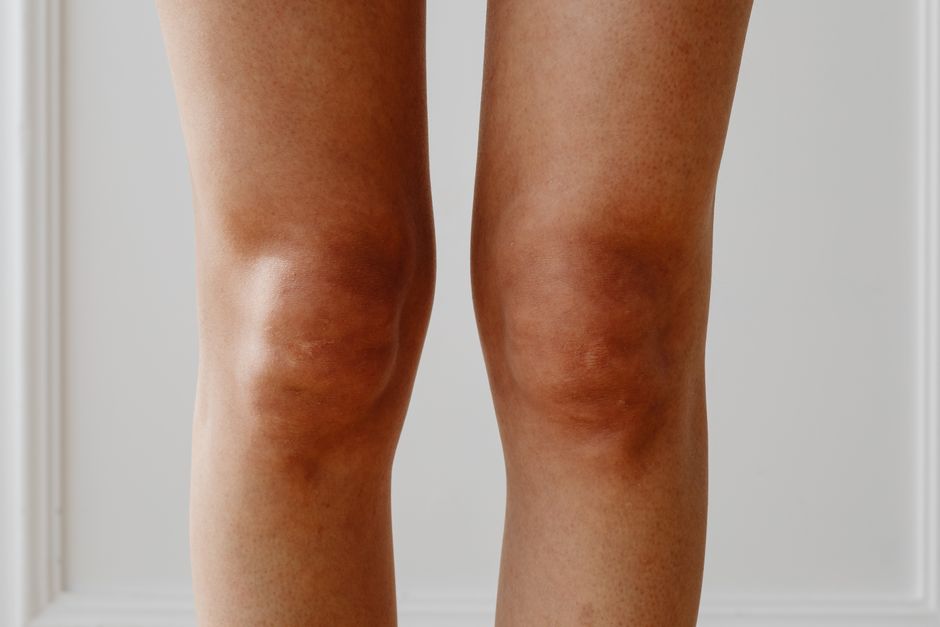
A hyperextended knee happens when the joint bends backward beyond its normal straight position. The fix depends on how badly the tissues were stretched or torn: mild cases usually recover with rest, ice, and a gradual return to activity, while severe cases involving ligament or cartilage damage may need a brace, physical therapy, or surgery. Preventing reinjury means rebuilding the strength and control around the knee before you go back to full activity — not just waiting for the pain to fade.
What Actually Happens Inside a Hyperextended Knee?
The knee is a hinge joint designed to straighten to about zero degrees — a straight line from hip to ankle. It is not built to bend backward. When forced past that limit, something has to give.
The structures most commonly involved sit at the back and center of the joint. The posterior cruciate ligament (PCL) runs through the middle of the knee and stops the shinbone from sliding too far backward. It is the ligament most often injured in hyperextension. The posterior capsule — the tough tissue at the back of the joint — can also stretch or tear. In more forceful injuries, the anterior cruciate ligament (ACL) and the menisci (the cartilage pads between the bones) can be damaged too.
Doctors grade these injuries on a three-level scale. Grade 1 means the ligament is stretched but still intact. Grade 2 means it is partially torn. Grade 3 means a complete tear. That grade drives everything about treatment and timeline.
One detail people miss: the direction of the force matters. A knee that hyperextends from a direct blow to the front of the shin behaves differently from one that hyperextends when a player lands awkwardly. That is why a proper exam matters more than the story of how it happened.
What Are the Symptoms of a Hyperextended Knee?
Most people feel a sudden sharp pain at the moment of injury, often with a sensation that the knee “gave” or bent the wrong way. Swelling usually follows within hours.
Common signs include:
- Pain behind the knee or deep in the joint
- Swelling that builds over the first day
- A feeling of instability, like the knee might buckle
- Difficulty bearing weight or fully straightening the leg
- Bruising, which may appear a day or two later
Mild hyperextensions often settle within a few days. If the knee stays swollen, feels unstable, or cannot bear weight, that points toward a more significant injury and needs a medical evaluation. A locked knee — where you cannot fully bend or straighten it — is a red flag for a meniscus tear or a piece of cartilage blocking the joint.
How To Fix A Hyperextended Knee And Prevent Reinjury?
Treatment follows the severity of the injury, not a single universal protocol. The early phase is about controlling swelling and protecting the joint. The later phase is about rebuilding strength and control so the knee does not hyperextend again.
Immediate Care
For the first 48 to 72 hours after a mild injury, the standard approach is protection, rest, ice, compression, and elevation. Ice for about 15 to 20 minutes at a time, several times a day, with a cloth between the ice and skin. Wrap the knee with an elastic bandage for compression, but not so tight that it causes numbness or tingling. Elevate the leg above heart level when possible.
Avoid the temptation to “test” the knee by forcing it straight or pushing through pain. That can turn a stretch into a tear.
Bracing and Support
For moderate injuries, a doctor may recommend a hinged knee brace that allows bending but blocks hyperextension. This protects the healing ligament while letting you move. The length of time in a brace depends on the grade of injury and is set by a clinician, not a fixed number of days.
Physical Therapy
This is where recovery is actually built. Physical therapy for a hyperextended knee focuses on three things: restoring range of motion, rebuilding the muscles that support the knee, and retraining the way the leg moves during activity.
The quadriceps — the muscles on the front of the thigh — matter most here. They act as a natural brake against hyperextension. Strengthening them, along with the hamstrings and glutes, gives the knee active protection that a brace cannot provide once it comes off.
Balance and proprioception training is often overlooked but matters. Proprioception is your body’s sense of where the joint is in space. After an injury, that sense is often impaired, which raises the risk of another hyperextension. Single-leg balance work and controlled landing drills help restore it.
Surgery
Surgery is reserved for severe injuries — complete ligament tears, significant cartilage damage, or a knee that remains unstable after a course of physical therapy. Not every torn ligament needs an operation. Some PCL injuries, in particular, are managed without surgery, though the decision depends on the specific damage and the person’s activity level. This is a judgment call made by an orthopedic specialist, not something to self-assess.




How Long Does a Hyperextended Knee Take To Heal?
Recovery time tracks closely with injury grade, and it is honest to say the range is wide.
A mild hyperextension with no ligament damage often improves within one to two weeks. A partial ligament tear typically takes several weeks to a few months to return to normal activity. A complete tear, especially one requiring surgery, can take six months or longer to fully recover — and full recovery means restored strength and function, not just a knee that no longer hurts.
Two things reliably slow healing: returning to activity too soon, and skipping the strengthening phase because the pain is gone. Pain fading is not the same as tissue healing.
How Do You Prevent Reinjury?
The single biggest risk factor for a second hyperextension is a first one that was never fully rehabilitated. The ligament may heal, but the strength, control, and movement patterns around the knee often do not return on their own.
Prevention rests on a few well-supported principles:
- Complete the rehab. Finish the full course of physical therapy, including the strengthening and balance work, even after pain stops.
- Strengthen the quadriceps and hamstrings. Strong muscles around the knee reduce the load on the ligaments.
- Train landing and cutting mechanics. Learning to land with a soft, bent knee instead of a straight one reduces the force that drives hyperextension.
- Warm up before activity. Cold, stiff muscles respond less well to sudden forces.
- Use proper technique. In sports, coaching on safe movement patterns matters more than any brace.
For people in high-risk sports — those involving jumping, pivoting, or contact — neuromuscular training programs have been studied for injury prevention. The evidence is strongest for reducing knee injuries overall in athletes who train consistently, though results vary by sport and program.
When Should You See a Doctor?
See a doctor if you cannot bear weight, if the knee feels unstable or gives way, if swelling is severe or does not improve, or if you cannot fully straighten or bend the knee. A locked or catching knee needs prompt evaluation.
Imaging — an X-ray to check for fractures and an MRI to assess ligaments and cartilage — is often used when the injury appears more than mild. A physical exam alone can miss some injuries, so imaging is a common next step when the picture is unclear.
Do not try to diagnose the severity yourself. The difference between a stretch and a tear is not something you can feel reliably, and the treatment paths are different.
Frequently Asked Questions
Can a hyperextended knee heal on its own?
A mild hyperextension with no ligament tear often heals with rest, ice, and gradual return to activity. If there is a partial or complete tear, it usually needs bracing, physical therapy, or in some cases surgery.
How long should I stay off a hyperextended knee?
There is no single number — it depends on injury grade. Mild cases may allow a return to light activity within days, while ligament injuries can take weeks to months. Follow the guidance of a clinician rather than a fixed timeline.
Should I wear a knee brace after hyperextending my knee?
A hinged brace that blocks hyperextension is often used for moderate injuries to protect the healing ligament. How long to wear it is a clinical decision based on the specific injury.
What exercises help prevent a hyperextended knee from happening again?
Strengthening the quadriceps, hamstrings, and glutes, plus balance and landing-control training, are the core of prevention. These should be guided by a physical therapist after an injury.
