
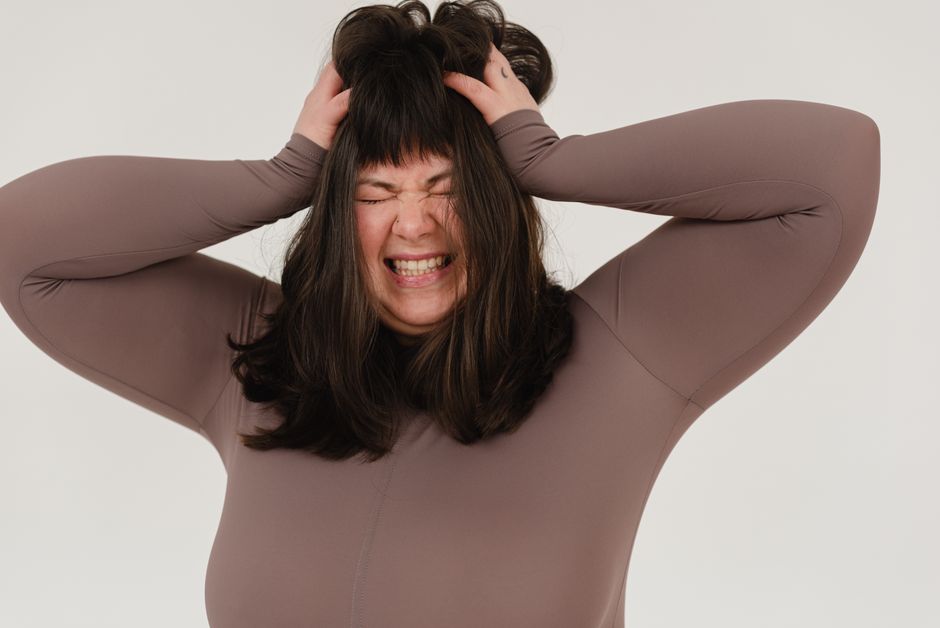
A dysregulated nervous system is not a disease you cure. It is a pattern of stress responses that has become stuck, and it improves when you change the conditions that keep it stuck. The most reliable approach combines three things: reducing ongoing stressors, retraining your body’s stress response through consistent daily practices, and getting professional help when self-care is not enough. No single technique fixes it. Consistency over weeks and months is what changes the underlying biology.
What Does “Dysregulated Nervous System” Actually Mean?
The term is not a formal medical diagnosis. It describes a state where the autonomic nervous system — the part that controls heart rate, digestion, breathing, and the stress response without conscious effort — is not shifting between activation and calm the way it should.
Your autonomic nervous system has two main branches. The sympathetic branch mobilizes you for action: it raises heart rate, sharpens focus, and releases stress hormones. The parasympathetic branch, mainly through the vagus nerve, slows things down and supports recovery, digestion, and rest. In a healthy system, these two branches trade off smoothly throughout the day.
When people say their nervous system is dysregulated, they usually mean one of two patterns. Either the sympathetic branch stays switched on too long, producing chronic anxiety, a racing heart, poor sleep, and a sense of being constantly on edge. Or the system becomes depleted and flattened, producing fatigue, emotional numbness, low motivation, and a feeling of disconnection.
This is not a fringe concept. Chronic stress activation has measurable effects on heart rate variability, cortisol patterns, blood pressure, and inflammatory markers. What is less clear is how much of any individual’s symptoms come from autonomic dysregulation versus other causes — poor sleep, thyroid problems, anemia, anxiety disorders, depression, or medication side effects can all produce overlapping symptoms.
That overlap matters. Before assuming your nervous system is the problem, it is worth ruling out conditions that mimic it.
What Causes the Nervous System to Become Dysregulated?
Dysregulation usually develops from prolonged or repeated stress that never fully resolves. The system is designed to activate and then return to baseline. When stress is constant, the return never completes.
Common drivers include:
- Ongoing life stress such as financial pressure, caregiving, or a demanding job
- Trauma, especially experiences that happened repeatedly or in childhood
- Chronic sleep deprivation, which impairs the body’s ability to reset stress hormones
- Persistent loneliness or relationship conflict
- Medical conditions that keep the body in a stressed state, including chronic pain and some hormonal disorders
- Stimulant use, including heavy caffeine intake
- Alcohol, which disrupts sleep architecture and stress hormone regulation even when it feels relaxing
The mechanism is fairly well understood. The hypothalamus-pituitary-adrenal axis, often called the HPA axis, controls cortisol release. Under chronic stress, this system can become either overactive or blunted. Both patterns show up in research on people with chronic stress and trauma.
What is not well understood is why some people develop these patterns after difficult experiences and others do not. Genetics, early life environment, social support, and prior coping all appear to play a role. No single factor explains it.
How To Fix A Dysregulated Nervous System For Good
There is no permanent fix that works like flipping a switch. Lasting change comes from consistently giving your nervous system the signals it needs to return to baseline — and removing the signals that keep it activated.
The most evidence-supported approaches fall into a few categories.
Slow, controlled breathing
Breathing at a slow, steady pace activates the parasympathetic branch. This is one of the better-studied methods for influencing the autonomic system voluntarily. Research on slow breathing and heart rate variability shows measurable shifts toward parasympathetic activity during practice.
The general approach used in most studies is breathing at roughly six breaths per minute — about a four-second inhale and a six-second exhale, or similar pacing. Slower and deeper than normal, but not strained. Even a few minutes a day is a reasonable starting point, and longer or more frequent practice appears to produce larger effects.
What the research does not show is that breathing exercises alone resolve long-standing dysregulation. They are one tool among several.
Regular physical activity
Exercise has consistent effects on stress hormone regulation, mood, and sleep quality. Both aerobic activity and resistance training show benefits in studies of stress and anxiety. The effect appears to come from multiple pathways, not one.
The catch is that intense exercise can itself be a stressor. For someone already in a depleted state, very hard training may make things worse rather than better. Moderate, regular activity tends to be the safer starting point.
Sleep
Sleep is when the stress response resets. Chronic short sleep keeps cortisol patterns abnormal and impairs emotional regulation. Addressing sleep is not optional if you want the rest of these strategies to work.
Established sleep hygiene basics — consistent wake time, dark and cool room, limiting screens and caffeine close to bedtime — are widely recommended. If sleep problems persist despite good habits, that is worth discussing with a clinician. Sleep apnea and other sleep disorders are common and treatable, and they will not resolve with breathing exercises.
Reducing ongoing stressors
This is the part people skip. You cannot out-breathe a life that keeps you in threat mode. If your job, relationship, or living situation is a constant source of stress, no amount of cold showers or meditation will fully compensate.
Sometimes the fix is structural: changing jobs, setting boundaries, getting help with caregiving. This is not a wellness tip. It is often the actual intervention.
Social connection
Human connection has measurable effects on stress physiology. Loneliness is associated with higher cortisol and worse cardiovascular outcomes in large studies. Regular contact with people you trust is not a soft recommendation — it is a biological input.
Professional support
Therapy approaches that specifically address trauma and chronic stress — including cognitive behavioral therapy, and in some cases somatic or trauma-focused therapies — have evidence for improving stress-related symptoms. Which approach fits depends on the person and the history.
Some clinicians also use medications such as beta-blockers or SSRIs for specific symptoms. Whether these help depends on the underlying issue, and they are not a fix for dysregulation itself.





Which Techniques Have the Strongest Evidence?
Not all nervous system remedies are equal. Some have solid research behind them. Others are popular but thinly supported.
Slow breathing, exercise, sleep improvement, and psychotherapy for trauma have the strongest evidence base. Heart rate variability biofeedback, which uses a device to train breathing and awareness of your own physiology, also has research support for stress and anxiety, though effect sizes vary across studies.
Cold exposure, grounding techniques, and vagus nerve stimulation devices are widely discussed. The evidence here is more limited. Cold water immersion does produce a strong sympathetic response followed by parasympathetic rebound, but whether regular cold exposure meaningfully improves long-term regulation is not established. Some studies suggest benefits for mood; results vary.
Polyvagal theory, which is often cited in wellness content, is a framework rather than a proven mechanism. Parts of it are debated among researchers. It has been useful clinically for some therapists, but it should not be presented as settled science.
Supplements marketed for “nervous system support” generally lack strong evidence. No large human trials have confirmed that most of them resolve dysregulation.
How Long Does It Take to See Real Change?
Some effects are immediate. A few minutes of slow breathing can shift how you feel in the moment. That is real, but it is not the same as fixing the underlying pattern.
Durable change typically takes weeks to months of consistent practice. This is not a precise timeline, and it varies widely. People with recent, situational stress often improve faster than those with long-standing trauma or chronic illness.
The pattern that seems to matter most is consistency. Small daily practices tend to outperform occasional intense efforts. This is because the nervous system responds to repeated signals over time, not single events.
Progress is also not linear. Setbacks are normal, especially during periods of new stress. The goal is not to never get activated — it is to return to baseline more quickly and reliably.
What Makes Recovery Harder Than It Should Be?
Several things slow progress, and they are worth naming directly.
Treating symptoms in isolation. If you are doing breathing exercises but sleeping five hours a night and drinking heavily, the practices are fighting an uphill battle.
Expecting a single technique to work. The evidence supports a combination of approaches, not one magic method.
Ignoring medical causes. Thyroid disorders, anemia, sleep apnea, and anxiety disorders can all produce symptoms that look like nervous system dysregulation. If your symptoms are severe, sudden, or not improving with basic self-care, that is a reason to see a doctor.
Pushing through when you need rest. For someone in a depleted state, more stimulation — intense exercise, cold plunges, high-dose supplements — can worsen things. The body sometimes needs less input, not more.
Frequently Asked Questions
Can you actually reset your nervous system for good?
You cannot reset it permanently in the way a computer reboots, but you can change how it responds to stress over time. Consistent practices that reduce ongoing stress and retrain the stress response can produce lasting improvement, though setbacks during new stressors are normal.
How long does it take to regulate your nervous system?
Some techniques produce immediate calming effects, but durable change usually takes weeks to months of consistent practice. The timeline varies widely depending on the cause, how long the pattern has been present, and whether other factors like sleep or ongoing stress are addressed.
What is the fastest way to calm a dysregulated nervous system?
Slow, controlled breathing at around six breaths per minute is one of the most reliable ways to shift toward parasympathetic activity in the moment. It works quickly, but it manages symptoms rather than resolving the underlying pattern on its own.
Do I need a doctor or therapist for nervous system dysregulation?
If symptoms are severe, sudden, or not improving with basic self-care, seeing a clinician is worth it. Medical conditions like thyroid problems and sleep apnea can mimic dysregulation, and trauma-focused therapy has evidence for helping chronic stress patterns that self-care alone does not resolve.
