
A crossbite happens when your upper teeth sit inside your lower teeth instead of outside them when you bite down. It can affect just one tooth or a whole section of your jaw, and it can develop in childhood or persist into adulthood. Fixing it usually involves orthodontic treatment, and sometimes jaw surgery when the underlying cause is skeletal. The right approach depends on your age, the type of crossbite, and whether the cause is dental or skeletal.
What Is a Crossbite and How Is It Different From an Underbite?
A crossbite is a misalignment where one or more upper teeth bite down inside the lower teeth. An underbite is a different condition where the entire lower jaw protrudes forward, so all the lower front teeth sit ahead of the upper front teeth.
The distinction matters because the treatments differ. A crossbite is often a localized problem involving specific teeth. An underbite typically involves the position of the whole jaw. Some people have both at the same time.
There are two main types of crossbite:
- Posterior crossbite — affects the back teeth. The upper molars or premolars sit inside the lower ones when you bite.
- Anterior crossbite — affects the front teeth. One or more upper front teeth sit behind the lower front teeth.
There is also a distinction between dental and skeletal crossbites. A dental crossbite means the teeth are tilted in the wrong direction but the jaws are normally positioned. A skeletal crossbite means the upper jaw itself is too narrow or positioned incorrectly. This difference determines whether orthodontics alone can fix it or whether surgery may be needed.
What Causes a Crossbite?
Crossbites develop from a mix of genetic and environmental factors. The most common causes include:
- Narrow upper jaw — the maxilla (upper jaw) doesn’t grow wide enough to fit outside the lower teeth
- Genetics — jaw size and shape run in families
- Prolonged thumb sucking or pacifier use — can push upper teeth inward during childhood
- Mouth breathing — chronic mouth breathing in children may affect jaw development, though the evidence for this is not as strong as once thought
- Premature loss of baby teeth — can cause permanent teeth to erupt in wrong positions
- Delayed eruption or crowding — teeth may tilt inward if there isn’t enough space
Some crossbites are present from early childhood. Others develop later as permanent teeth come in. In adults, a crossbite that was never treated in childhood doesn’t correct itself — the jaw has finished growing, so the alignment stays as it is unless treated.
How To Fix A Crossbite: Treatment Options Explained
Treatment depends on the type of crossbite, the age of the patient, and whether the cause is dental or skeletal. Here are the main options.
Palatal Expander
A palatal expander is the most common treatment for posterior crossbites in children and teenagers. It’s a custom device that fits across the roof of the mouth and applies gentle, steady pressure to widen the upper jaw.
The expander works by separating the midpalatal suture — the seam between the two halves of the upper jaw. In growing children, this suture hasn’t fused yet, so it can be widened. The device is adjusted regularly, usually with a small key, over several weeks or months. After expansion, the expander stays in place for a period to allow bone to fill in and stabilize the new width.
Palatal expansion is most effective before puberty, while the jaw is still growing. In adults, the suture has fused, so nonsurgical expansion is much more limited. Some adults can achieve modest expansion with specific devices, but results vary and the evidence for adult nonsurgical expansion is mixed.
Braces
Braces can correct dental crossbites — where the teeth are tilted the wrong way but the jaw itself is fine. They move individual teeth into proper position. Braces are often used alongside a palatal expander or after expansion is complete.
For anterior crossbites, braces may be combined with elastics or other appliances to tip the upper front teeth forward and the lower front teeth back into correct alignment.
Clear Aligners
Clear aligners can treat some dental crossbites, especially mild anterior ones. They work similarly to braces by applying controlled force to move teeth. However, aligners are generally not effective for skeletal crossbites or for widening a narrow upper jaw. They can’t expand bone.
Whether aligners are suitable depends on the specific case. An orthodontist can assess whether aligners can achieve the needed movement or whether braces would be more predictable.
Orthognathic Surgery
When a crossbite is caused by a skeletal problem — the upper jaw is genuinely too narrow or positioned incorrectly — and the patient has finished growing, surgery may be the most effective option. Orthognathic surgery repositions the jaw bones. It’s usually combined with orthodontic treatment before and after surgery.
This is a significant procedure. It’s typically reserved for adults with skeletal crossbites that can’t be corrected with orthodontics alone, or for cases where the misalignment causes functional problems like difficulty chewing or speaking.
Tooth Extraction or Crowding Correction
Sometimes a crossbite is caused by crowding — there isn’t enough room for teeth to sit in the right position. In these cases, removing one or more teeth may create space for proper alignment. This is more common when the crossbite is limited to specific teeth.





Can a Crossbite Fix Itself?
No. A crossbite does not correct on its own. Unlike some mild orthodontic issues that may improve as a child grows, a crossbite is a structural misalignment that persists without treatment.
In rare cases, a very mild anterior crossbite in a young child may improve as the jaw grows, but this is not predictable and should be evaluated by a dentist or orthodontist. Waiting to see if it resolves is not recommended.
Why Treating a Crossbite Matters
An untreated crossbite can cause problems beyond appearance. These include:
- Uneven wear on tooth enamel — teeth that don’t meet correctly wear down faster in certain spots
- Jaw pain and TMJ issues — misalignment can put stress on the jaw joint
- Difficulty chewing — especially with posterior crossbites that affect the back teeth
- Speech problems — some crossbites affect how the tongue and teeth interact during speech
- Gum recession — teeth that bite outside their normal position can put pressure on the gums
- Asymmetrical jaw growth — in children, an untreated crossbite can affect how the jaw develops
The evidence for some of these consequences is stronger than for others. The link between crossbite and TMJ disorders, for example, is debated. Some studies show an association, but it’s not clear that crossbite causes TMJ problems in all cases. The relationship is complex.
What Age Should a Crossbite Be Treated?
Earlier is generally better, especially for skeletal crossbites. The American Association of Orthodontists recommends that children have their first orthodontic evaluation by age 7. At this age, the jaw is still growing, and a palatal expander can often correct a posterior crossbite without surgery.
For anterior crossbites, treatment may start even earlier if the condition is detected. Some pediatric dentists recommend addressing it as soon as it’s noticed, especially if it’s affecting the eruption of other teeth.
Adults can still be treated. The approach is different because the jaw has stopped growing. Dental crossbites can often be corrected with braces or aligners. Skeletal crossbites in adults may require surgery for the best result.
How Long Does Crossbite Treatment Take?
Treatment time varies widely depending on the type and severity of the crossbite, the patient’s age, and the method used.
- Palatal expansion in children — active expansion may take several weeks to a few months, followed by a retention period
- Braces for dental crossbite — often several months to a year or more, depending on complexity
- Aligners — similar to braces, though treatment time can vary
- Surgery plus orthodontics — often a year or more of orthodontic preparation, surgery, then additional orthodontic adjustment
These are general ranges. An orthodontist can give a more specific estimate after examining your bite and taking imaging.
What Happens If You Don’t Treat a Crossbite?
An untreated crossbite usually doesn’t improve and may worsen over time. The long-term effects depend on the type and severity.
Some people with mild crossbites have no symptoms and may never need treatment. Others develop jaw pain, uneven tooth wear, or difficulty chewing. In children, an untreated crossbite can affect jaw growth and lead to more complex problems later.
If you’re an adult with a crossbite that doesn’t cause pain or functional problems, treatment may be optional. But it’s worth having an orthodontist evaluate it to understand your specific situation and whether it’s likely to cause problems down the road.
How Is a Crossbite Diagnosed?
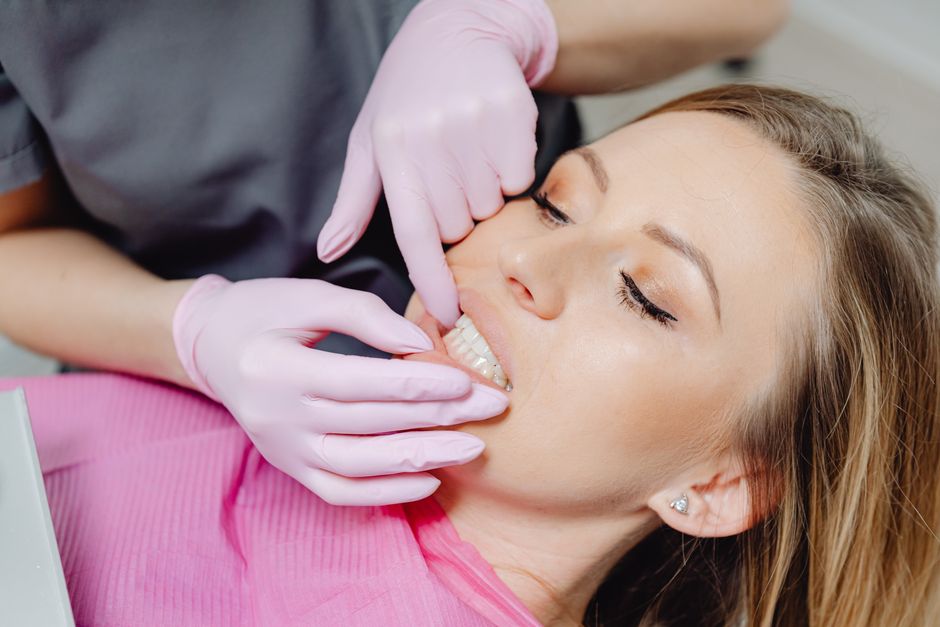
A dentist or orthodontist can usually identify a crossbite during a routine exam. They’ll ask you to bite down and look at how your upper and lower teeth meet. They may also take X-rays or dental impressions to see the underlying bone structure.
For skeletal crossbites, imaging like a cone beam CT scan or panoramic X-ray can show the position of the jaw bones. This helps determine whether orthodontics alone will work or whether surgery is needed.
Frequently Asked Questions
Can a crossbite be fixed without braces?
Sometimes. Mild dental crossbites may be corrected with clear aligners or a palatal expander in children. Skeletal crossbites in adults often require surgery, which is a more involved treatment than braces alone.
Is crossbite correction painful?
Most people feel pressure or soreness when braces or an expander are adjusted, but this usually fades within a few days. The procedure itself is not typically painful.
How much does crossbite treatment cost?
Costs vary widely depending on the treatment and where you live. Braces or aligners may cost several thousand dollars, while surgery is significantly more expensive. Dental insurance may cover part of the cost if the crossbite is considered medically necessary.
Can I fix a crossbite at home?
No. Crossbite correction requires professional evaluation and treatment. Home remedies or over-the-counter devices are not effective and may cause harm.
