
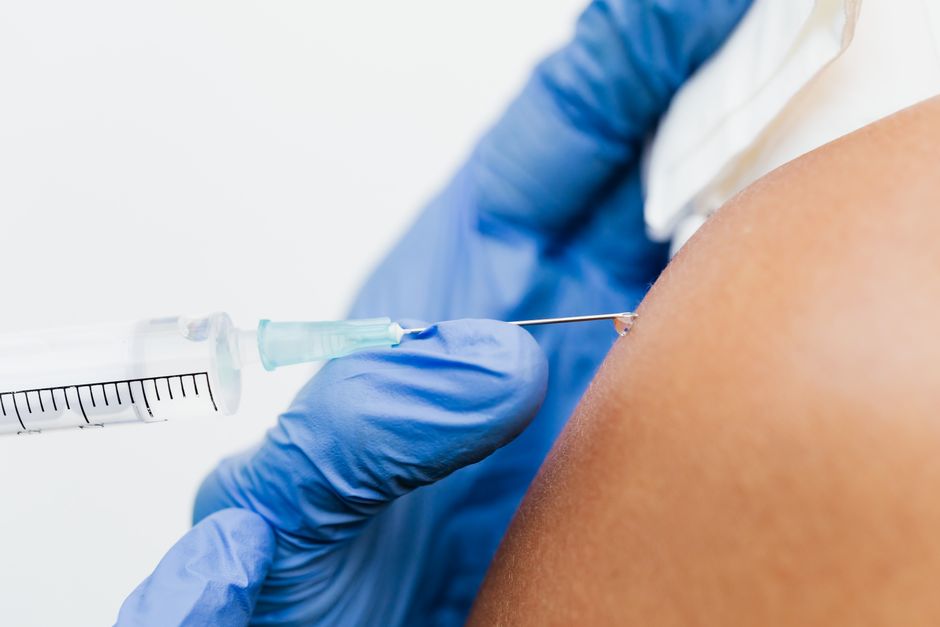
The ventrogluteal site is a safe, common place for intramuscular injections. It sits on the side of your hip, over a thick muscle called the gluteus medius. Finding it correctly matters because this spot avoids major nerves and blood vessels. Here is the direct method: place the heel of your hand on the greater trochanter (the bony bump on the outside of your upper thigh). Point your thumb toward the groin and your fingers toward the front of the head. Your index finger should rest on the anterior superior iliac spine (ASIS), a bony landmark at the front of your hip. The injection goes into the V-shaped area between your index finger and middle finger.
Why Is the Ventrogluteal Site Preferred?
Clinicians choose the ventrogluteal site for several clear reasons. It has a thick layer of muscle, which absorbs medications well. The site is also far from the sciatic nerve and major blood vessels, lowering the risk of nerve damage or accidental injection into a vein.
Compared to the dorsogluteal site (the upper outer buttock), the ventrogluteal site is safer. The dorsogluteal area sits close to the sciatic nerve. Accidental nerve injury there can cause pain, numbness, or weakness in the leg. For this reason, many healthcare providers now prefer the ventrogluteal site for adults.
Another advantage is patient comfort. Injections here tend to be less painful than in the deltoid muscle of the arm. The muscle is deep and less sensitive. This makes it a practical choice for repeated injections, such as those needed for certain hormone therapies or vaccinations.
What Are the Landmarks for the Ventrogluteal Site?
Finding the ventrogluteal site requires two bony landmarks. The first is the greater trochanter. This is the large, hard bump you can feel on the outside of your upper thigh, just below the hip. The second is the anterior superior iliac spine (ASIS). This is the front edge of your pelvic bone, which you can feel at the front of your hip.
To locate the ASIS, place your hand on the front of your hip. Slide your fingers toward the middle of your body until you feel a firm, bony edge. That is the ASIS. In many people, this point sits near the crease where the leg meets the torso.
Once you have both landmarks, the injection site is the thick muscle mass between them. This muscle is the gluteus medius. It is deep and well-developed in most adults, making it an ideal target for intramuscular injections.
How To Find The Ventrogluteal Injection Site Step by Step
Follow these steps to locate the ventrogluteal site accurately. This method works for both self-injection and when a clinician is giving the injection.
- Have the person lie on their side with the injection side facing up. The knee should be slightly bent.
- Locate the greater trochanter. Press firmly on the outside of the upper thigh until you feel the hard, bony prominence.
- Place the heel of your hand on the greater trochanter. Your palm should face the person’s head.
- Point your thumb toward the person’s groin. Your fingers should point toward the front of their head.
- Extend your index finger to touch the ASIS. Your middle finger should extend toward the iliac crest (the top edge of the pelvic bone).
- The injection site is the V-shaped area between your index and middle fingers.
- Clean the skin with an alcohol wipe. Insert the needle at a 90-degree angle to the skin.
This hand placement works for most adults. For larger or smaller patients, adjust the position slightly so the V-shaped area still sits over the gluteus medius muscle.





What Mistakes Should You Avoid?
Several common errors can lead to an incorrect injection. The most frequent mistake is placing the injection too far back or too low. This can hit the sciatic nerve or miss the muscle entirely.
Another error is using the wrong hand. If you are injecting on the person’s right side, use your right hand to find the landmarks. If you are injecting on the left side, use your left hand. This keeps your fingers pointing in the correct direction.
Do not inject into the iliac crest itself. That bone is hard and cannot absorb medication. The needle should enter the muscle below the bone, not into it.
Finally, avoid injecting into the same spot repeatedly without rotating. Even with a safe site, repeated injections in the exact same location can cause tissue damage or scarring over time.
Can You Self-Inject Into the Ventrogluteal Site?
Yes, self-injection into the ventrogluteal site is possible, but it takes practice. Many people who need regular injections, such as those for testosterone therapy or certain autoimmune conditions, learn to do this themselves.
To self-inject, stand or lie on your side. Use the hand on the same side as the injection site. For example, if injecting into the right hip, use your right hand to find the landmarks. This positioning allows your fingers to point correctly toward the ASIS.
Some people find it easier to use a mirror. A mirror helps you see the landmarks and confirm your hand placement. Others prefer to have a caregiver or family member give the injection. Both approaches are valid. What matters is accuracy, not who performs the injection.
If you are learning to self-inject, have a healthcare provider watch you do it at least once. They can confirm your technique and correct any errors before you do it alone.
What Does the Evidence Say About This Injection Site?
Research consistently supports the ventrogluteal site as a safe and effective location for intramuscular injections. Studies have shown it has a lower risk of complications compared to the dorsogluteal site.
One reason is the anatomy. The gluteus medius muscle is thick and well-vascularized, meaning it absorbs medications efficiently. The site also avoids major nerves. The sciatic nerve runs through the deeper gluteal region, not through the ventrogluteal area.
Some research has examined whether healthcare providers accurately locate the ventrogluteal site. Results vary, but studies indicate that proper training improves accuracy significantly. This is why clinicians are taught to use the hand-placement method described above.
No large-scale studies have found significant disadvantages to the ventrogluteal site. It is considered a first-line choice for adult intramuscular injections in many clinical guidelines.
When Should You Not Use the Ventrogluteal Site?
There are situations where the ventrogluteal site is not appropriate. If the area is painful, swollen, or has a visible rash, do not inject there. This could indicate an infection or inflammation.
People with muscle wasting or very low body mass may not have enough muscle tissue at this site. In these cases, a clinician may choose a different location, such as the deltoid or vastus lateralis (outer thigh).
If you have had surgery on that hip, or if you have scar tissue in the area, the ventrogluteal site may not be suitable. Scar tissue can interfere with medication absorption and increase pain.
Always consult a healthcare provider if you are unsure whether this site is right for you. They can assess your anatomy and recommend the safest option.
Does the Injection Hurt?
Most people describe ventrogluteal injections as uncomfortable but not severely painful. The muscle is deep, so the needle passes through skin and fat before reaching the muscle. The sensation is often a brief, sharp pinch followed by a dull ache.
Pain can vary depending on the medication being injected. Some medications, such as certain antibiotics or hormone preparations, can sting more than others. The size of the needle also matters. Smaller-gauge needles cause less pain.
Applying pressure to the site after the injection can reduce bruising. Moving the leg gently after the injection can help distribute the medication through the muscle. Do not massage the site vigorously, as this can irritate the tissue.
What Should You Do If You Hit a Nerve or Blood Vessel?
Accidental nerve or blood vessel injury is rare with the ventrogluteal site, but it can happen. Signs of nerve injury include sharp, shooting pain down the leg, numbness, or tingling. If you experience any of these, remove the needle immediately and stop the injection.
If you see blood in the syringe after aspirating (pulling back on the plunger), withdraw the needle and start over with a new needle and syringe. This indicates you have entered a blood vessel. The medication should not be injected into a vein.
These complications are uncommon. The ventrogluteal site is chosen specifically because it minimizes these risks. However, knowing what to do in an emergency is important. If you have persistent pain, numbness, or weakness after an injection, seek medical attention.
Frequently Asked Questions
How do I find the ventrogluteal injection site?
Place the heel of your hand on the greater trochanter, point your index finger toward the ASIS, and inject in the V-shaped area between your index and middle fingers.
Is the ventrogluteal site safe for self-injection?
Yes, with proper training and practice. Have a healthcare provider confirm your technique before injecting yourself at home.
Why is the ventrogluteal site better than the buttock?
It avoids the sciatic nerve and major blood vessels, reducing the risk of nerve injury and other complications compared to the dorsogluteal site.
How deep should the needle go into the ventrogluteal site?
The needle should enter at a 90-degree angle and reach the muscle, typically 1 to 1.5 inches depending on the person’s body size. Use the needle length recommended by your healthcare provider.
