
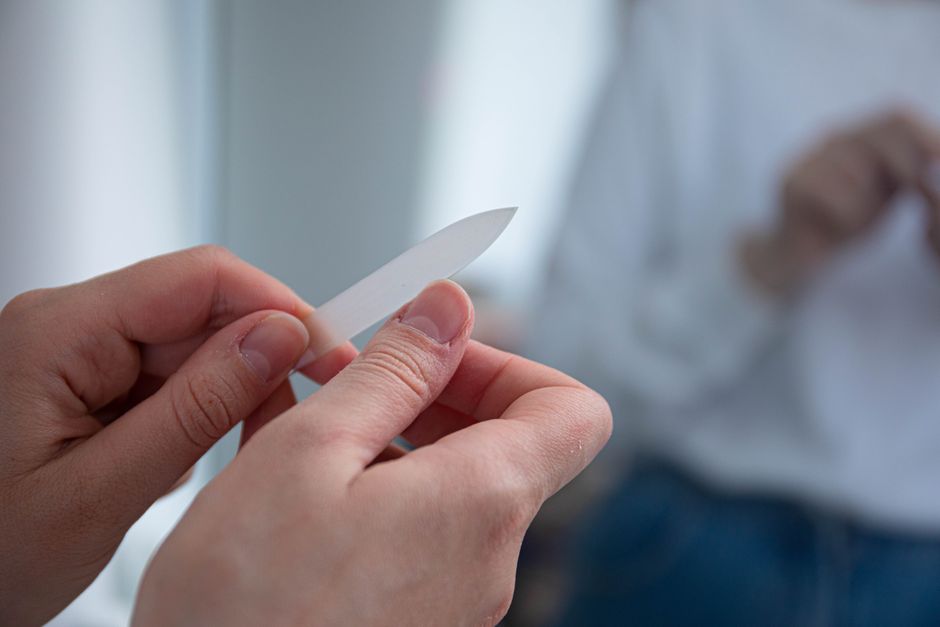
Filing your nails seems simple, but most people do it wrong. The correct technique involves filing in one direction, using the right tool, and matching the file’s grit to your nail type. Done properly, filing prevents peeling, splitting, and breakage. Done poorly, it weakens the nail plate and causes damage that takes months to grow out.
What Is the Correct Way to File Nails?
File in one direction only. Move the file from the outer edge of the nail toward the center. Do not saw back and forth. Sawing creates microscopic tears in the nail’s keratin layers, which leads to peeling and splitting.
Hold the file at a 45-degree angle against the nail edge. Use long, smooth strokes from one side to the center, then repeat from the other side. Keep pressure light—let the file do the work. Pressing hard generates heat and friction that damages the nail bed.
File only the free edge, never the skin around the nail. The nail plate itself should not be filed on top unless you are removing ridges, which requires a fine buffer, not a file.
Which Nail File Should You Use?
Nail files come in different materials and grits. Grit refers to how coarse the abrasive surface is. Lower numbers mean coarser, higher numbers mean finer.
| File Type | Grit Range | Best For |
|---|---|---|
| Coarse file | 80–100 grit | Acrylic or gel nails, shortening long nails quickly |
| Medium file | 150–180 grit | Natural nails, shaping |
| Fine file | 220–240 grit | Finishing edges, smoothing, thin or fragile nails |
| Buffer | 280+ grit | Shining nail surface, removing ridges |
Glass files are the most durable and gentle on natural nails. They have a fine grit that seals the nail edge as you file, which reduces peeling. Emery boards are affordable but wear out quickly and can be too coarse for thin nails. Metal files are too harsh for natural nails—they cause micro-tears and are best avoided unless you have very thick artificial nails.
If you have brittle or peeling nails, choose a fine grit file (220 or higher). If your nails are strong and healthy, a medium grit works well. Match the file to your nail condition, not to fashion or convenience.
What Nail Shape Should You File?
Your natural nail shape and the length of your fingers should guide your choice. Not every shape suits every hand.
Square nails are filed straight across with slightly rounded corners. They suit wide nail beds and shorter fingers. The straight edge can catch on things and break more easily.
Oval nails follow the natural curve of the fingertip. They are the most durable shape because the sides are filed less, keeping strength where the nail attaches to the finger. This shape suits most people.
Almond nails are filed into a tapered point with a rounded tip. They elongate the fingers but require enough nail length to work. They are more prone to breakage because the sides are filed away, removing structural support.
Round nails are short and follow the fingertip’s curve. They are the strongest shape because almost no side filing happens. They suit active people and short nails.
Coffin or stiletto shapes require significant length and are structurally the weakest. They break easily on natural nails and are best left to artificial enhancements.
Your nail’s natural shape is the strongest shape for your hands. Fighting it with aggressive filing always results in weaker nails.




How Often Should You File Your Nails?
File only when needed—typically every one to two weeks. Nails grow about 1/10 of an inch per month, so most people need a light touch-up weekly to maintain shape, not a full filing session.
Over-filing is a real problem. Each pass removes a thin layer of nail. File too often, and you thin the nail plate, making it flexible, weak, and prone to bending. If your nails bend easily, you are filing too much or using too coarse a file.
Do not file wet nails. Water softens the keratin, and filing a wet nail creates a rough, frayed edge that peels once it dries. File dry nails only. If you just showered or washed dishes, wait at least 30 minutes before filing.
What Mistakes Damage Your Nails?
The sawing motion is the most common mistake. Back-and-forth filing creates friction and tears the keratin fibers. The damage shows up days later as peeling or splitting at the free edge.
Filing too far into the corners weakens the nail’s sidewalls. The sidewall is where the nail attaches to the finger, and removing this area leaves the nail unsupported. It will eventually crack or break along the side.
Using a coarse file on natural nails removes too much material too quickly. You cannot feel the damage happening until the nail thins noticeably. If you see white spots or the nail feels flexible, you are using too aggressive a file.
Filing the top surface of the nail is another mistake. The top layer is the hardest part of the nail plate. Removing it to smooth ridges weakens the entire nail. Use a buffer sparingly—once a month is enough—and never file the surface with a regular file.
Cutting cuticles before filing is also counterproductive. The cuticle protects the nail matrix from infection. Pushing or cutting it opens a pathway for bacteria. File first, then address cuticles gently if needed, and never cut them.
How Do You File Artificial Nails?
Acrylic and gel nails require a different approach. These materials are harder than natural nails, so a coarser file (100–150 grit) is needed to shape them. The risk is filing through the product into the natural nail underneath.
File artificial nails in short strokes with light pressure. Check frequently by looking at the nail from the side to see how much product remains. The goal is to shape the enhancement without touching the natural nail plate.
When removing gel or acrylic at home, filing is the riskiest step. You can easily file through the artificial layer and into the natural nail. Many professionals recommend soaking off enhancements rather than filing them off. If you must file, use a coarse grit and stop the moment you see the natural nail’s color change.
If you wear artificial nails, give your natural nails a break periodically. Continuous filing and product application thins the natural nail over time. A few months without enhancements allows the nail plate to recover.
How Do You Fix a Torn or Broken Nail?
A tear at the side of the nail needs immediate attention. If the tear is small, file it smooth before it catches on clothing. File from the tear toward the center in one direction to avoid enlarging the crack.
If the nail is fully broken, do not rip it off. Cutting or tearing the remaining nail can damage the nail bed. Use nail scissors to cut the broken edge, then file it smooth.
For a crack that extends into the nail bed, keep the area clean and dry. A cracked nail bed can allow bacteria in, leading to infection. If you see redness, swelling, or pus, see a doctor. Do not try to glue the nail back together—nail glue is not medical adhesive and can trap bacteria.
Some people use a tea bag patch or nail repair kit for splits. These provide temporary support while the nail grows out. They do not repair the nail itself, only hold it together. The split will grow out in two to three months.
Does Filing Make Nails Grow Faster?
No. Filing does not affect nail growth. Nails grow from the matrix, the tissue under the cuticle. Filing only shapes the free edge, which is dead keratin cells. Nothing you do to the free edge changes how fast the matrix produces new nail.
The belief that filing stimulates growth is a myth. If your nails seem to grow faster when you file them regularly, it is because they break less often. A nail that does not break appears to grow faster than one that snaps off at the tip.
What actually supports nail growth is nutrition and health. Protein, biotin, iron, and adequate hydration all play roles in keratin production. But even optimal nutrition will not make nails grow faster than your genetics dictate.
When Should You See a Doctor About Your Nails?
Most nail problems are cosmetic, not medical. But some signs warrant professional attention.
See a doctor if you notice dark streaks under the nail, a nail that separates from the nail bed without injury, or persistent yellow or green discoloration. These can indicate fungal infection, psoriasis, or other conditions that need treatment.
If your nails are severely brittle and do not improve with better filing habits and moisturizing, mention it to your doctor. Brittle nails can be a sign of thyroid disease, iron deficiency, or other systemic conditions. But most brittle nails are simply a result of damage from filing, chemicals, or repeated wet-dry cycles.
Frequently Asked Questions
Should you file nails in one direction or back and forth?
File in one direction only, from the edge toward the center. Sawing back and forth tears the keratin layers and causes peeling and splitting.
What grit nail file is best for natural nails?
A medium grit of 150–180 is best for natural nails. Use a finer grit of 220 or higher if your nails are thin or already peeling.
Is it better to file nails wet or dry?
Always file dry nails. Water softens the keratin, and filing wet nails creates rough, frayed edges that peel once dry.
How often should you file your nails?
File every one to two weeks to maintain shape. Over-filing thins the nail plate and makes nails weak and flexible.
