
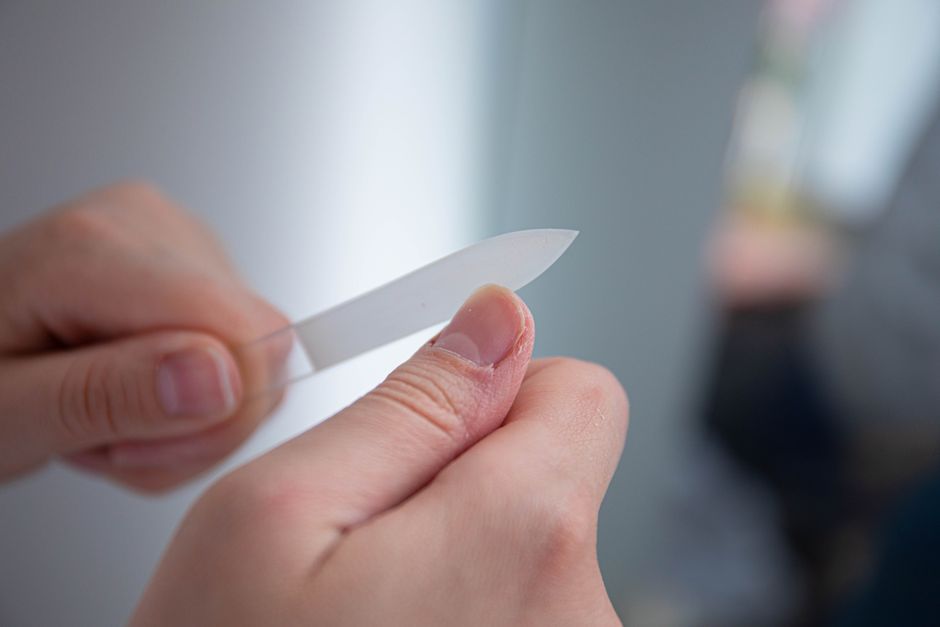
You should not file down a dental crown at home. There is no safe way to do it yourself. A crown is shaped and adjusted by a dentist using a drill, precise measurements, and knowledge of how your bite fits together. Filing it at home risks breaking the crown, exposing the tooth underneath, and changing your bite in ways that cause new problems.
People search for this because a crown feels too high, too rough, or uncomfortable. That is a real problem worth fixing. The right move is to call the dentist who placed it. Most bite adjustments take only a few minutes in the chair and are not expensive compared with replacing a damaged crown.
Why Filing a Crown at Home Is Risky
A dental crown is a fitted medical device, not a nail you can sand down. Once material is removed, it cannot be put back. That single fact drives most of the risk.
Crowns are made from materials like porcelain, ceramic, metal, or a mix. Each behaves differently under pressure. A file or rotary tool that seems gentle can chip porcelain or crack the bond between the crown and the tooth. If the crown fractures, it usually needs to be replaced, which costs far more than an office visit.
There is a deeper problem too. A crown that feels “too high” is often not too tall at all. The issue may be how your upper and lower teeth meet, a change in a neighboring tooth, or a bite that has shifted. Grinding the crown down without understanding the cause can make the bite worse. It can also push pressure onto other teeth or the jaw joint.
Finally, home tools are not sterile. Rough edges and small cuts in the gum or cheek can become entry points for infection. That risk is small but real, and it is avoidable.
What Happens If You File a Crown Yourself?
The most common outcome is damage that a dentist then has to repair or replace. The second most common is a bite that feels wrong in a new way.
Here is what can go wrong:
- The porcelain chips or cracks, sometimes days later under normal chewing.
- The crown loosens if the seal at the gum line is disturbed.
- The exposed inner material or tooth becomes sensitive to hot and cold.
- Your bite changes unevenly, causing soreness in other teeth or the jaw.
- Sharp edges cut the tongue, cheek, or gum.
Some of these problems show up right away. Others appear over weeks as the bite settles. A crown is designed to protect the tooth beneath it, and once that protection is compromised, the tooth itself can be at risk.
Why Does My Crown Feel Too High or Rough?
A new crown can feel high for a few days while your bite adjusts. That is normal and usually settles. A crown that still feels high after a week or more is worth checking.
There are several possible reasons a crown feels off:
- Bite not fully adjusted. The dentist may have left the crown slightly high on purpose, planning to fine-tune it at a follow-up visit.
- Numbness during fitting. If your mouth was numb when the crown was placed, you may not have felt the true bite until the numbing wore off.
- Shifting teeth. Teeth move slowly over time, and a crown that fit well can start to feel different.
- A rough edge or margin. The point where the crown meets the gum can feel scratchy if it was not polished smooth.
- Something else entirely. A cavity, a cracked tooth, or gum inflammation near the crown can feel like a crown problem.
This is why self-diagnosis is unreliable. What feels like “too tall” could be a gum issue or a problem with a different tooth. A dentist can tell the difference in minutes.





What Should You Do If a Crown Is Bothering You?
Call the dental office that placed the crown first. Most practices will see you quickly for a bite adjustment, and many do not charge for a follow-up on their own work.
While you wait for your appointment, a few things can ease discomfort without causing harm:
- Eat softer foods and chew on the other side of your mouth.
- Avoid very hot, cold, or sticky foods if the tooth is sensitive.
- Keep the area clean with gentle brushing and flossing.
- If an edge feels sharp, dental wax sold at pharmacies can cover it temporarily. Do not file it.
If you have pain that is getting worse, swelling, bleeding that will not stop, or a crown that has come loose, treat it as urgent and call your dentist the same day. A loose crown can sometimes be recemented if you act quickly.
How Does a Dentist Adjust a Crown?
A dentist adjusts a crown with a drill and articulating paper, a thin colored film that marks where your teeth touch. The process is quick and controlled.
You bite down on the paper, and the marks show exactly where the crown is hitting first. The dentist removes tiny amounts of material from those high spots and checks again. This repeats until your bite feels even. The amount removed is often less than a millimeter.
This is the part that cannot be copied at home. The dentist is not just grinding a high spot. They are reading how your whole bite works together. Removing too much in one place can throw off the balance somewhere else.
If the crown is rough at the gum line rather than high, the dentist can polish the margin smooth. If the crown is loose or damaged, they will assess whether it can be recemented or needs to be replaced.
When a Crown Problem Needs More Than an Adjustment
Not every crown issue can be fixed with a quick grind. Some point to a problem underneath the crown.
Signs that need a closer look include pain when biting, sensitivity that lingers, a bad taste, or a crown that feels loose. These can signal decay at the edge of the crown, a failing seal, or a problem with the tooth’s nerve. In those cases, the fix is not adjusting the crown but treating the tooth.
A dentist will usually take an X-ray to see what is happening beneath the crown. This is standard practice and the only reliable way to check the tooth and bone underneath. No amount of filing on the outside will solve a problem on the inside.
The Bottom Line on DIY Crown Filing
There is no safe home method for filing down a dental crown. The tools are wrong, the diagnosis is guesswork, and the material cannot be replaced once removed.
A crown that feels high, rough, or uncomfortable is a normal reason to call your dentist. Adjustments are fast, usually simple, and far cheaper than a replacement. The most useful thing you can do at home is protect the crown and get it looked at.
Frequently Asked Questions
Can I file down a crown myself with a nail file?
No. A nail file cannot shape dental material safely and can chip the crown or damage the seal at the gum line. Only a dentist should adjust a crown.
What can I do at home if my crown feels too high?
Avoid chewing on that side and call your dentist for a bite adjustment. Dental wax can cover a sharp edge temporarily, but do not file or sand the crown.
Will a dentist charge me to adjust a crown?
Many practices do not charge for a follow-up adjustment on a crown they placed. Ask when you call so there are no surprises.
How long does a crown adjustment take?
A simple bite adjustment usually takes only a few minutes in the chair. More complex issues may need an exam and X-ray first.
