
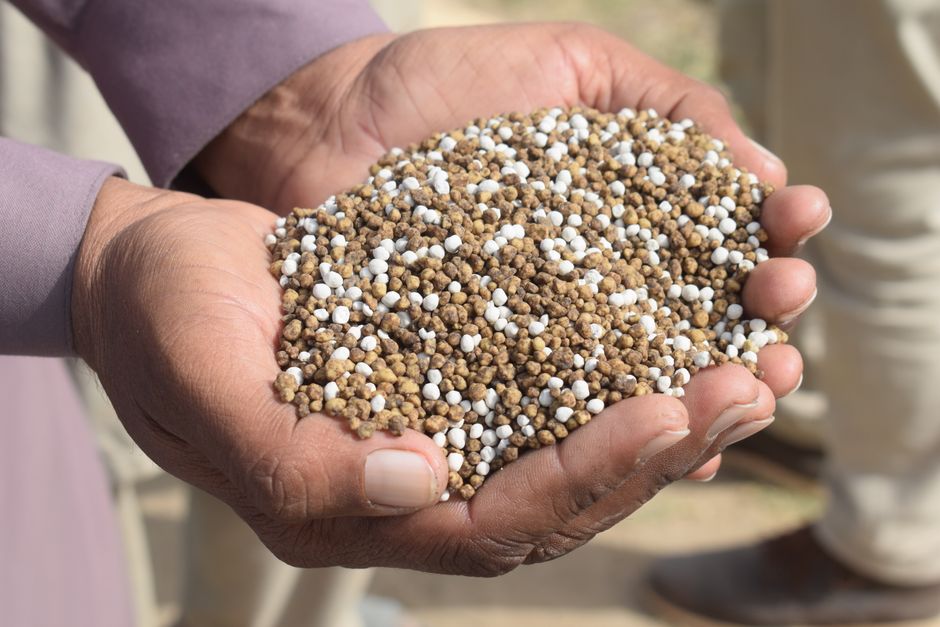
Fertilizing corn by hand gives you control over exactly what your plants get and when they get it. The key is timing the application to match when corn needs nutrients most—at planting for phosphorus and later when stalks are knee-high for nitrogen. Apply a balanced fertilizer like 10-10-10 at planting, then side-dress with a high-nitrogen fertilizer when corn is 12 to 18 inches tall.
Why Does Corn Need Fertilizer In The First Place?
Corn is a heavy feeder. It pulls more nutrients from the soil than most garden vegetables. A single corn stalk can grow ten feet tall and produce one or two ears in about 60 to 100 days. That takes a lot of energy.
Nitrogen is the most important nutrient for corn. It drives leaf growth and the green color that signals a healthy plant. Phosphorus helps roots develop and supports ear formation. Potassium strengthens stalks and helps the plant handle stress like wind or dry weather.
If your soil is already rich in organic matter you may need less fertilizer. But most garden soils run low on nitrogen by midsummer. That is why hand fertilizing works well—you can add what the plant needs exactly when it needs it.
What Kind Of Fertilizer Should You Use For Corn?
A balanced fertilizer like 10-10-10 is a safe starting point. The numbers mean 10 percent nitrogen, 10 percent phosphorus, and 10 percent potassium. This works well at planting because it gives young corn a broad nutrient base.
For side-dressing when corn is knee-high you want something higher in nitrogen. A 34-0-0 fertilizer like ammonium nitrate works well. So does a 21-0-0 like ammonium sulfate. Blood meal is an organic option with about 12-0-0.
If you prefer organic methods you can use composted manure or fish emulsion. These release nutrients more slowly. That can be good for soil health but harder to time for corn’s peak demand.
Avoid high-phosphorus fertilizers unless a soil test shows your soil is low in phosphorus. Excess phosphorus can run off into waterways and causes algae blooms. Most garden soils already have enough phosphorus.
How To Fertilize Corn By Hand For A Better Harvest
The process has two main steps: fertilizing at planting and side-dressing later. Both are done by hand with simple tools.
Step 1: Fertilize at planting. Before you drop seeds into the furrow, sprinkle a balanced fertilizer along the row. Use about 1 cup of 10-10-10 for every 10 feet of row. Mix it into the top 2 to 3 inches of soil so the roots can reach it quickly. Do not let the fertilizer touch the seeds directly—it can burn them.
Step 2: Side-dress when corn is knee-high. When stalks are 12 to 18 inches tall, corn enters a rapid growth phase. It needs nitrogen most at this stage. Sprinkle a high-nitrogen fertilizer in a band about 4 to 6 inches away from the stalk. Use about 1 tablespoon of 34-0-0 per plant or 1 cup per 10 feet of row. Water it in lightly so it reaches the roots.
Step 3: Side-dress again if needed. Some gardeners add a second side-dressing when tassels appear. This can help if your soil is sandy or if heavy rain has washed nitrogen away. Use the same amount and method as the first side-dressing.
Watering after each application is important. Dry fertilizer sitting on the soil surface does little good. It needs moisture to dissolve and move into the root zone.





When Exactly Should You Side-Dress Corn?
Timing matters more than most people think. Side-dress too early and the small plants cannot use the nitrogen yet. Side-dress too late and the ears may already be forming without enough fuel.
The standard advice is to side-dress when corn is knee-high. That is roughly 12 to 18 inches tall. For most varieties this happens about 3 to 4 weeks after planting.
A second side-dressing at tasseling can boost yield in poor soil or rainy years. But if your corn looks dark green and healthy skip it. Extra nitrogen late in the season can delay maturity without improving harvest.
Watch your corn. Pale green or yellow lower leaves are a sign of nitrogen deficiency. If you see that before tasseling, side-dress immediately. Dark green leaves mean the plant has enough.
How Much Fertilizer Does Corn Actually Need?
Corn needs about 1 pound of nitrogen per 1000 square feet of garden space for a good harvest. That is roughly 3 pounds of 34-0-0 or 5 pounds of 21-0-0 for that area.
But soil type matters. Sandy soil loses nitrogen quickly because water washes it down below the root zone. Clay soil holds nitrogen longer. If you garden in sand you may need to split your nitrogen into three smaller applications instead of two.
A soil test is the only way to know exactly what your garden needs. Extension offices sell test kits for about 10 to 20 dollars. The test tells you your soil pH and levels of nitrogen, phosphorus, and potassium. That takes the guesswork out of fertilizing.
Without a test, the standard approach works fine for most gardens. Use a balanced fertilizer at planting and a high-nitrogen side-dress at knee-high. That covers the basics for a better harvest.
Can You Over-Fertilize Corn By Hand?
Yes, and it causes real problems. Too much nitrogen makes corn grow tall and leafy but produce small ears or no ears at all. The plant puts energy into leaves instead of grain.
Excess fertilizer can also burn roots. This happens when concentrated fertilizer sits too close to the stalk. The salts in synthetic fertilizers draw water out of root cells and damage them. The plant wilts even though the soil is moist.
Signs of over-fertilizing include leaf tips turning brown or yellow, stunted growth, and ears that do not fill out. If you see these, stop fertilizing and water deeply to flush excess nutrients past the root zone.
More is not better with corn. Stick to the recommended amounts and spacing. Your harvest will be larger than if you dump on extra fertilizer hoping for magic results.
What About Liquid Fertilizers For Corn?
Liquid fertilizers like fish emulsion or kelp extract work for corn but have limits. They provide nutrients quickly because plants absorb them through leaves and roots right away. That makes them good for a quick boost if you see deficiency signs.
The downside is they do not last long. Liquid fertilizers wash out of the soil within a week or two. You have to apply them every 10 to 14 days during the growing season to keep up with corn’s demand.
Granular fertilizers release nutrients over several weeks. That matches corn’s growth pattern better. For hand fertilizing, granular is usually the practical choice. One application at knee-high covers the next month of growth.
If you do use liquid fertilizer, apply it to the soil around the base of the plant. Foliar feeding—spraying the leaves—can help in an emergency but is less efficient for a crop like corn that needs large amounts of nitrogen.
How Does Soil pH Affect Corn Fertilizer?
Soil pH determines whether your fertilizer actually works. Corn grows best in soil with a pH between 6.0 and 6.8. In that range, nutrients dissolve properly and roots can absorb them.
If your soil pH is below 6.0, phosphorus and potassium become less available even if they are in the soil. The fertilizer you apply may not help the plant at all. Lime raises pH and fixes this problem. Apply lime in fall for the next spring’s corn crop.
If your soil pH is above 7.0, iron and zinc become less available. Corn may show yellow leaves even with plenty of nitrogen. Acidifying fertilizers like ammonium sulfate can help lower pH over time.
A soil test tells you your pH. Without one you are guessing. Guessing often leads to poor harvests even when you fertilize correctly.
Frequently Asked Questions
Can I use lawn fertilizer on corn?
Lawn fertilizer often contains weed killers that damage corn. Use a fertilizer labeled for vegetables or gardens instead.
How close to the corn stalk should I put fertilizer?
Place fertilizer 4 to 6 inches away from the stalk. Closer than that risks burning the roots.
Should I fertilize corn after it tassels?
Fertilizing after tasseling rarely helps because the plant has already set its ears. Focus on feeding before and during tasseling.
Is compost enough to fertilize corn?
Compost adds organic matter and some nutrients but usually does not provide enough nitrogen for corn’s peak demand. Supplement with a high-nitrogen fertilizer at knee-high.
