
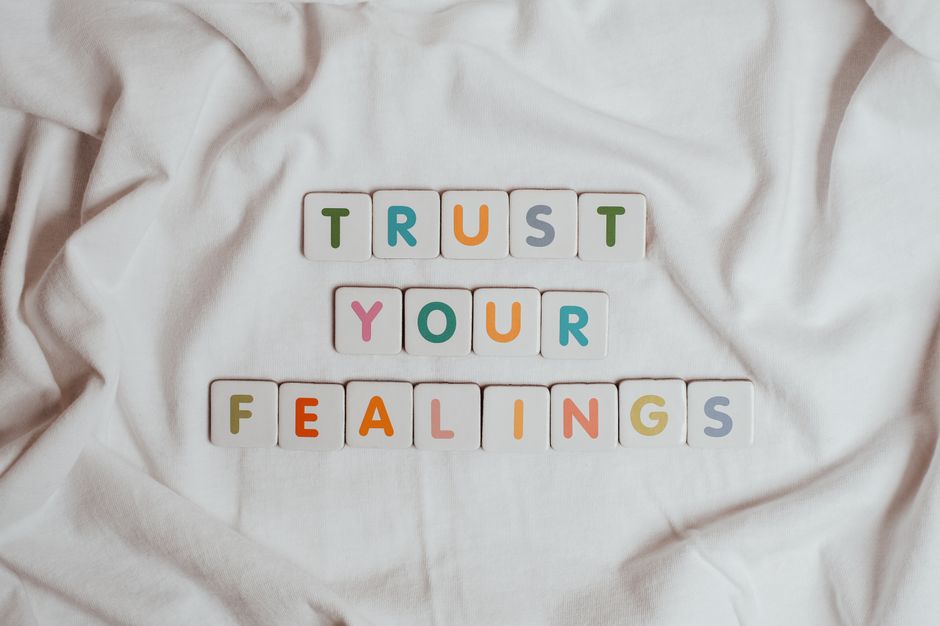
Feeling your feelings means letting an emotion move through you without pushing it away, numbing it, or turning it into a problem to solve. It sounds simple, and for most people it is genuinely hard. Avoidance is not a character flaw. It is a habit the brain learns because it works in the short term. The catch is that the emotion does not disappear when you avoid it. It usually comes back, often stronger, and often attached to new problems. Learning to feel feelings is a skill, and like most skills it can be practiced.
Why Do We Avoid Our Emotions In The First Place?
Avoidance is a form of protection. When an emotion feels overwhelming, the brain looks for the fastest way to reduce the discomfort. Distraction, busyness, food, alcohol, scrolling, and shutting down all do that job, at least for a while.
This is sometimes called experiential avoidance. Research in psychology has linked it to a range of mental health struggles, including anxiety and depression. The pattern is consistent: the more a person tries to escape uncomfortable inner experiences, the more those experiences tend to dominate their life.
There is a biological reason avoidance feels so automatic. Emotions are processed in older parts of the brain that respond faster than the thinking, reasoning parts. A surge of fear or sadness can hit before you have any conscious say in it. Avoiding it is not weakness. It is the nervous system doing what it evolved to do.
The problem is that the relief is temporary. The emotion is still there underneath, waiting for the next quiet moment.
What Actually Happens When You Suppress An Emotion?
Suppression does not delete an emotion. It changes where the emotion goes and how long it stays.
When you push a feeling down, your body still responds. Heart rate, muscle tension, and stress hormones can all shift even when you tell yourself you are fine. Over time, this can show up as physical tension, sleep problems, or a general sense of being on edge without a clear reason.
There is also a well-documented rebound effect. Trying not to think or feel something often makes it more present, not less. If you have ever tried to force yourself not to feel anxious before something important and felt more anxious, you have experienced this directly.
Suppression also has a social cost. People can usually tell when someone is holding something back. It can create distance in relationships, even when the intent was to keep the peace.
How To Feel Your Feelings Instead Of Avoiding Them?
The core skill is to notice an emotion and stay with it long enough for it to move, without fighting it or feeding it. Emotions are not permanent states. They rise, peak, and fall. Most emotional surges pass through the body in a matter of minutes if you do not add fuel to them.
Here is a way to practice this that many therapists teach.
- Name it. Saying “this is sadness” or “this is anger” out loud or in your head creates a small amount of distance. Labeling an emotion is linked to calmer activity in the brain’s emotional centers.
- Find it in your body. Emotions show up physically. Tight chest, clenched jaw, heavy limbs, heat in the face. Putting attention on the physical sensation gives the mind something concrete to rest on.
- Stop arguing with it. The goal is not to convince yourself the feeling is wrong or to fix it. It is to let it be there without acting on it immediately.
- Breathe slowly. Slower breathing, with the exhale longer than the inhale, can help settle the nervous system. It does not erase the emotion, but it makes it more bearable.
- Wait before reacting. You do not have to solve anything in the first surge. Let the intensity come down before deciding what to do.
None of this requires special equipment or a quiet room. It can be done at a desk, in a car, or in the middle of a conversation, though it is easier to practice when you are not already at your limit.
Why Does Naming An Emotion Help?
Putting a word to a feeling is not just a coping phrase. It changes what is happening in the brain.
Brain imaging studies have found that when people label an emotion, activity in the amygdala, a region involved in threat detection, tends to decrease, while activity in areas linked to reasoning and self-control increases. This is sometimes called “name it to tame it.”
The effect is not instant and it is not magic. It works best when the label is honest. Saying “I am fine” when you are not is not labeling. It is another form of avoidance.
Precision helps too. “I feel bad” is vague. “I feel disappointed” or “I feel left out” points to something specific, and specific is easier to work with.
What Is The Difference Between Feeling And Ruminating?
Feeling an emotion and ruminating on it are not the same thing, and confusing them is common.
Feeling is a bodily, present-moment experience. It moves. It has a beginning, a peak, and an end.
Ruminating is thinking about the emotion in circles. It is replaying the situation, imagining what you should have said, or predicting how bad things will get. It feels productive, but it usually keeps the emotion alive rather than letting it pass.
If you notice you have been thinking about the same feeling for hours or days without any shift, you have likely slipped from feeling into rumination. The way back is to return to the body and the present moment, not to keep analyzing.
What Gets In The Way Of Feeling Your Feelings?
Several things make this harder than it sounds.
One is a belief that certain emotions are unacceptable. Many people grew up learning that anger is dangerous, sadness is weak, or fear is shameful. When a feeling is treated as forbidden, the automatic response is to hide it, sometimes even from yourself.
Another is a low tolerance for discomfort. If you have spent years avoiding anything unpleasant, the first time you sit with a strong emotion can feel alarming. That reaction is normal and it tends to ease with practice.
Trauma is a separate factor. For people with a history of trauma, some emotions can be tied to memories or body sensations that feel genuinely unsafe to approach alone. In that case, working with a qualified mental health professional is not optional caution. It is the safer path.
When Should You Get Professional Help?
Feeling your feelings is a skill most people can build on their own, but there are times when support matters more than self-practice.
Consider talking to a doctor or mental health professional if emotions feel unmanageable, if they interfere with work or relationships, if you notice thoughts of harming yourself, or if you are using alcohol or other substances to cope. These are signs that the pattern has moved beyond something to handle alone.
Therapies such as cognitive behavioral therapy and acceptance and commitment therapy are both used to help people relate differently to difficult emotions. Acceptance and commitment therapy in particular focuses on making room for feelings rather than fighting them, and it has a growing body of research behind it.
Getting help is not a sign that you failed at feeling your feelings. It is a sign that you are taking them seriously.
Frequently Asked Questions
How long does it take to feel an emotion?
Most emotional surges ease within minutes if you stay with them without adding fuel. If a feeling lasts for hours or days, it is usually being kept alive by rumination or ongoing stress rather than the original emotion.
Is it bad to distract yourself from your feelings?
Occasional distraction is normal and not harmful. It becomes a problem when it is the only tool you have and you never let difficult emotions move through.
Can feeling your feelings make anxiety worse?
It can feel worse at first because you are no longer pushing the feeling away. With practice, most people find that staying with the emotion reduces its intensity over time rather than increasing it.
Do I need a therapist to learn how to feel my feelings?
No, many people can build this skill on their own. A therapist is recommended if emotions feel unmanageable or are tied to trauma, or if you are using substances to cope.
