
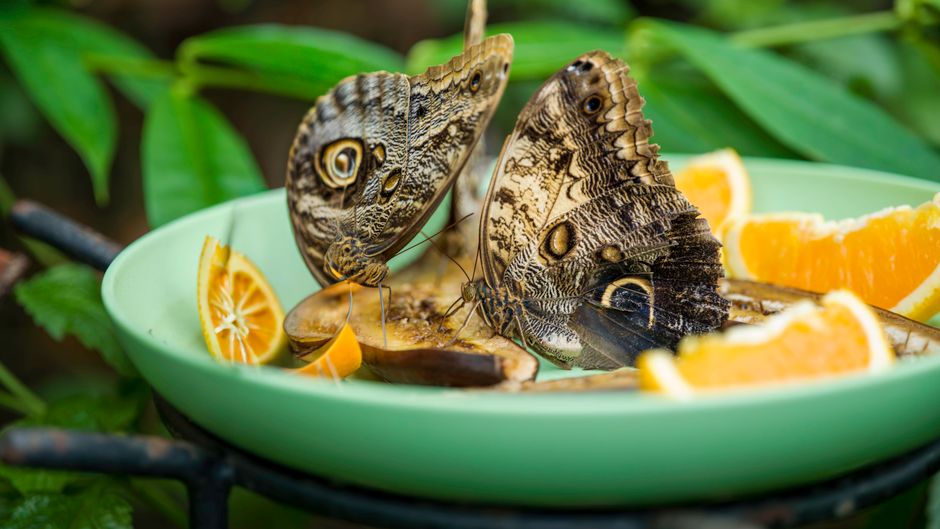
Feeding butterflies sugar water is simple, but doing it safely takes a few specific choices. Use plain white sugar, never honey or artificial sweeteners. Mix roughly one part sugar to four parts water, and offer it in a shallow dish with a sponge or cotton so butterflies can drink without drowning. Skip red food coloring, and never leave honey-based feeders out, because honey can carry spores that are dangerous to butterflies.
Those four rules cover most of what matters. The rest of this guide explains why each one exists, how to set up a feeder correctly, and when feeding butterflies is a good idea at all.
Why Is Plain White Sugar the Only Safe Sweetener?
White granulated sugar is the standard because it is close to the sugars found in flower nectar. Nectar is mostly sucrose, glucose, and fructose. Table sugar is sucrose, and the body of a butterfly can break it down into the other two. That makes it a reasonable stand-in when flowers are scarce.
Honey is the sweetener people reach for most often, and it is the one to avoid. Honey can contain spores of Paenibacillus larvae, the bacterium that causes American foulbrood, a serious disease of honeybee colonies. Butterflies are not bees, but the risk of spreading spores to nearby hives is real, and many butterfly and beekeeping groups advise against putting honey outdoors for this reason. Raw or organic honey carries the same concern.
Artificial sweeteners are not food for butterflies. They provide no usable energy, and there is no reason to offer them. Brown sugar, molasses, and agave contain other compounds and are not standard feeder fare. Stick with plain white sugar.
How Do You Mix Sugar Water for Butterflies?
The common ratio is one part sugar to four parts water. That means one quarter cup of sugar dissolved in one cup of water. This concentration is close to the sugar level in natural nectar and is easy for a butterfly to drink.
Use warm water so the sugar dissolves fully, then let the mixture cool before you put it out. Undissolved crystals can clog a butterfly’s feeding tube, called the proboscis. Stir until the liquid is clear.
Do not add food coloring. Red dye is a common addition in homemade feeders, but it offers no benefit and some evidence from bird-feeding research suggests dyes are unnecessary and potentially harmful. There is no established reason to color butterfly food.
Make only what you will use in a few days. Sugar water can grow bacteria and mold, especially in warm weather. Store any extra in the refrigerator and replace the feeder solution every day or two, more often in heat.
How To Feed Butterflies Sugar Water Safely Without Drowning Them
The biggest risk in butterfly feeding is drowning. Butterflies drink through a long, thin tube, and they cannot swim. A deep pool of liquid is a trap.
Offer the sugar water in a shallow container and give butterflies something to stand on. A clean sponge, a piece of cotton, or a paper towel soaked in the solution works well. The butterfly lands on the textured surface and drinks from the moisture without its body sinking into liquid.
Keep the liquid level low. A jar lid or a small saucer with just enough solution to dampen the sponge is safer than a full dish. Refresh the sponge so it stays moist but not flooded.
Place the feeder where butterflies can reach it and where it is protected from wind and rain. A spot near flowers, in sun during cooler hours, works well. Avoid placing feeders where pets or children can knock them over.
Can You Use a Butterfly Feeder Instead of a Dish?
Commercial butterfly feeders are designed around the same principle: a reservoir of sugar water that wicks moisture onto a surface the butterfly can stand on. Many use a spongy pad or a series of small wells. These can work well if the design keeps liquid shallow and accessible.
Some feeders use a mesh or screen the butterfly clings to while drawing liquid from a reservoir. Others rely on a saturated wick. Either way, check that the drinking surface stays damp and that no deep pool forms. A feeder that collects standing liquid at the bottom is a drowning risk.
You do not need a store-bought feeder. A jar lid with a soaked cotton ball is a safe, simple option. The design matters less than the principle: shallow, moist, and easy to stand on.
Should You Feed Butterflies at All?
Feeding butterflies is a supplement, not a substitute for their natural food. Most adult butterflies feed on flower nectar, and some also take nutrients from rotting fruit, tree sap, mud, and other sources. A sugar water feeder can help when flowers are scarce, but it does not replace a garden with flowering plants.
If your goal is to support butterflies, planting nectar-rich flowers does more good than any feeder. Native flowering plants provide food across the season and support the caterpillars that become butterflies. A feeder is a nice addition, not the main event.
There is also a caution about attracting butterflies to a feeder. Concentrating many butterflies in one spot can spread disease among them, particularly in captive or dense settings. For a backyard garden, the risk is generally low, but keeping feeders clean and not overcrowded is sensible.
What About Feeding Butterflies Fruit Instead?
Many butterflies, especially certain species, feed readily on overripe fruit. Slices of banana, orange, apple, or melon left to soften can attract butterflies and provide sugars and other nutrients. This is a common and low-risk option.
Use fruit that is fully ripe or slightly past ripe, and replace it before it molds. Fruit that is fermenting can attract wasps and other insects, so keep an eye on it. Like sugar water, fruit is a supplement to flowers, not a replacement.
Some butterfly species prefer fruit and rarely visit flowers. Offering both fruit and a sugar water feeder covers more species. Neither is harmful if kept clean and fresh.
What Are the Most Common Mistakes?
Most problems come from a few avoidable choices. Here is what to watch for:
- Using honey, which risks spreading bee disease spores.
- Adding red food coloring, which has no benefit.
- Offering sugar water in a deep dish, which can drown butterflies.
- Leaving the same solution out for days, allowing bacteria and mold to grow.
- Using artificial sweeteners, which provide no energy.
- Placing feeders in full sun during hot weather, which speeds spoilage.
Each of these is easy to fix. Plain sugar, shallow and moist, changed often, is the safe formula.
Does Sugar Water Actually Help Butterflies?
Sugar water provides energy, and energy matters for flight and reproduction. That part is well established. What is less clear is how much a backyard feeder changes a butterfly’s survival or population numbers. No large studies have measured that directly.
Think of a feeder as a small convenience, not a conservation tool. The evidence that feeders boost butterfly populations is limited. The evidence that habitat and flowering plants support butterflies is much stronger. If you want to help butterflies, plant for them first and feed as a bonus.
Frequently Asked Questions
Can I use honey instead of sugar for butterflies?
No. Honey can carry spores that cause disease in honeybee colonies, and most butterfly and beekeeping guidance advises against putting it outdoors. Plain white sugar is the safe choice.
What is the right sugar to water ratio for butterflies?
Use about one part sugar to four parts water, such as one quarter cup of sugar in one cup of water. This is close to the sugar concentration in natural flower nectar.
How often should I change butterfly sugar water?
Replace it every day or two, and more often in hot weather. Sugar water grows bacteria and mold quickly, so fresh solution keeps the feeder safe.
Can butterflies drown in a sugar water feeder?
Yes, if the liquid is deep enough for them to fall in. Use a shallow dish with a sponge or cotton so butterflies can stand and drink without sinking.
