
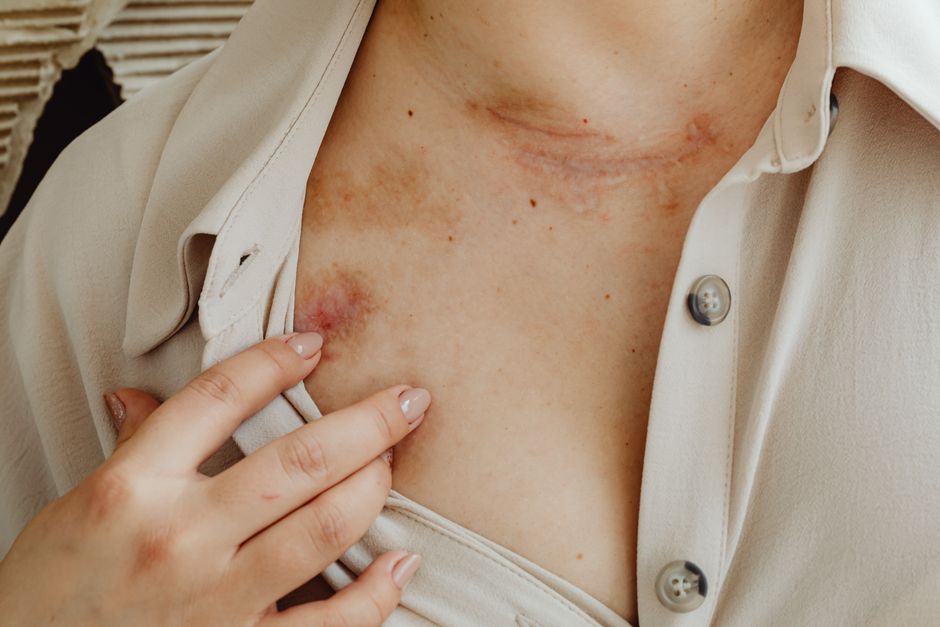
Scars are permanent changes to the skin. Once the tissue has healed, no treatment can erase a scar completely. What treatments can do is make a scar flatter, softer, lighter, and less noticeable — and how much improvement is possible depends heavily on the type of scar and how old it is.
How to fade scars comes down to three things: matching the treatment to the scar type, starting early where that is possible, and protecting the area from sun, which is the single biggest reason scars stay dark and visible for years. This guide explains what each type of scar actually is, what the evidence supports, and where the honest limits are.
Why Do Scars Form In The First Place?
A scar is what happens when skin repairs itself with collagen instead of regenerating normal skin. When an injury cuts through the upper layer of skin (the epidermis) into the deeper dermis, the body cannot rebuild the original architecture. It lays down collagen to close the gap fast and seal the wound. That patch of collagen is a scar.
The process has three overlapping phases. First comes inflammation, where immune cells clear debris and bacteria. Next comes proliferation, where new tissue and blood vessels fill the wound. Finally comes remodeling, which can continue for a year or longer. During remodeling, collagen fibers are rearranged and the scar gradually flattens and fades.
This is why a fresh scar often looks red or pink and feels raised, then slowly settles. A scar that is still red is still remodeling. A scar that has turned white or silver has largely finished that process — and that matters, because treatments work differently at each stage.
How a scar turns out depends on several factors:
- Depth and size of the original wound
- Location — areas with more tension, like the chest, shoulders, and joints, tend to scar worse
- Genetics and individual healing tendencies
- Age — younger skin often heals with more visible scarring
- Wound care — infection, picking, and slow healing all increase scarring
What Are The Different Types Of Scars?
Not all scars respond to the same treatment, so identifying the type is the first practical step. A flat, pale scar and a thick, raised keloid behave very differently and need different approaches.
- Flat scars (also called normotrophic) sit level with the surrounding skin. They may start red or dark and gradually fade on their own.
- Hypertrophic scars are raised but stay within the boundary of the original wound. They often improve over time.
- Keloids grow beyond the original wound edges and can keep expanding. They are more common in people with darker skin tones and often recur after removal.
- Atrophic scars are sunken. Acne scars and some chickenpox scars fall into this group. They form when too little collagen is laid down.
- Contracture scars tighten the skin and can restrict movement, usually after a burn.
- Stretch marks are technically a form of scar from stretched skin, though they are usually treated differently.
Getting the type right changes everything. A treatment that softens a hypertrophic scar may do little for a sunken acne scar, and a keloid may get worse with certain approaches.
What Actually Fades Scars — And What Does Not?
The most reliable way to reduce a scar’s appearance is a combination of time, sun protection, and treatments matched to the scar type. No single product erases a scar, and the marketing around scar creams often outruns the evidence.
Sun protection
This is the most underrated step. Ultraviolet light triggers extra pigment production in healing skin, which is why scars often darken and stay dark. Research consistently shows that protecting a healing scar from the sun reduces this darkening. Daily sunscreen on the scar, plus covering it with clothing or a bandage, protects the area while it remodels. This matters most in the first year, but continues to help afterward.
Silicone
Silicone gel and silicone sheets are among the better-supported at-home options for raised scars. Some studies suggest they help flatten and soften hypertrophic and keloid scars, likely by keeping the scar hydrated and applying gentle pressure. They are typically used for several months. Results vary, and they work better on newer, raised scars than on old flat ones.
Massage and pressure
Gentle massage of a healing scar is widely recommended by clinicians to help soften it and reduce tightness. The evidence for massage alone is limited but it is low-risk. Pressure therapy, often with specialized garments, is used for burn scars and some keloids, though it requires consistent, prolonged use.
Corticosteroid injections
For raised scars and keloids, doctors sometimes inject a corticosteroid directly into the scar. This is a well-established clinical treatment that can flatten and soften the tissue. It usually requires multiple sessions and is performed in a medical setting.
Other clinical options
Dermatologists may use laser therapy, cryotherapy (freezing), microneedling, chemical peels, or surgical revision depending on the scar. These are not one-size-fits-all. Laser treatment, for example, can help with redness, texture, or pigment, but the specific type of laser matters and results vary. Any of these should be discussed with a qualified clinician, because the wrong approach can worsen certain scars.
What does not reliably work
Many over-the-counter creams, oils, and “scar removers” have little to no evidence behind them. Vitamin E, for instance, is commonly applied to scars but studies have not shown it fades them — and in some people it causes skin irritation. Claims that a product can “erase” or “remove” a scar are not supported, because no topical product can restore normal skin architecture. Be cautious with any product that promises complete removal.





Do Scar Treatments Work Better Early?
Timing matters. A scar that is still red and actively remodeling is generally more responsive to treatment than one that has been white and settled for years. This is why clinicians often start scar care as soon as a wound has closed.
That said, “early” does not mean treating an open wound with scar products. A wound needs to heal first, and applying the wrong thing too soon can interfere with healing or cause irritation. Once the skin surface has closed and there is no sign of infection, basic scar care — sun protection, gentle massage, and silicone where appropriate — can begin.
Older scars are not hopeless. Raised scars and keloids can still respond to clinical treatments years later, and even flat scars may lighten slowly over time. The realistic expectation is improvement, not disappearance.
One point that surprises many people: scars can keep changing for a year or more. A scar that looks prominent at three months may look considerably better at twelve. Patience is not just a platitude here — it reflects how collagen remodeling actually works.
Can You Prevent A Scar From Forming?
You can reduce how noticeable a scar becomes, though you cannot always prevent one. Good wound care is the foundation.
- Keep the wound clean and follow medical advice for dressing changes
- Prevent infection — infected wounds scar more
- Do not pick or scratch at scabs or healing skin
- Keep the area moist during healing, which supports faster closure
- Protect from the sun once healed to limit darkening
- Avoid unnecessary tension on the wound where possible
Some people are simply more prone to raised scars, particularly keloids, based on genetics and skin tone. If you know you form keloids, it is worth telling a doctor before any planned surgery or piercing so the approach can be adjusted.
When Should You See A Doctor About A Scar?
Most scars are harmless. Some signs warrant a medical visit.
- A scar that keeps growing beyond the original wound
- A scar that becomes painful, itchy, or restricts movement
- Signs of infection in a healing wound — increasing redness, warmth, swelling, pus, or fever
- A mole or skin growth that changes in size, shape, or color
- A scar that bothers you enough that you want to explore clinical options
A dermatologist can identify the scar type and discuss treatments that fit it. This is worth doing before spending money on products that may not help. For keloids especially, the wrong treatment can sometimes make things worse, so professional guidance matters.
What Results Can You Realistically Expect?
Scars fade over time, but they do not vanish. Most flat scars gradually become lighter and less noticeable over months to a couple of years. Raised scars and keloids are less predictable and often need clinical treatment, and even then they may not fully flatten.
The honest summary is that improvement is realistic, complete removal is not. The best results usually come from combining sun protection, consistent home care where appropriate, and professional treatment for scars that are raised, sunken, or persistent. Matching the method to the scar type matters more than any single product.
Frequently Asked Questions
Can scars really fade completely?
No. A scar is permanent tissue, so it cannot be erased, but it can become flatter, softer, and lighter over time. Treatments aim to reduce how noticeable a scar is, not remove it.
What is the fastest way to fade a scar?
There is no quick fix, but consistent sun protection and silicone, started once the wound has closed, are among the better-supported steps. Raised or stubborn scars may need clinical treatment such as corticosteroid injections or laser therapy.
Does vitamin E oil fade scars?
The evidence does not support vitamin E as an effective scar treatment, and it can irritate the skin in some people. Silicone products have more support for raised scars.
How long does it take for a scar to fade?
Flat scars often lighten over several months to a couple of years as collagen remodels. Raised scars and keloids are less predictable and may need treatment to improve.
