
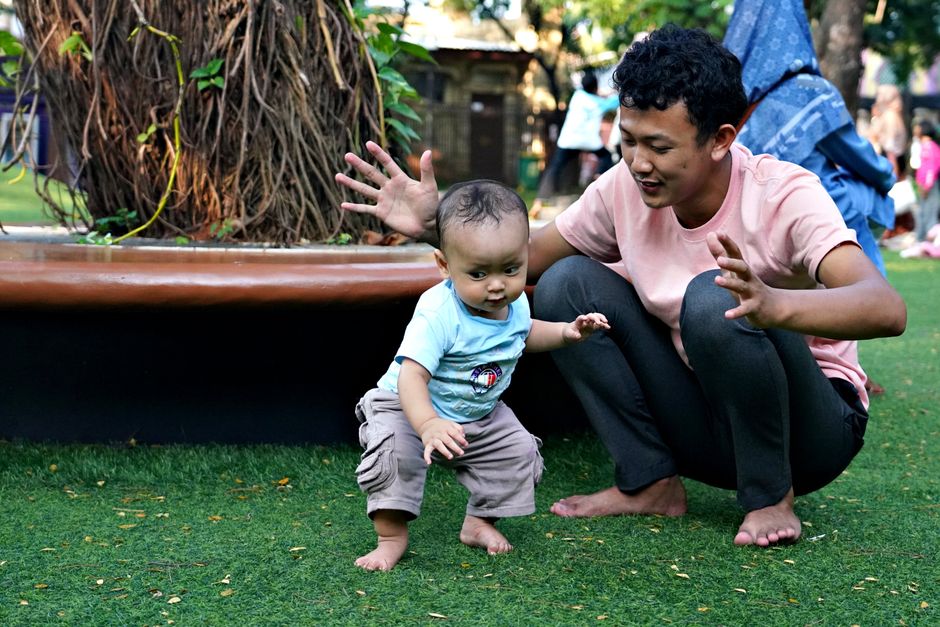
Most babies move from cruising along furniture to walking on their own between 9 and 18 months. You encourage that shift by giving steady support, safe floor space, bare feet, and time. Practice, not pushing, is what turns cruising into independent steps.
Walking is a milestone that builds on months of earlier skills: rolling, sitting, crawling, pulling up, and then cruising. Each stage strengthens the muscles and balance a baby needs for those first free steps. Your job is to set up the conditions and then let your baby lead.
What Is the Difference Between Cruising and Walking?
Cruising is walking sideways while holding onto furniture or a hand. Walking is taking steps without that support. The gap between them is mostly about balance and confidence, not leg strength.
When a baby cruises, the furniture does part of the balancing work. The hands grip, the arms steady the body, and the legs learn the rhythm of stepping. Free walking removes that support. Now the core, hips, and ankles have to keep the body upright on their own.
That is why cruising can last weeks or even a couple of months before independent steps appear. The legs are often ready well before the balance system is. A baby may cruise confidently along a couch while still dropping to crawl the moment they let go.
This is normal. The time spent cruising is not wasted. It is practice.
When Do Babies Usually Start Walking?
Most children take their first independent steps between 9 and 18 months. A smaller number walk a little earlier or later and still develop typically.
Some babies skip cruising almost entirely and go from pulling up to walking. Others cruise for months. Both patterns fall within normal development.
Walking is one milestone where the range is wide. A child who walks at 10 months and a child who walks at 17 months can both be developing exactly as expected. The pace varies with temperament, size, and how much floor time a baby gets.
Talk with your pediatrician if your child is not showing progress toward walking by around 18 months, or if you notice other concerns like stiffness, weakness on one side, or loss of skills they once had. Those are reasons to check in, not reasons to panic. A clinician can assess whether anything needs attention.
How To Encourage Baby To Walk From Cruising To Steps
The most effective approach is simple: give your baby safe space to practice, keep the environment steady, and resist the urge to rush the process. Confidence grows through repetition.
Here are the practical steps that help most.
- Offer safe floor time every day. Babies learn to balance by being on their feet and on the floor, not strapped into seats. Short, frequent sessions work well.
- Let them go barefoot indoors. Bare feet give the toes and soles direct feedback about the ground. That sensory input helps balance. Soft, flexible shoes are fine outdoors once walking is established.
- Arrange furniture so cruising leads somewhere. A low, stable couch or a line of sturdy furniture gives a baby a safe route to travel. Place a favorite toy just out of reach at the end of the route.
- Hold hands at the baby’s height. Bending down to hold both hands lets your baby practice stepping upright. Keep the grip light so they carry their own weight.
- Use a sturdy push toy. A weighted push wagon or a stable push-along toy lets a baby practice forward steps while holding on. Avoid walkers with wheels that let a baby sit and scoot.
- Celebrate the attempt, not just the result. A baby who lets go, wobbles, and sits down has still practiced. Calm, cheerful reactions keep them willing to try again.
One point that surprises many parents: baby walkers with seats and wheels do not help and are not recommended. They let a baby move faster than they can control, and they have been linked to injuries. Several health organizations advise against them. A stationary activity center or a sturdy push toy is a safer choice.
Does Barefoot or Shoe Matter for First Steps?
Bare feet are the better choice for learning to walk indoors. The foot’s many nerve endings send balance information to the brain, and bare toes can grip and adjust.
Once a baby is walking well and going outside, a soft, flexible shoe with a thin sole supports the foot without stiffening it. Rigid, high-top shoes do not help a baby learn to walk and can get in the way of natural foot movement.
Socks on smooth floors are slippery and can make stepping harder. If the floor is cold, consider socks with grip dots or bare feet on a rug.
Should You Use a Push Toy or Hold Their Hands?
Both can help, but they do different things. Hand-holding builds confidence and lets a baby practice balance with a safety net. A sturdy push toy lets a baby practice stepping forward while still holding on.
The key word is sturdy. A lightweight toy that rolls away fast can tip or slide out from under a new walker. A weighted push wagon moves at the baby’s pace and stays stable.
Hold hands lightly. If you carry too much of your baby’s weight, they never feel the balance challenge that builds strength. Let them bear their own weight and steady themselves.
A note on holding one hand versus two: many babies do better with both hands at first, then graduate to one hand, then to letting go. Follow your baby’s lead on when they are ready for less support.
What If My Baby Is Not Walking Yet?
Late walking is common and often has no underlying problem. Some babies are simply more cautious, heavier, or more interested in other skills. Others cruise for a long stretch before letting go.
There are a few things worth checking with your pediatrician if walking is delayed. These include not pulling to stand by around 12 months, not walking by around 18 months, stiffness in the legs, weakness on one side, or losing skills your child once had. A clinician can look at the whole picture.
Premature babies often reach motor milestones on a adjusted timeline, so their pediatrician may track progress differently. Ask what timeline applies to your child.
It also helps to look at floor time. A baby who spends most of the day in seats, swings, or carriers has less chance to practice. More supervised floor time is one of the simplest things that supports motor development.
How Do You Keep a New Walker Safe?
Once a baby starts taking steps, the home needs a fresh look. A new walker can reach and move in ways they could not before.
Anchor tall furniture and televisions to the wall. A cruising baby may pull on a bookshelf or a lamp. Secure anything that could tip. Put gates at stairs and block off rooms that are not baby-proofed.
Clear the floor of small objects and cords. A new walker is unsteady and will fall. Most falls are harmless, but a clear, soft landing area reduces the risk of injury.
Expect lots of falling. It is part of learning. A baby who falls and gets back up is doing exactly what they should.
How Long Does It Take to Go From Cruising to Walking?
There is no fixed timeline. Some babies go from cruising to independent steps in a few weeks. Others take a couple of months. Both are within the normal range.
The pace depends on balance, confidence, and practice. A baby who cruises daily and gets floor time tends to progress steadily. A cautious baby may take longer even with plenty of practice.
Try not to compare your baby to others at the same age. The range for first steps is wide, and the order in which skills appear varies too. What matters is steady progress over time, not a specific date.
Frequently Asked Questions
How long does it take for a baby to walk after cruising?
There is no set timeline. Some babies take independent steps within a few weeks of cruising, while others cruise for a couple of months before letting go.
Should I hold my baby’s hands to help them walk?
Holding hands can build confidence, but keep the grip light so your baby carries their own weight. Too much support can slow the balance practice that free steps require.
Are baby walkers good for learning to walk?
No. Walkers with seats and wheels are not recommended because they let babies move faster than they can control and have been linked to injuries. A sturdy push toy is a safer option.
What if my baby is not walking by 18 months?
Talk with your pediatrician. Many late walkers develop typically, but a check-in can rule out anything that needs attention and set your mind at ease.
