
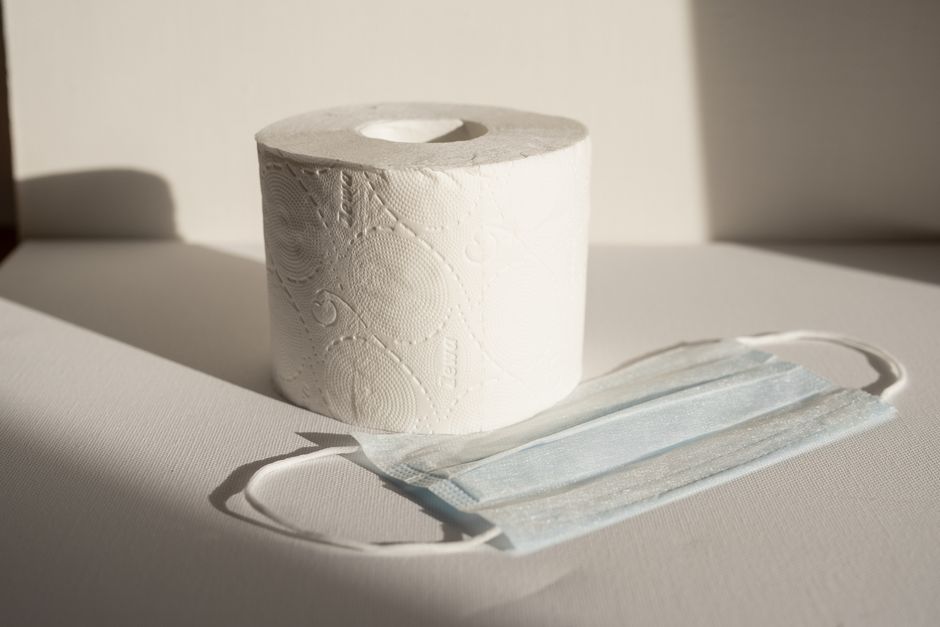
Toilet paper dust is made of tiny paper fibers that shed from the roll every time you tear off a sheet. To eliminate it for good, you have to change what the fibers do after they leave the roll: keep them from becoming airborne in the first place, capture the ones that do, and reduce how much loose fiber the paper releases. Ventilation alone will not fix it. The fix is a combination of better paper, better technique, and a simple cleaning routine.
What Is Toilet Paper Dust Actually Made Of?
Toilet paper dust is a mix of short paper fibers, fine mineral particles, and small amounts of chemical residue from the manufacturing process. It is not a single substance. That matters, because how much dust you get depends on how the paper was made, not just how you use it.
Toilet paper starts as wood pulp or recycled paper fiber. The fibers are beaten, mixed with water, pressed into thin sheets, and dried. During drying, some fibers break into fragments too small to bond into the sheet. Those fragments sit loosely on the surface. When you pull or tear a sheet, friction knocks them free.
Manufacturers also add fillers and coatings. Common ones include calcium carbonate, clay, and starch-based binders. These help the paper feel soft and hold its shape. Fine particles of these additives can shed along with the fibers.
So the dust in your bathroom air is a blend. It is mostly cellulose fiber, plus mineral filler, plus whatever the paper was treated with. This is why two rolls of the same ply can produce very different amounts of dust.
Why Does Some Toilet Paper Shed More Than Others?
Fiber length is the biggest factor. Longer fibers interlock tightly and resist breaking apart. Short fibers sit loose and shed easily. Paper made from short-fiber pulp, or from recycled fiber that has already been broken down once, tends to release more dust.
Ply count matters too, but not in the direction most people assume. A single-ply sheet is thin and tears easily, which can throw off more fragments. A two-ply or three-ply sheet holds together better during a tear. The outer layer often does the shedding, while the inner layers stay intact.
Texture is the other variable. Embossed or quilted paper has raised patterns pressed into the surface. Those raised areas have more exposed edge, and edges are where fibers break free. A smooth sheet has less surface area to shed from.
Bulk and density play a role as well. Denser paper packs more fiber into the same space, so fewer loose ends stick out. Lighter, fluffier paper feels softer but tends to release more particles.
There is no standard label that tells you how much a roll will shed. You generally have to test it yourself. A paper that feels smooth and tears cleanly with little fraying is usually a lower-dust option.
Does Toilet Paper Dust Cause Health Problems?
For most people, the amount of dust from normal bathroom use is small and does not cause symptoms. The evidence here is limited, and no large human trials have measured long-term health effects from household toilet paper dust specifically.
That said, the particles are small enough to be inhaled. Fine airborne dust can reach the lower airways. For someone with asthma, allergic rhinitis, or another respiratory condition, added airborne irritants can aggravate symptoms. This is a reasonable concern based on how inhaled particulates generally behave, not a proven cause-and-effect finding for toilet paper dust in particular.
People who handle large volumes of paper — workers in paper manufacturing or recycling — have documented exposure to paper dust at far higher levels than any home bathroom produces. Research on occupational paper dust exposure has looked at respiratory effects in those settings. That research does not translate directly to a household roll of toilet paper, and it should not be used to suggest that home use is dangerous.
The honest position: for a healthy person, toilet paper dust is a nuisance and a cleaning problem more than a health threat. For someone with existing respiratory sensitivity, reducing airborne dust is a sensible step. If you notice new or worsening breathing symptoms, that is a reason to see a clinician, not to assume the toilet paper is the cause.





How To Eliminate Toilet Paper Dust For Good
No single change removes all of it. The approach that works is layered: reduce how much fiber gets released, stop what is released from spreading, and remove what settles before it gets stirred up again.
Change how you tear the paper
Most dust is created in the moment of tearing. A fast, sharp pull snaps fibers and throws fragments into the air. A slow, controlled tear along the perforation breaks fewer fibers and releases less.
- Tear along the perforation instead of pulling sideways.
- Pull slowly rather than snapping the sheet off.
- Hold the roll steady with one hand while tearing with the other.
- Avoid unrolling more than you need, since each extra rotation sheds fiber.
This will not eliminate dust, but it reduces the burst of particles released with each tear.
Choose lower-shedding paper
Switch to a smooth, denser, multi-ply paper. Smooth surfaces have fewer exposed fiber ends. Denser sheets hold together better. Two-ply or three-ply tends to shed less than thin single-ply.
Recycled toilet paper is a common choice for environmental reasons, but recycled fiber has already been broken down once, so it often contains more short fibers and can shed more. That is a trade-off worth knowing about, not a reason to avoid recycled paper if you prefer it.
Control the air in the room
Air movement decides where dust goes. A running exhaust fan pulls airborne particles out of the room. That helps, but it does not stop dust from being created.
Avoid leaving the bathroom door open to a bedroom or hallway right after use, since that spreads particles into other spaces. If you have a small air purifier with a HEPA filter, running it in or near the bathroom can capture fine particles that stay suspended. HEPA filters are designed to trap very small particles, and that is a well-established function of the technology.
Clean settled dust before it re-enters the air
Dust that settles on surfaces does not stay put. Every time you move, wipe, or open a drawer, some of it lifts back into the air. Removing it regularly breaks that cycle.
- Wipe surfaces with a damp cloth rather than a dry one. A dry cloth just moves dust around.
- Clean the toilet paper holder, the wall behind it, and nearby ledges where dust collects.
- Vacuum or damp-mop the floor instead of sweeping, which throws dust up.
- Change or rinse your cleaning cloth often so you are not redistributing what you picked up.
This step matters more than most people expect. A bathroom that is wiped down weekly will have far less dust circulating than one cleaned only when it looks dirty.
Do Air Purifiers and Humidifiers Help With Toilet Paper Dust?
An air purifier with a HEPA filter can remove fine particles from the air, including paper dust. That is a documented function of HEPA filtration. What it cannot do is stop the paper from shedding in the first place. It reduces what is floating around after the fact.
Humidifiers are a different story. Adding moisture to the air can make particles heavier so they settle faster instead of staying suspended. That may reduce how much you breathe in. But higher humidity also encourages mold and dust mite growth in a bathroom, which is a real downside. The evidence does not support using a humidifier specifically for toilet paper dust, and the mold risk is a genuine concern in a damp room.
If you want to address airborne dust, a HEPA purifier is the more defensible choice. Skip the humidifier unless a clinician has recommended one for another reason.
Is Switching to a Bidet the Real Fix?
A bidet removes the need for toilet paper almost entirely, which means it removes the dust source. If your goal is to eliminate toilet paper dust for good, reducing or eliminating toilet paper use is the most direct path.
Bidet attachments and handheld sprayers are widely available and install on most standard toilets. Many people still keep a small amount of paper for drying, so the dust does not disappear completely unless you also switch to cloth or a drying method that does not shed.
This is a practical solution, not a medical one. There is no clinical evidence comparing bidet use to toilet paper use for respiratory or dust outcomes, because that is not what these products are studied for. The logic is straightforward: less paper used means less paper dust created.
What Does Not Work
Some common ideas do not hold up. Spraying air freshener or fragrance does not remove dust — it adds particles and can irritate airways. Running a fan without filtration just moves dust around the room. Wiping with a dry cloth or feather duster lifts dust back into the air instead of removing it.
There is also no product that coats toilet paper to stop shedding, and no clinical evidence supports any such claim. If a product promises to eliminate toilet paper dust, treat that as marketing until independent testing shows otherwise.
Frequently Asked Questions
Is toilet paper dust harmful to breathe?
For most healthy people, the small amount released during normal use is not a known health hazard. People with asthma or other respiratory conditions may find added airborne dust irritating, but no large human studies have confirmed harm from household toilet paper dust specifically.
Does recycled toilet paper create more dust?
Recycled fiber has already been broken down once, so it often contains more short fibers and can shed more than paper made from longer virgin fibers. This is a general tendency, not a fixed rule, since manufacturing varies by brand.
Will a HEPA air purifier stop toilet paper dust?
A HEPA purifier can capture fine particles already floating in the air, but it does not stop the paper from shedding. It reduces airborne dust rather than preventing it.
Does a bidet really eliminate toilet paper dust?
A bidet removes most or all toilet paper use, which removes the source of the dust. Many people still use a small amount of paper for drying, so the dust is greatly reduced rather than always fully gone.
