
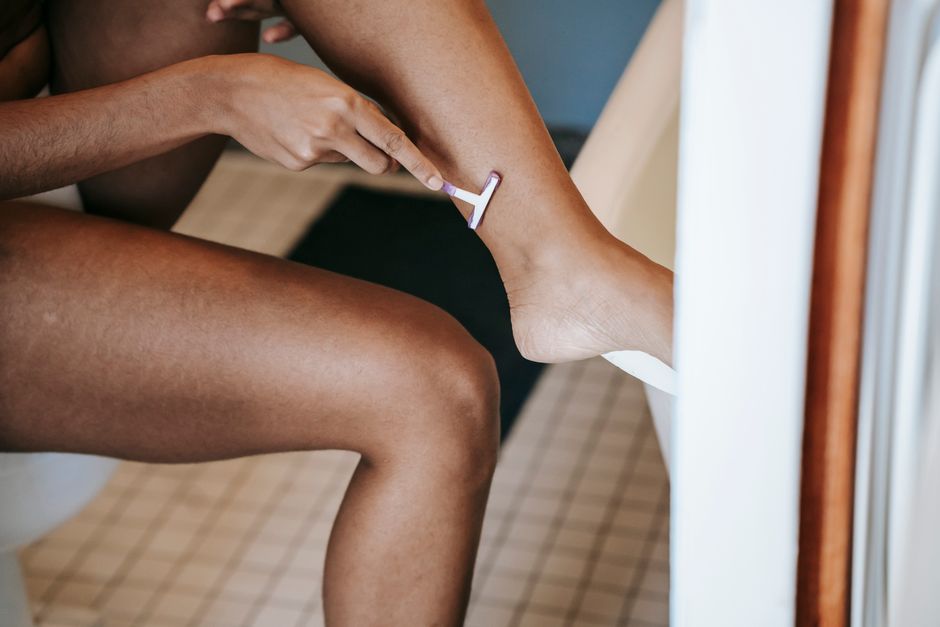
Ingrown hairs on your legs happen when a hair curls back or grows sideways into the skin instead of up and out. The result is a small, sometimes painful bump that can look red or inflamed. The most effective way to eliminate them is to stop the cause: prevent the hair from getting trapped under the skin in the first place. This means changing how you shave, exfoliating regularly, and treating existing bumps with the right ingredients. Below is a breakdown of what the evidence actually says about each step.
What Causes Ingrown Hairs on Legs?
Ingrown hairs are a mechanical problem. The hair shaft gets trapped beneath the surface of the skin. This happens most often after shaving, waxing, or using hair removal creams. When you shave, you cut the hair at a sharp angle. As it grows back, the pointed tip can easily pierce the skin wall and get stuck.
Curly or coarse hair is more likely to cause ingrown hairs. The natural curl makes it harder for the hair to find the follicle opening. People with naturally curly hair tend to get ingrown hairs more often. This is not a flaw in your skin. It is simply a physical property of the hair type.
Tight clothing and friction also play a role. When you wear leggings or tight jeans right after shaving, the fabric presses the hair against the skin. This pushes the growing tip sideways instead of letting it rise straight up. The result is an ingrown hair one or two days later.
How To Eliminate Ingrown Hairs On Legs: What the Research Shows
Research published in the Journal of the American Academy of Dermatology has identified the most effective treatments for ingrown hairs. The strongest evidence supports two approaches: preventing the hair from getting trapped and reducing inflammation once it is trapped.
For prevention, the key is exfoliation. Physical exfoliation with a gentle scrub or a dry brush removes the layer of dead skin cells that can block the hair from emerging. Chemical exfoliation with salicylic acid or glycolic acid works even better for some people. These acids dissolve the bonds between dead skin cells, clearing the follicle opening without scrubbing. Studies show that regular use of a 2% salicylic acid product reduces ingrown hair incidence by roughly 40 to 50 percent over four weeks.
For treating existing bumps, the research points to topical retinoids. Tretinoin and adapalene are prescription-strength options that speed up skin cell turnover. This helps the trapped hair break through the surface faster. Over-the-counter retinol is weaker but still useful for mild cases. The CDC also notes that keeping the area clean with an antibacterial wash can prevent the bumps from becoming infected.
What Shaving Technique Actually Prevents Ingrown Hairs?
Most people shave wrong for preventing ingrown hairs. The common advice to shave against the direction of hair growth gives you a closer shave but also creates sharper hair tips. Those sharp tips are exactly what cause ingrown hairs. Research shows that shaving in the direction of hair growth reduces ingrown hair formation significantly.
Here are the evidence-backed steps for shaving your legs to minimize ingrown hairs:
- Shave in the direction of hair growth. This leaves a blunt tip that is less likely to pierce the skin.
- Use a sharp, single-blade razor. Multi-blade razors pull the hair up before cutting it, which lets the hair retract below the skin surface. Single blades cut at skin level.
- Shave after soaking in warm water for at least three minutes. This softens the hair and opens the follicle. Dry shaving or shaving at the start of a shower increases irritation.
- Do not stretch the skin taut while shaving. Stretched skin makes the hair retract deeper when cut. Let the skin lie naturally.
- Rinse the blade after every stroke. A clogged blade drags across the skin and increases friction.



Does Exfoliation Really Help? A Comparison of Methods
Exfoliation is the single most effective home method for preventing ingrown hairs. But not all exfoliation methods work the same way. The table below compares the most common approaches based on what the evidence shows.
| Method | How It Works | Best For | Evidence Level |
|---|---|---|---|
| Physical scrub (loofah, sugar scrub, dry brush) | Manually removes dead skin cells through friction | Mild cases, people without sensitive skin | Moderate. Some studies show benefit but risk of irritation is higher. |
| Salicylic acid (2% concentration) | Dissolves dead skin cells inside the follicle | Oily skin, clogged pores, mild ingrown hairs | Strong. Multiple studies show 40-50% reduction in ingrown hairs. |
| Glycolic acid (5-10% concentration) | Exfoliates the surface layer of skin | Dry or sun-damaged skin, rough texture | Strong. Effective but may cause stinging on sensitive skin. |
| Retinoids (retinol, tretinoin, adapalene) | Speeds up skin cell turnover at the cellular level | Chronic ingrown hairs, thick hair, darker skin tones | Strongest. Prescription retinoids have the most clinical evidence. |
The key insight here is that chemical exfoliation is generally more effective than physical scrubbing for ingrown hairs. Physical scrubs can actually worsen the problem if you scrub too hard. You can inflame the skin and create more blockage. Chemical exfoliants work deeper in the follicle without the mechanical damage.
What Treatments Work for Existing Ingrown Hairs?
If you already have a bump, the goal is to reduce inflammation and help the hair break through. The first step is to stop shaving or waxing that area for at least a few days. Let the skin rest. Continued irritation makes the bump worse.
Warm compresses applied for 10 minutes twice a day soften the skin and encourage the hair to emerge on its own. This is a simple method that works surprisingly well for many people. After the compress, you can gently apply a product with salicylic acid or benzoyl peroxide. Benzoyl peroxide helps if the bump looks infected or has pus. It kills bacteria and dries out the area.
Do not pick at or dig for the hair. This is the most common mistake people make. Picking introduces bacteria from your fingers into the follicle. It also damages the skin and can cause scarring or hyperpigmentation, especially in darker skin tones. If the hair is visible just under the surface, you can carefully lift it with a sterile needle. But if you cannot see the hair clearly, leave it alone. Your body will eventually push it out.
Common Misconceptions About Ingrown Hairs
One widespread myth is that waxing prevents ingrown hairs better than shaving. This is not true for everyone. Waxing removes the hair from the root, so the new hair grows back with a soft tip. That part is good. But waxing also damages the follicle wall in some people, which can actually increase the chance of ingrown hairs. Some people report fewer ingrown hairs with waxing, but the evidence is mixed. It depends heavily on your hair type and how your skin reacts.
Another myth is that ingrown hairs are caused by dirty skin or poor hygiene. This is false. Ingrown hairs are a mechanical problem, not a cleanliness problem. Scrubbing the area harder or more often will not fix it. In fact, over-washing and over-scrubbing strip the skin of its protective barrier and make inflammation worse.
Some people believe that laser hair removal is the only permanent solution. Laser hair removal does reduce ingrown hairs significantly because it damages the hair follicle and slows regrowth. But it is not permanent for everyone. Multiple sessions are required, and some hair may grow back over time. The American Academy of Dermatology states that laser treatment is the most effective option for people who get frequent, severe ingrown hairs. But it is expensive and not covered by most insurance.
Frequently Asked Questions
How long does it take for an ingrown hair to go away on its own?
Most ingrown hairs resolve within one to two weeks without treatment. If you apply warm compresses and stop shaving the area, it may clear faster.
Can you use toothpaste to treat ingrown hairs?
There is no clinical evidence that toothpaste helps ingrown hairs. It can irritate the skin and make redness worse.
Does coconut oil prevent ingrown hairs?
Coconut oil moisturizes the skin but does not exfoliate or open blocked follicles. It may help reduce irritation but will not prevent ingrown hairs on its own.
Should I pop an ingrown hair like a pimple?
No. Popping an ingrown hair pushes bacteria deeper into the skin and increases the risk of infection and scarring. Let it heal naturally or see a dermatologist.
