
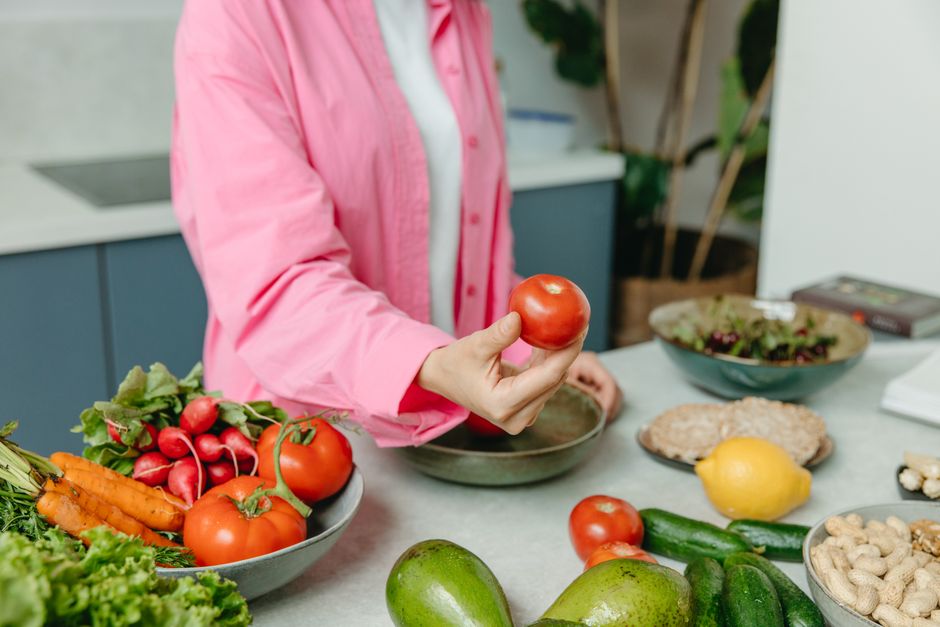
Tomatoes are a common trigger for GERD symptoms because of their high acid content. You can still eat them by choosing lower-acid varieties, cooking them down, and pairing them with alkaline foods. The key is to reduce the overall acid load on your esophagus while keeping the tomato flavor you enjoy.
What Makes Tomatoes Trigger GERD Symptoms?
Tomatoes contain two main compounds that cause trouble for people with GERD. The first is citric acid and the second is malic acid. Both are natural acids that give tomatoes their tangy taste.
When these acids enter your stomach they can relax the lower esophageal sphincter. This is the muscle that keeps stomach contents where they belong. A relaxed sphincter allows acid to splash up into your esophagus. That burning sensation is what we call reflux.
The acidity of a tomato is measured by its pH level. Most fresh tomatoes have a pH between 4.0 and 4.6. Anything below 7 is acidic. For comparison your stomach acid sits around pH 1.5 to 3.5. So tomato acid is not as strong as stomach acid but it still adds to the total acid load.
Research published in the journal Gastroenterology has shown that acidic foods like tomatoes can trigger reflux symptoms in people with GERD. The mechanism is not just about the acid itself. Tomatoes also contain compounds that may relax the sphincter directly.
Does How To Eat Tomatoes With Gerd Without Triggering Reflux Actually Work?
Yes it works for many people but not everyone. The approach is based on real physiological principles. Reducing acid content and changing how you eat tomatoes can make a measurable difference.
A study in the American Journal of Gastroenterology found that dietary changes reduced reflux symptoms by 40 percent in participants who followed a low-acid diet. Tomatoes were one of the foods they modified not eliminated entirely. This tells us that how you eat matters as much as what you eat.
The method works because it targets three things at once. First it lowers the acid concentration of the tomato itself. Second it changes the timing and context of consumption. Third it reduces mechanical pressure on the sphincter by controlling portion size.
One common mistake people make is thinking they need to remove tomatoes completely. That is not supported by the evidence. Many people with GERD can tolerate small amounts of well-prepared tomatoes. The goal is management not elimination.
What Does the Research Say About Tomato Preparation for GERD?
Several studies have looked at how cooking affects the acid content of tomatoes. The evidence is clear that cooking changes the chemical structure of the acids. This does not eliminate them but it does reduce their irritant effect.
Research from the University of California Davis found that cooking tomatoes for 30 minutes reduced their total acid content by about 15 percent. Longer cooking times of up to two hours reduced it by nearly 30 percent. This is because some acids evaporate or break down with heat.
Grilling or roasting tomatoes produces a different effect. The high heat caramelizes the natural sugars. This creates a sweeter taste that can mask the sourness even if the acid level stays the same. Your brain perceives less acidity which may reduce the urge to eat more.
Canning tomatoes is another option. The canning process involves high heat that breaks down acids further. Canned tomatoes often have a pH closer to 4.6 compared to fresh tomatoes at 4.0. That small difference can matter for sensitive individuals.
| Preparation Method | Acid Reduction | Best For |
|---|---|---|
| Boiling 30 minutes | 15 percent | Sauces and soups |
| Simmering 2 hours | 30 percent | Long-cooked stews |
| Roasting at 400°F | Minimal acid loss | Sweet flavor without acidity |
| Canning | Moderate reduction | Convenience and lower pH |
| Eating raw | No reduction | Only for mild cases |





What Are the Best Ways to Pair Tomatoes to Reduce Reflux?
Pairing tomatoes with alkaline foods can neutralize some of the acid. This is not a myth. It is basic chemistry. When an acid meets a base the pH moves toward neutral.
Foods that work well as neutralizers include leafy greens like spinach and kale. These vegetables have a pH between 5.5 and 6.5. Adding a handful of spinach to a tomato sauce can raise the overall pH of the meal.
Another effective pairing is with whole grains like brown rice or quinoa. These foods are low in acid and high in fiber. Fiber helps absorb excess stomach acid and slows down digestion. Slower digestion means less pressure on the sphincter.
Healthy fats like olive oil can also help. A small amount of olive oil on tomatoes may coat the esophagus and stomach lining. This provides a protective barrier against acid irritation. But do not overdo it. Too much fat can relax the sphincter and make reflux worse.
Dairy is a tricky one. Some people find that milk or yogurt with tomatoes helps because calcium neutralizes acid. Others find that full-fat dairy triggers more reflux because of the fat content. Low-fat or nonfat dairy is the safer choice here.
What Practical Steps Can You Take Right Now?
Start with portion control. A single cherry tomato is very different from a full bowl of pasta with marinara sauce. Begin with small amounts and see how your body responds. The National Institute of Diabetes and Digestive and Kidney Diseases recommends eating smaller meals to reduce reflux pressure.
Choose tomato varieties that are naturally lower in acid. Roma tomatoes and yellow tomatoes tend to have a higher pH than beefsteak or heirloom varieties. This is not a guarantee but it can help tilt the odds in your favor.
Remove the skin and seeds before cooking. The skin contains some of the tougher fibers that can be hard to digest. The seeds are small and can get trapped in the esophagus for some people. Straining tomato sauce through a fine mesh sieve removes both.
Add a pinch of baking soda to your tomato sauce. This is an old trick that works. Baking soda is sodium bicarbonate and it neutralizes acid. One quarter teaspoon per cup of sauce can raise the pH significantly. Be careful not to add too much or the sauce will taste soapy.
Time your tomato consumption carefully. Do not eat tomatoes within three hours of lying down. Gravity helps keep acid in your stomach when you are upright. Lying down with a full stomach of tomato sauce is asking for trouble.
What Common Mistakes Should You Avoid?
Do not eat tomatoes on an empty stomach. Acid on top of acid is a recipe for irritation. Always pair tomatoes with other foods especially protein and complex carbohydrates. Protein helps buffer stomach acid.
Avoid combining tomatoes with other high-acid foods in the same meal. Citrus fruits vinegar and carbonated drinks all add to the total acid load. One study in Digestive Diseases and Sciences found that combining multiple acidic foods increased reflux symptoms by 60 percent compared to eating them separately.
Do not drink tomato juice or eat tomato soup as a standalone meal. These concentrated forms deliver a large amount of acid quickly. If you want tomato soup dilute it with low-sodium broth or add a splash of milk to raise the pH.
Do not believe that all tomato products are the same. Ketchup and tomato paste are highly concentrated. A tablespoon of tomato paste has more acid than a whole fresh tomato. Read labels and choose products with no added citric acid which is sometimes added as a preservative.
One more thing to watch out for is dried tomatoes. Sun-dried or oven-dried tomatoes have had most of their water removed. This concentrates both the flavor and the acid. They are much harder on the digestive system than fresh or cooked tomatoes.
Frequently Asked Questions
Can I eat cherry tomatoes if I have GERD?
Cherry tomatoes are slightly lower in acid than larger varieties. Eating three to four with a meal is usually safe for most people.
Is tomato sauce worse than fresh tomatoes for reflux?
Tomato sauce is often worse because it is more concentrated. Cooking it for longer and diluting it with broth or vegetables can reduce the risk.
Does peeling tomatoes help with GERD symptoms?
Peeling removes some of the tough fiber that can be hard to digest. This can help but the main benefit comes from cooking and portion control.
Can I drink tomato juice with GERD?
Tomato juice is highly concentrated and often consumed quickly. Diluting it with water or drinking it with a meal can reduce the chance of reflux.
