
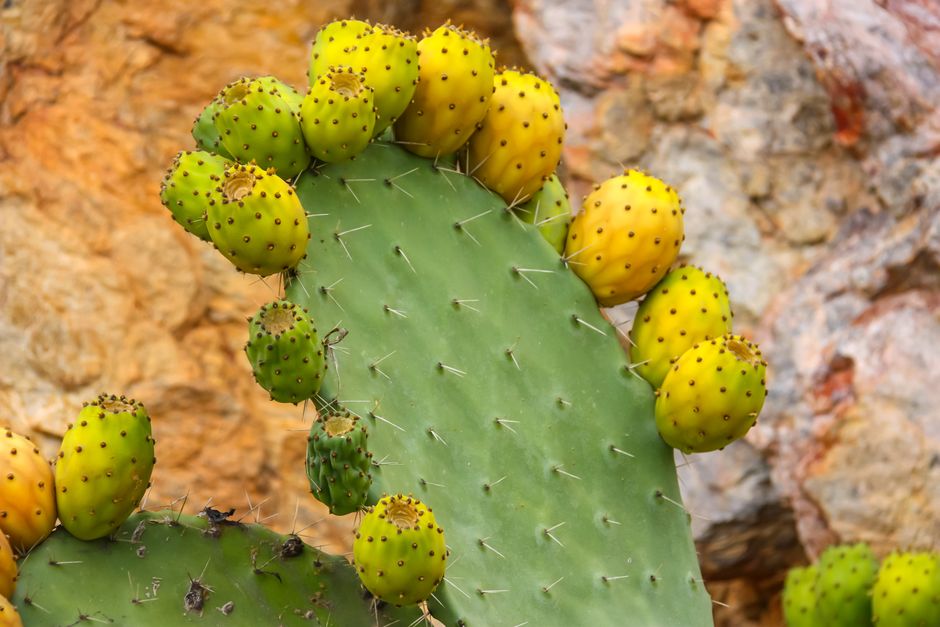
Prickly pear cactus fruit, also called tuna, is a sweet and colorful addition to your diet if you know how to prepare it safely. The fruit grows on the pads of the nopal cactus and is covered in tiny, hair-like spines called glochids that must be removed before eating. Handle the fruit with care, remove the skin, and you can enjoy it raw, blended, or cooked.
What Is a Prickly Pear and What Does It Taste Like?
The prickly pear is the oval fruit of the Opuntia cactus. It grows in warm, dry climates across the American Southwest, Mexico, and the Mediterranean. The fruit ripens in late summer and early fall, with colors ranging from green to yellow, orange, and deep red or purple.
The flavor is often compared to a mix of watermelon and bubblegum, with a mild sweetness. The texture is similar to a ripe pear or kiwi, but it is full of small, hard seeds that are edible but crunchy. Some people spit them out; others swallow them whole.
Both the fruit and the cactus pads, called nopales, are eaten. The pads are treated like a vegetable and cooked. The fruit is usually eaten raw or used in drinks and desserts.
How To Eat Prickly Pear: Step-by-Step Preparation
Preparing a prickly pear takes a few careful steps. The main challenge is the glochids — the tiny, almost invisible spines that cover the skin. They are not the large, obvious spines on the cactus pads. Glochids are fine, barbed hairs that lodge in skin easily and are painful to remove.
Follow these steps to prepare a prickly pear safely:
- Wear thick gloves or use tongs to hold the fruit. Kitchen towels can work, but the spines can pierce thin fabric.
- Rinse the fruit under cold water. This removes loose dirt and some glochids.
- Cut off both ends with a sharp knife. Slice about a quarter-inch off the top and bottom.
- Make a shallow slit lengthwise down the skin. Cut only through the skin, not into the flesh.
- Peel the skin back using the slit as a starting point. The skin should pull away in one or two pieces, similar to peeling a thick-skinned orange.
- Rinse the peeled fruit again to remove any remaining glochids that may have transferred during peeling.
Once peeled, the fruit is ready to eat. Slice it into rounds or cubes. The seeds can be eaten, but if you prefer, you can strain the flesh to make juice or puree.
If you buy prickly pears at a store, they are often already de-spined. Still check for any remaining glochids before handling with bare hands.
Can You Eat the Skin and Seeds?
The skin is not edible. Even after cooking, the skin and its glochids remain tough and unpleasant. Do not eat the skin, and do not blend the whole fruit with the skin on. The tiny spines can irritate the mouth and throat.
The seeds are edible. They are hard and crunchy, similar to sesame seeds in size but much firmer. Some people find them unpleasant and prefer to remove them. To remove seeds, press the peeled flesh through a fine mesh strainer or food mill. This yields a smooth juice or puree.
Eating the seeds provides some fiber, but no strong evidence suggests they offer unique health benefits beyond what the rest of the fruit provides. If you do not like the texture, straining them out is fine.




Raw, Cooked, or Blended: Best Ways To Eat Prickly Pear
Prickly pear is versatile. The method you choose depends on how you plan to use it.
Raw: This is the simplest way. Peel, slice, and eat the fruit as a snack. Add cubes to fruit salads, yogurt, or oatmeal. The raw fruit holds its shape well and adds a bright color.
Juice: Blend the peeled fruit, then strain out the seeds. The juice is sweet and can be mixed with water, lime juice, or other fruit juices. Prickly pear juice is a common ingredient in aguas frescas, a Mexican drink made with water, fruit, and sugar.
Cooked: The fruit can be simmered into a syrup, jam, or sauce. Cooking concentrates the sweetness and softens the seeds slightly. Prickly pear syrup is used to flavor cocktails, drizzle over pancakes, or sweeten iced tea.
Roasted: Some people roast whole, unpeeled prickly pears over an open flame or in the oven. The heat burns off the glochids and softens the flesh. After roasting, split the skin and scoop out the flesh. This method is common in traditional Mexican cooking.
No single method is better than the others. Choose based on what you are making. For a quick snack, eat it raw. For drinks, juice it. For desserts, cook it into a syrup.
Nutritional Value and Potential Health Benefits
Prickly pear is a low-calorie fruit with a decent amount of fiber and vitamin C. A single medium fruit contains only a small number of calories, making it a reasonable snack for weight management.
The fruit also contains antioxidants called betalains. These are the pigments that give the fruit its red or purple color. Some research suggests betalains have anti-inflammatory properties, but most of this work is in test tubes or animals, not large human trials.
Some studies have looked at prickly pear for blood sugar control. The evidence is mixed. A few small studies suggest that consuming prickly pear may lower blood sugar after a meal, but other studies show no significant effect. If you have diabetes, do not assume prickly pear will replace your medication. Monitor your blood sugar as usual and talk to your doctor before making dietary changes.
Prickly pear is not a miracle food. It is a nutritious fruit that fits into a balanced diet, but no clinical evidence supports claims that it cures or treats any disease. Be cautious of marketing that calls it a superfood or implies it has dramatic health effects.
Where To Buy Prickly Pear and How To Store It
Prickly pears are available in many grocery stores, especially in the Southwest and in stores that carry Mexican or Latin American produce. Farmers markets in late summer are also a good source. Look for fruit that is firm but gives slightly to gentle pressure, similar to a ripe avocado.
Color does not indicate ripeness. A green prickly pear can be just as ripe as a red one. The best indicator is firmness and a sweet smell at the stem end.
Store unpeeled prickly pears in the refrigerator for up to two weeks. Once peeled, the fruit should be eaten within a day or two. Peeled fruit can be frozen for longer storage. Freeze cubes on a baking sheet, then transfer to a freezer bag. Frozen cubes work well in smoothies.
If you pick prickly pears from a wild cactus, be very careful. Wild fruit may have more glochids than store-bought fruit. Wear heavy gloves and use tongs. Also confirm you have correctly identified the plant. Some cacti produce fruits that look similar but are not palatable.
Are There Any Risks or Side Effects?
The main risk is the glochids. If you get them in your skin, remove them with tweezers or tape. Do not rub the area, as this can push the spines deeper.
Eating the fruit is generally safe for most people. Some people report mild digestive upset, especially if they eat a large amount at once. The seeds can be hard to digest for some people, and the fiber content may cause bloating or gas.
If you are allergic to cactus or have a history of food allergies, start with a small amount. Severe allergic reactions to prickly pear are rare but possible.
Pregnant and breastfeeding women can eat prickly pear as food. No clinical guidelines address prickly pear supplements in these populations, so stick to eating the fruit itself and avoid concentrated extracts or supplements.
If you take medication for diabetes, be aware that large amounts of prickly pear might affect blood sugar. This is not a reason to avoid the fruit, but it is a reason to be consistent and monitor your levels.
Frequently Asked Questions
How do you remove the spines from a prickly pear?
Wear thick gloves and rinse the fruit, then cut off both ends and peel the skin away with a knife. Rinse the peeled flesh again to remove any remaining glochids.
Can you eat prickly pear raw?
Yes, prickly pear can be eaten raw after peeling. Slice it into cubes and eat it as a snack or add it to salads and yogurt.
Is prickly pear good for you?
Prickly pear is a low-calorie fruit with fiber and vitamin C. Some research suggests it may help with blood sugar control, but the evidence is mixed and it is not a treatment for any condition.
Do you have to remove the seeds from prickly pear?
No, the seeds are edible but hard and crunchy. If you do not like the texture, press the flesh through a strainer to remove them.
