
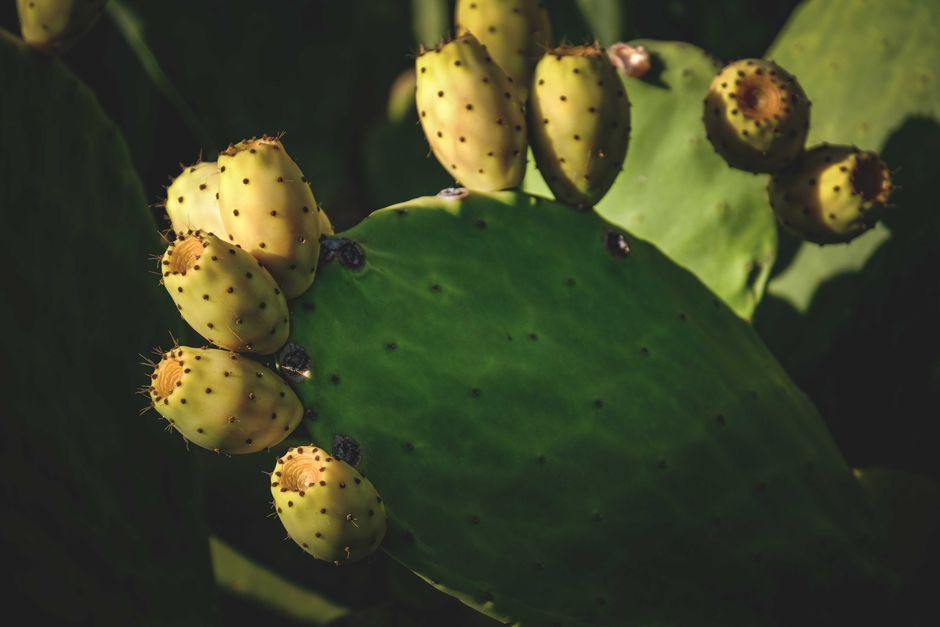
Prickly cactus pear is eaten by cutting away the outer skin and removing the small hard seeds inside, then slicing or scooping the soft flesh. You peel it with a knife and fork rather than your hands, because the tiny spines on the skin can stick into fingers. The fruit is safe to eat raw once peeled, and it can also be cooked into jams, sauces, and drinks. Knowing how to handle the skin carefully is the part most people get wrong.
What Is a Prickly Cactus Pear?
A prickly cactus pear is the fruit of the Opuntia cactus, also called the prickly pear cactus. The plant grows widely in Mexico, the southwestern United States, and parts of the Mediterranean. The fruit itself is often called a tuna in Spanish-speaking regions, while the flat green pads of the plant are called nopales.
The fruit is oval and comes in several colors, including green, yellow, orange, red, and deep purple. The color usually hints at flavor. Red and purple types tend to be sweeter and juicier, while green types are milder and sometimes more tart. The flavor is often described as a mix of watermelon and bubblegum, with a soft, seedy texture.
One important point: the fruit is not the same as the cactus pad. People eat both, but they are prepared differently. The pads are cooked like a vegetable. The fruit is eaten raw or used in sweet recipes. Do not confuse the two when you shop.
Why You Need to Be Careful With the Skin
The skin of the cactus pear carries tiny spines called glochids. These are not the large, obvious spines you see on some cacti. They are small, hair-like, and barbed. They can lodge in your skin and cause irritation that lasts for days.
Some grocery stores sell fruit with the glochids already removed, but you cannot always tell by looking. Treat every cactus pear as if the spines are still present. This single habit prevents most of the trouble people run into.
If a glochid does get into your skin, do not rub the area. Rubbing pushes the spines deeper. Try to remove them with tweezers or by pressing tape over the spot and pulling it away. If many spines are stuck or the area becomes swollen and painful, seek medical care.
How Do You Peel and Cut a Cactus Pear Safely?
Peeling is the step that matters most. The goal is to never let the outer skin touch the flesh you plan to eat, and to keep the spines away from your hands.
- Rinse the fruit under cool running water. Hold it with tongs or a thick kitchen towel, not bare hands.
- Slice off both ends with a sharp knife.
- Make a shallow lengthwise cut through the skin, from one end to the other.
- Use the knife to peel the skin back, or slide a spoon between the skin and the flesh to separate them.
- Discard the skin right away so stray spines do not end up on your cutting board or counter.
Once peeled, the flesh is soft and full of small hard seeds. You can slice it into rounds or cubes, or scoop it out with a spoon. Some people eat the seeds along with the flesh. They are hard and can be unpleasant to chew, so many people spit them out or strain them when making juice.
A common mistake is peeling the fruit with bare hands over a sink. The glochids can transfer to the sink, the towel, and your fingers. Work on a clean board and wash your hands and tools afterward.




How To Eat Prickly Cactus Pear Raw
Raw is the simplest way to eat cactus pear, and it keeps the texture and flavor intact. After peeling, eat the flesh fresh with a spoon or fork. Chilling the fruit in the refrigerator for an hour or two makes it more refreshing, especially in hot weather.
You can add the chopped flesh to fruit salads, yogurt, or oatmeal. It also works well in smoothies, where the seeds get blended and are easier to swallow. Some people squeeze lime juice over the slices to balance the sweetness.
One practical note: cactus pear can act as a mild laxative for some people, mainly because of its fiber and seed content. If you have never eaten it, start with a small amount rather than a large portion. This is a common reaction and not a sign of anything wrong with the fruit.
Can You Cook With Cactus Pear?
Yes. Cactus pear holds up well in cooked recipes, and cooking softens the seeds and deepens the sweetness. It is often made into jams, jellies, syrups, and sauces. The juice is also used in drinks, including aguas frescas and cocktails.
To make juice, peel the fruit, blend the flesh, then strain out the seeds through a fine mesh sieve or cheesecloth. The strained juice can be sweetened and chilled. Cooked down with sugar, it becomes a syrup you can pour over pancakes or desserts.
Some people grill or roast the fruit briefly, which caramelizes the natural sugars. Others use it in savory dishes, such as salsas or sauces for meat. The fruit pairs well with lime, chili, and mild cheeses.
What Does Cactus Pear Offer Nutritionally?
Cactus pear is a source of fiber, vitamin C, and certain plant compounds. It contains water and some natural sugars, which is part of why it tastes sweet and juicy.
According to USDA nutritional data, the fruit provides fiber and vitamin C along with smaller amounts of other nutrients. The exact values vary by variety and ripeness, so treat any single number as an estimate rather than a fixed figure.
Some research suggests cactus pear may have effects on blood sugar and cholesterol, but the evidence is not strong enough to present the fruit as a treatment for any condition. If you take medication for diabetes or cholesterol, talk with your doctor before making the fruit a regular part of your diet. Food is not a substitute for prescribed treatment.
How Do You Choose and Store Cactus Pear?
Pick fruit that feels firm but gives slightly when pressed, similar to a ripe avocado. Avoid fruit with soft, mushy spots, cuts, or mold. A deep, even color usually means the fruit is ripe and sweet.
Store whole cactus pears in the refrigerator. They keep for several days, and some varieties last a bit longer. Once peeled, eat the flesh within a day or two and keep it covered in the fridge. Peeled flesh does not store well for long.
If you buy fruit with the spines still on, keep it away from other produce so the glochids do not transfer. A sealed container or bag helps. Wash your hands after handling the whole fruit, even if you wore gloves.
Who Should Be Cautious With Cactus Pear?
Most people can eat cactus pear without problems. The main issues are the spines, the seeds, and the mild laxative effect from the fiber.
People with diabetes should pay attention to how the fruit affects their blood sugar, since it contains natural sugars. Those who take blood sugar or cholesterol medication should check with a clinician before eating it regularly, because of the possibility of added effects.
Anyone with a history of reactions to the fruit or the cactus plant should avoid it. If you are pregnant or breastfeeding, there are no established clinical guidelines for cactus pear specifically, so ask your doctor before adding it in large amounts. As with any new food, start small.
Frequently Asked Questions
Can you eat the skin of a cactus pear?
The skin is edible in the sense that it is not toxic, but it carries tiny spines called glochids that can lodge in your mouth and throat. Most people peel it for that reason, and peeling is the safer choice.
Are the seeds of a cactus pear safe to eat?
Yes, the seeds are safe to swallow, but they are hard and can be unpleasant to chew. Many people spit them out or strain them when making juice.
Does cactus pear make you poop?
It can have a mild laxative effect for some people because of its fiber and seed content. Start with a small portion if you have never eaten it.
How do you remove cactus pear spines from your skin?
Use tweezers to pull them out, or press tape over the spot and pull it away. Do not rub the area, because rubbing pushes the spines deeper. Seek medical care if many spines are stuck or the area becomes swollen and painful.
