
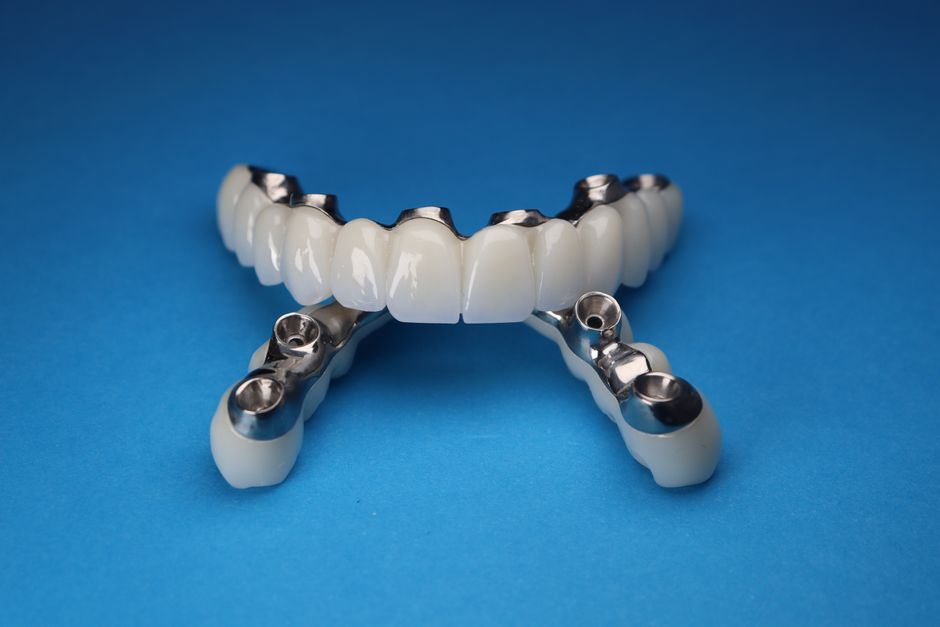
You can eat pizza with dentures. The trick is changing how you bite, not giving up the food. Cut each slice into smaller pieces, chew on both sides of your mouth at once, and choose softer crusts and toppings while you build confidence. Most problems with pizza come from three things: a hard crust edge, a hot cheese pull that tugs at a loose plate, and biting with only one side of the jaw, which can tip a denture out of place.
None of that means pizza is off the table. It means you eat it differently than you did before. Here is what is actually happening in your mouth, and how to work with it.
Why Is Pizza Harder With Dentures Than Other Foods?
Pizza combines several challenges in one bite. A traditional crust is dense and requires real shearing force to break. The cheese is hot, stretchy, and sticky. The toppings can be hard, chewy, or slippery. And a slice is usually eaten by biting into a large piece rather than cutting it small.
Dentures do not work like natural teeth. Natural teeth are anchored in bone through the periodontal ligament, a tiny cushion that lets each tooth flex slightly under pressure and tells your brain exactly how hard you are biting. Dentures rest on the gums and the bony ridge underneath. They transmit force directly to that tissue. There is no ligament, and there is less sensory feedback about how much pressure you are applying.
That difference matters for pizza specifically. You cannot feel the crust the way you used to, so it is easy to bite harder than you intend. And the fit of a denture depends on suction, adhesion, and the shape of your jaw. A hard, off-center bite can break that seal.
Upper dentures usually hold better than lower ones. The upper denture covers the roof of the mouth, which creates a large suction surface. The lower denture sits on a ridge with the tongue moving around it constantly, and it has far less surface area to work with. This is why many people find lower dentures shift more during chewing. It is a well-recognized difference in denture function, not a personal failing.
How To Eat Pizza With Dentures Without Problems
The practical approach comes down to preparation, portion size, and even chewing. None of it requires special equipment beyond a knife and fork.
Before you take a bite
- Cut the slice into small pieces, roughly bite-sized or smaller. This is the single most effective change.
- Let the pizza cool for a few minutes. Very hot cheese is more pliable and more likely to stick and pull.
- Consider a softer crust style. Thin crust can be crisp and shattery, while a soft hand-tossed or pan crust is dense but gives way more gradually. Try both and notice which your dentures handle better.
- Check that your dentures are seated properly before eating. A denture that is already slightly loose will not improve mid-slice.
While you chew
- Chew on both sides at the same time, or alternate sides evenly. Chewing on one side only creates a lever effect that can lift the denture on the opposite side.
- Take smaller bites than feels natural. Your sense of “a normal bite” was calibrated to natural teeth.
- Use your tongue to help position food and clear the roof of your mouth, especially with an upper denture.
- Avoid tearing at the crust with your front teeth. Incising with the front of a denture is where tipping and dislodging most often happen.
One clarification worth knowing: a soft diet does not mean a mushy diet. You still need to chew real food for nutrition. The goal with pizza is to reduce the force per bite, not to avoid chewing altogether.
Which Pizza Toppings Are Easier On Dentures?
Softer toppings cause fewer problems. Hard, crunchy, or stringy toppings are the ones that tend to catch, stick, or require extra force.
Easier options generally include:
- Soft cheeses and well-melted mozzarella
- Cooked vegetables such as roasted peppers, mushrooms, or spinach
- Ground or shredded meats rather than large chunks
- Soft, cooked toppings rather than raw or crunchy ones
Toppings that tend to cause trouble include whole nuts, large chunks of hard sausage, thick raw onion, and anything with a hard or fibrous texture. Very stretchy cheese is a separate issue from hardness: it does not break, it pulls. Letting the pizza cool slightly helps here more than changing the topping.
Crust style matters as much as toppings. A very thin, cracker-like crust can shatter and send hard fragments against the gums. A thick, dense crust requires more force but breaks more predictably. There is no single “best” crust for everyone, because fit and jaw shape vary. What works for one person may not for another.





What If Your Dentures Slip While Eating Pizza?
Occasional slipping during a challenging food like pizza is common, especially with new dentures or lower dentures. The question is whether it is occasional or frequent, and whether it is getting better or worse.
New dentures take time to adjust to. The gums and bone change shape, particularly in the first months after teeth are removed, and a denture that fit well initially may loosen as the ridge shrinks. This is expected and is one reason follow-up adjustments are part of normal denture care. If slipping is persistent rather than occasional, a denture that needs adjusting or relining is a common explanation, and a dental professional can assess the fit.
Denture adhesive can help with retention for some people. It is widely used and can improve hold, though it is a support rather than a fix for a poorly fitting denture. If you are relying on adhesive heavily just to eat, that is worth raising with your dentist.
If you have a partial denture, the same principles apply, but the natural teeth remaining can sometimes help anchor the partial. Ask your dental professional how your specific appliance is designed to function during chewing.
Can You Damage Your Gums Or Jaw By Eating Pizza?
Pizza itself is unlikely to damage healthy gums when eaten with care. The bigger risks are indirect: biting down hard on a hidden hard fragment, or persistent uneven chewing that puts repeated pressure on one area of the ridge.
Some people develop sore spots under a denture from uneven pressure. These are common and usually resolve with adjustment, but persistent soreness, bleeding, or pain that does not settle should be checked rather than tolerated. Gum tissue under a denture does not have the same protection as tissue around natural teeth, so ongoing irritation is worth taking seriously.
There is also a nutrition angle that gets overlooked. People with dentures sometimes eat less variety because certain foods feel difficult. That can affect overall diet quality over time. Finding ways to keep eating foods you enjoy, including pizza, supports better nutrition than avoiding them.
Does Pizza Fit Into A Healthy Diet With Dentures?
Pizza can be part of a balanced diet. The denture question is about mechanics, not nutrition rules. How you eat it does not change what it contains.
What matters for health is the overall pattern: how often, what toppings, and what else you eat. Pizza tends to be high in sodium and saturated fat, and portion size matters. Choosing vegetable toppings, going lighter on processed meats, and pairing pizza with a side of vegetables or a salad are reasonable adjustments that have nothing to do with dentures.
The mechanical adjustments above let you keep a food you enjoy without turning every meal into a struggle. That is the point. Eating should not become a source of anxiety, and small changes in how you approach a slice usually make the difference.
Frequently Asked Questions
Can you eat pizza with dentures?
Yes, most people with dentures can eat pizza by cutting it into small pieces and chewing evenly on both sides. Softer crusts and toppings make it easier while you adjust.
What is the best pizza crust for dentures?
There is no single best crust, because fit and jaw shape vary from person to person. A soft hand-tossed or pan crust tends to break more predictably than a very thin, shattery crust, but trial is the only reliable way to know what works for you.
Why do my dentures slip when I eat pizza?
Hard, off-center bites can break the seal that holds a denture in place, and lower dentures have less suction surface than upper ones. Frequent slipping may also mean the denture needs adjusting or relining.
Can I use denture adhesive to eat pizza?
Adhesive can improve hold for some people, but it is a support rather than a fix for a poorly fitting denture. If you need it heavily just to eat, have the fit checked.
