
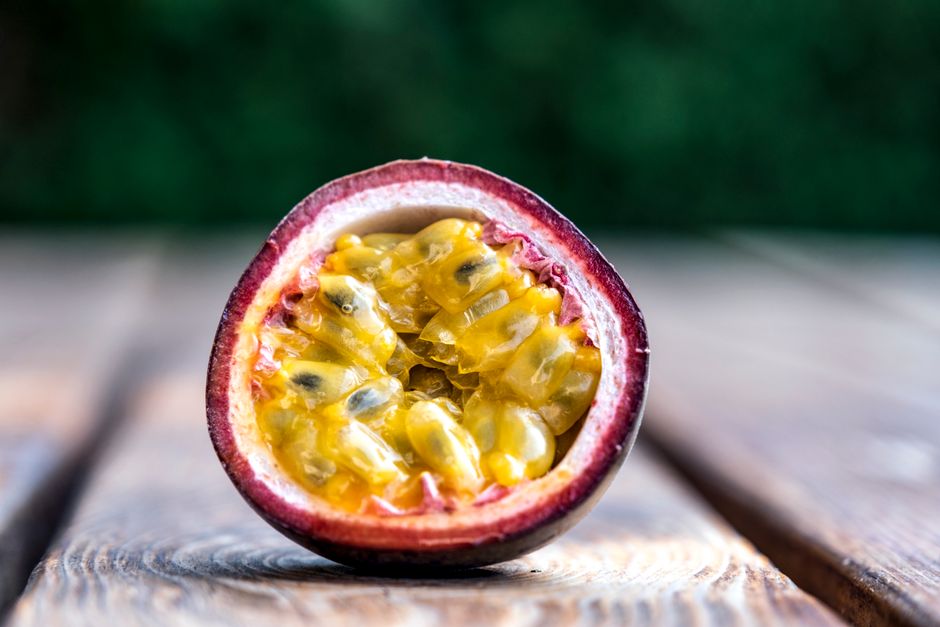
Passion fruit is a small, round fruit with a tough outer rind and a jelly-like center full of crunchy seeds. To eat it, cut the fruit in half, scoop out the pulp with a spoon, and eat the pulp and seeds together. The rind is not edible, but nearly everything inside is. You can eat it raw, strain the pulp for juice, or blend it into sauces, drinks, and desserts.
That is the short answer. The rest comes down to choosing a ripe fruit, knowing which parts to eat, and understanding why the seeds are worth keeping rather than spitting out.
What Does Passion Fruit Taste Like?
Passion fruit tastes tropical, tart, and intensely aromatic. The flavor sits somewhere between pineapple, guava, and citrus, with a floral note that is hard to compare to anything else. Ripe fruit is sweet-tart. Underripe fruit is sharply sour and much less pleasant to eat straight.
There are two main types sold in the United States. Purple passion fruit has a dark, wrinkled skin and tends to be sweeter and less acidic. Yellow passion fruit is larger, smoother, and more sour. Most grocery stores carry the purple variety. Both are eaten the same way.
The aroma is a big part of the experience. Passion fruit is one of the most concentrated flavor sources in the fruit world, which is why a small amount can flavor a whole drink or dessert.
How Do You Know When Passion Fruit Is Ripe?
A ripe passion fruit has a deeply wrinkled, dimpled rind. That is the clearest sign. Smooth, glossy skin usually means the fruit was picked early and will be more sour.
Wrinkling is not a defect. It is what happens as the fruit loses moisture and the sugars and acids inside reach their peak. Many people avoid wrinkled fruit at the store, not realizing it is the better choice.
Other signs of ripeness:
- The fruit feels heavy for its size, which means the pulp is still moist.
- The skin gives slightly when pressed, but the fruit is not mushy or leaking.
- It smells sweet and floral near the stem end.
If you buy a smooth passion fruit, leave it on the counter for a few days. It will wrinkle and sweeten. Once ripe, you can store it in the refrigerator for about a week. The pulp also freezes well, which is useful because fresh passion fruit is seasonal and can be expensive.
How To Eat Passion Fruit Step By Step
The simplest method takes about a minute. Cut the fruit in half across its middle with a sharp knife. The rind is tough, so a serrated knife or a firm, steady cut works better than pressing hard with a thin blade.
Once open, you will see a yellow-orange pulp packed with dark seeds. Scoop it out with a spoon and eat it as is. The seeds are edible and are meant to be eaten. They add a crunchy texture and are a normal part of the fruit, not something to remove.
A few practical notes:
- Eat over a bowl or plate. The pulp is juicy and can drip.
- Do not eat the rind. It is tough, bitter, and not digestible in a useful way.
- The white pith just under the rind is also not eaten. It is spongy and bland.
- If you want juice rather than pulp, push the contents through a fine mesh strainer to remove the seeds.
Some people prefer to cut the fruit in half and eat it with a spoon like a soft-boiled egg. Others scoop the pulp into a bowl first so they can mix it with other ingredients. Both work fine.
Do You Eat the Seeds?
Yes. The seeds are edible and safe to swallow. They are small, black, and surrounded by a translucent gel that holds most of the flavor.
The seeds are crunchy and slightly fibrous. Some people love the texture. Others find it distracting and prefer to strain the pulp. There is no health reason to avoid them. In fact, the seeds contain some fiber and a small amount of healthy fat.
One thing worth knowing: passion fruit seeds are not a choking hazard for adults, but they are firm. If you are serving passion fruit to a young child, you may want to strain the seeds out first. No clinical guidelines specifically address passion fruit seeds for infants or toddlers, so use your judgment and follow general guidance on age-appropriate textures.
Ways to Use Passion Fruit Beyond Eating It Raw
Passion fruit is versatile. Its strong flavor means a little goes a long way, which is why it shows up in so many drinks and desserts.
Common uses:
- Juice and cocktails. Strain the pulp and mix with water, sparkling water, or spirits. Passion fruit pairs well with rum, vodka, and tequila.
- Smoothies and yogurt. Scoop the pulp straight into a blender or stir it into plain yogurt for sweetness and texture.
- Desserts. Spoon it over ice cream, cheesecake, or pavlova. It also works in mousse, curd, and frosting.
- Sauces and dressings. The acidity makes it a good match for vinaigrettes, marinades, and sauces for fish or chicken.
- Mocktails and iced tea. A spoonful adds tropical flavor without much sugar.
If you are using a recipe that calls for passion fruit puree, you can often substitute fresh pulp. Just keep in mind that fresh pulp has seeds, while most commercial purees are strained.
What Are the Nutrition and Health Considerations?
Passion fruit is a good source of fiber and vitamin C. It also provides vitamin A, potassium, and some iron. The seeds add a small amount of healthy fat and additional fiber.
Like most whole fruits, it fits well into a balanced diet. It is naturally sweet but not excessively so, and the fiber content helps slow how quickly the sugars are absorbed.
A few honest points about health claims. Passion fruit is often marketed as a sleep aid, a stress reliever, or a digestive tonic. Some of this comes from research on passionflower, which is a different plant. Passionflower (Passiflora incarnata) has been studied for anxiety and sleep, but that is not the same as the fruit (Passiflora edulis). Do not assume the fruit carries the same effects.
Passion fruit itself has not been shown in large human trials to treat any medical condition. It is a nutritious fruit, not a medicine. If you see claims that it lowers blood pressure, improves sleep, or boosts immunity in a meaningful clinical way, those claims are not supported by strong evidence.
One practical caution: passion fruit is acidic and high in fiber. Eating a large amount at once may cause stomach discomfort or loose stools in some people. Start with one fruit and see how you feel.
Can You Eat the Rind or Leaves?
No. The rind is tough, bitter, and not meant to be eaten. The leaves and stems of the passion fruit plant should also be avoided. They contain compounds that can be toxic in sufficient amounts, and they are not a food.
This matters because passion fruit is sometimes confused with passionflower, whose leaves and flowers are used in teas and supplements. They are related plants, but they are not interchangeable. Eat the pulp and seeds of the fruit. Leave the rest of the plant alone.
Where to Buy Passion Fruit and What to Expect
Fresh passion fruit is sold in many US grocery stores, especially in areas with Latin American, Caribbean, or Asian markets. It is often near the tropical fruit section. Availability varies by season, and prices can be high because most of it is imported.
Frozen passion fruit pulp is a good alternative. It is usually sold in bags or blocks and keeps for months. Canned or bottled juice and puree are also widely available, though many contain added sugar. Check the label if you are watching your sugar intake.
If fresh fruit is hard to find, frozen pulp gives you most of the same flavor and nutrition without the hassle of cutting and scooping.
Frequently Asked Questions
Can you eat passion fruit seeds?
Yes, the seeds are edible and safe to swallow. They add crunch and a small amount of fiber, though some people prefer to strain them out.
Do you eat the skin of a passion fruit?
No, the rind is tough, bitter, and not edible. Only the pulp and seeds inside are meant to be eaten.
How do you know when a passion fruit is ripe?
A ripe passion fruit has a wrinkled, dimpled skin and feels heavy for its size. Smooth skin usually means it is underripe and more sour.
Is passion fruit the same as passionflower?
No, they are related but different. Passion fruit is the fruit of Passiflora edulis, while passionflower refers to plants like Passiflora incarnata used in teas and supplements.
