
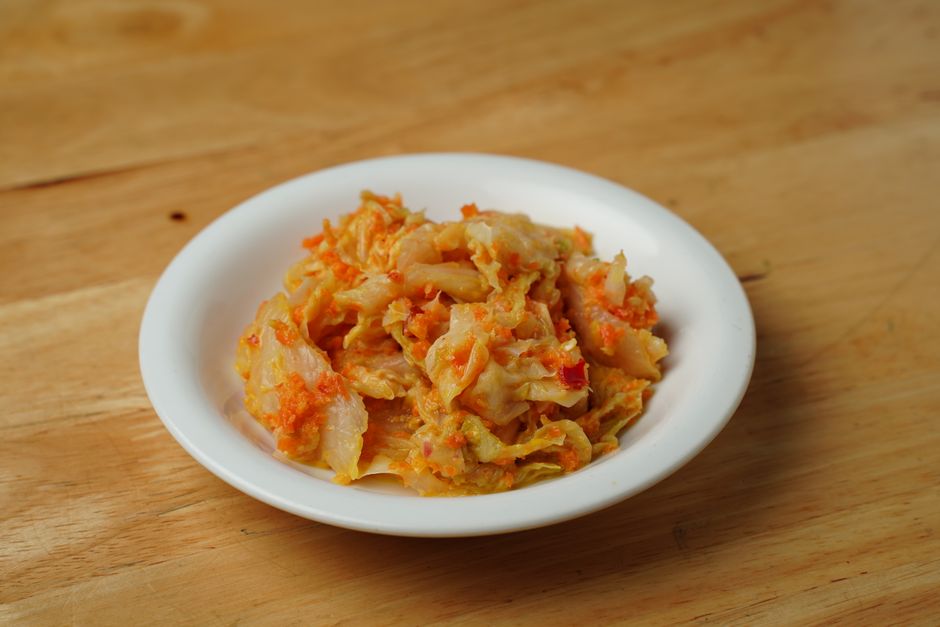
Kimchi is fermented cabbage, radish, or other vegetables, and fermentation is what makes it interesting for gut health. The bacteria that drive fermentation can survive in the finished product, and some of them reach the large intestine alive. To get the most from kimchi, eat it raw and unpasteurized, start with small amounts, and keep it refrigerated. Cooking kills the live cultures, so a simmered kimchi stew is food, not a probiotic delivery system.
What Happens to Kimchi Bacteria in Your Gut?
Kimchi contains live lactic acid bacteria, mostly species from the Lactobacillus, Leuconostoc, and Weissella groups. These are the same broad families found in yogurt, sauerkraut, and other fermented foods. They produce lactic acid during fermentation, which is what gives kimchi its sour bite and preserves the vegetables.
When you eat raw kimchi, a portion of those bacteria survive the trip through the stomach. Stomach acid kills many of them, but not all. Some reach the small intestine and colon. Whether they take up residence there is a different question. Most probiotic bacteria are transient — they pass through rather than colonizing permanently. That does not mean they do nothing. A growing body of research suggests that transient bacteria can still interact with your existing gut microbes and with the lining of your gut while they are present.
Kimchi also delivers prebiotics — fiber and other compounds that feed the bacteria already living in your colon. The cabbage itself provides fiber. Fermentation breaks down some of that fiber and creates new compounds, including short-chain fatty acids and various metabolites. So kimchi works on two fronts at once: live bacteria going in, and food for your existing bacteria.
One clarification worth making: the research on kimchi and gut health is promising but not as deep as the research on some other fermented foods. Much of it comes from laboratory studies and animal models, with a smaller number of human trials. The evidence points in a favorable direction. It does not yet support sweeping claims.
Does Cooking Kimchi Destroy the Benefits?
Heat kills live bacteria. If you cook kimchi — in stews, fried rice, pancakes, or soups — the probiotic organisms die. What remains is the fiber, the flavor compounds, and some of the metabolites produced during fermentation.
That is not a reason to avoid cooked kimchi. Cooked kimchi still contributes fiber and plant compounds to your diet. It is simply no longer a source of live cultures. If your goal is specifically to get live bacteria into your gut, eat kimchi raw or add it to a dish after the heat has been turned off.
Pasteurized kimchi sold at room temperature has also been heat-treated or otherwise processed to stop fermentation. It will not contain meaningful amounts of live bacteria. Check the label. Refrigerated kimchi is usually unpasteurized, though not always. Words like “live cultures” or “contains live and active cultures” are a reasonable indicator, but labeling rules for fermented vegetables are less standardized than for yogurt.
How Much Kimchi Should You Eat?
There is no official recommended serving of kimchi for gut health. No health agency has established a target intake. That is an honest limitation, not an oversight.
What is reasonable: start with a small amount, roughly a forkful or a tablespoon, and see how your body responds. Some people notice gas, bloating, or looser stools when they first add fermented foods. This usually settles within a week or two as your gut adjusts. If it does not, reduce the amount or pause.
Common amounts in Korean cuisine range from a small side dish portion to larger servings with meals. Many people eat kimchi daily without issue. Others find that larger amounts cause digestive discomfort, particularly if they are not used to fermented foods.
More is not automatically better. There is no evidence that eating large quantities of kimchi produces better gut outcomes than eating moderate amounts. The dose-response relationship for fermented vegetables and gut health has not been well characterized in human studies.



What About Sodium and Other Concerns?
Kimchi is high in sodium. The traditional preparation involves salting the cabbage heavily before fermentation. A typical serving can contain a meaningful share of your daily sodium allowance. If you have high blood pressure, heart failure, kidney disease, or your doctor has told you to watch your salt intake, portion size matters.
Some brands and homemade recipes use less salt. Rinsing kimchi briefly before eating can remove some surface sodium, though it also rinses away some of the live bacteria and flavor. There is no perfect solution here — just awareness.
Kimchi can also be spicy. The chili flakes used in most varieties can irritate the stomach in people with acid reflux, gastritis, or sensitive digestion. If spicy food bothers you, this is worth factoring in. Some milder varieties exist, but they are less common outside Korea.
People who are immunocompromised should talk to their doctor before adding raw fermented foods to their diet. Live bacteria in food are generally safe for healthy people, but the risk profile changes when the immune system is suppressed. This is established clinical caution, not a reason for most people to avoid kimchi.
How to Choose and Store Kimchi
The best kimchi for gut health is raw, unpasteurized, and refrigerated. Beyond that, a few practical points:
- Buy refrigerated, not shelf-stable. Shelf-stable jars have usually been heat-treated.
- Check the label for live cultures. Not all brands state this, but it is a useful signal when they do.
- Keep it cold. Refrigeration slows fermentation. Left at room temperature, kimchi continues to ferment and becomes increasingly sour.
- Use clean utensils. Scooping with a dirty fork introduces unwanted microbes and speeds spoilage.
- Eat it within a reasonable time after opening. The bacteria stay alive for a while, but the product changes over weeks.
Very sour, heavily fermented kimchi is not spoiled. It is just further along. It still contains live bacteria, though the mix of species shifts as fermentation continues. Some people prefer it; others find it too sharp to eat raw and use it in cooking instead.
Does Kimchi Actually Change Your Gut Bacteria?
This is the question that matters most, and the honest answer is: the evidence is growing but not yet definitive. Some human studies have found changes in the composition of gut bacteria after people eat fermented foods regularly. Other studies have found less consistent effects.
A key point: changes in gut bacteria composition do not automatically translate into health improvements. Researchers can measure which bacteria are present, but linking those shifts to specific health outcomes is harder. The gut microbiome is complex, varies enormously between individuals, and responds to diet, sleep, stress, medications, and many other factors.
What is better established is that fermented foods as a category have been associated with certain health benefits in observational studies. Whether kimchi specifically produces those benefits, and at what dose, is less clear. Kimchi is one fermented food among many. It is not uniquely powerful.
Fiber from kimchi and other vegetables, meanwhile, has well-documented benefits for gut health. Fiber feeds beneficial bacteria, supports regular bowel movements, and contributes to overall digestive function. That part is not in question, though kimchi is not a major fiber source compared to whole vegetables, legumes, or whole grains.
Practical Ways to Eat Kimchi for Gut Health
The simplest approach is to eat a small portion of raw kimchi with meals. It works as a side dish, a condiment, or a topping. Here are a few ways to work it in without cooking it:
- Serve it alongside rice, eggs, or grilled meat as a traditional side.
- Add it to a grain bowl after the hot ingredients have cooled slightly.
- Layer it into a sandwich or wrap.
- Stir it into cold noodle dishes.
- Top a baked potato or scrambled eggs with it just before eating.
If you want both flavor and live cultures, use kimchi two ways: cook some into a stew or fried rice for taste, and keep a separate batch in the fridge for raw use. That way you get the culinary benefits of cooked kimchi and the live bacteria from the raw version.
Pairing kimchi with other fiber-rich foods — vegetables, beans, whole grains — supports your gut bacteria more than kimchi alone. The goal is not to eat kimchi in isolation. It is to include it as one part of a diet that feeds your gut well.
Frequently Asked Questions
Is kimchi good for gut health?
Kimchi contains live lactic acid bacteria and fiber, both of which can support gut health. The evidence is promising but not as strong as for some other fermented foods, and much of it comes from laboratory and animal studies.
Does cooking kimchi kill the probiotics?
Yes, heat kills the live bacteria in kimchi. Cooked kimchi still provides fiber and flavor compounds, but it is no longer a source of live cultures.
How much kimchi should I eat daily?
No official recommended amount exists for gut health. A small serving of a tablespoon or two is a reasonable starting point, and you can adjust based on how your digestion responds.
Can kimchi cause bloating or gas?
Yes, some people experience gas, bloating, or looser stools when they first eat fermented foods. This usually settles within a week or two, but reducing the amount can help if it does not.
