
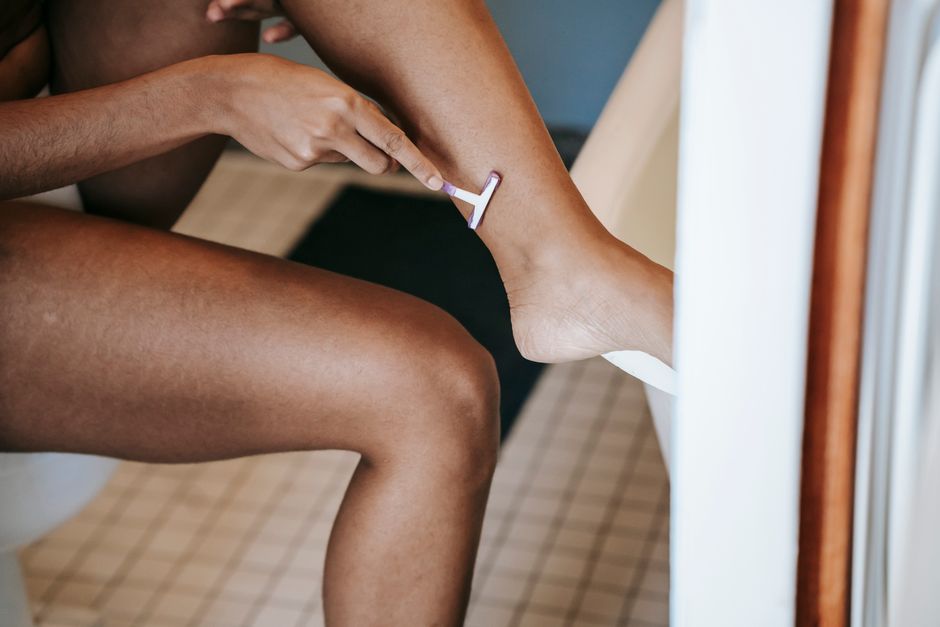
Razor burn is irritation of the skin that happens after shaving, usually showing up as redness, stinging, and small bumps within minutes to a few hours. The fastest way to ease it is to stop shaving that area, rinse with cool water, and apply a gentle, fragrance-free moisturizer or a cool compress. Most cases settle on their own within a few days, and better shaving habits are what prevent it from coming back.
What Actually Causes Razor Burn?
Razor burn is not an infection. It is a form of irritant contact dermatitis, meaning the skin reacts to physical and chemical irritation rather than to a germ.
Three things drive it. First, the blade scrapes off the top layer of skin cells along with the hair, and that mechanical friction irritates the skin underneath. Second, shaving removes some of the skin’s natural oils, leaving it drier and more reactive. Third, hair that is cut too close can curl back and poke into the skin, which is part of why bumps form.
Shaving against the direction of hair growth, using a dull blade, and shaving dry all make this worse. So does pressing hard. The razor does the cutting — pressure only adds friction.
Razor burn is sometimes confused with two other conditions. Razor bumps (pseudofolliculitis barbae) are inflamed bumps caused by ingrown hairs, and they tend to appear more in people with tightly curled hair. Folliculitis is actual inflammation or infection of the hair follicle, which can look similar but may need medical treatment if it spreads or persists. If bumps are painful, filled with pus, or spreading, that points away from simple razor burn.
How To Ease Razor Burn Treatments And Prevention
Treatment and prevention overlap more than people expect. What you do in the first hour after shaving calms the skin, and what you do before and during shaving decides whether it happens at all.
Immediate relief
Rinse the area with cool water to remove leftover shaving cream and loose hair. A cool, damp cloth held against the skin for a few minutes reduces the stinging. Avoid hot water, which can increase redness.
Apply a plain, fragrance-free moisturizer while the skin is still slightly damp. Products with fragrance, alcohol, menthol, or essential oils are more likely to sting irritated skin than help it. Aloe vera gel is a common choice and is generally soothing, though the evidence that it speeds healing of razor burn specifically is limited.
Skip anything that scrubs, exfoliates, or contains acids for a few days. Those will irritate skin that is already compromised.
What about hydrocortisone or other creams?
Over-the-counter hydrocortisone cream is sometimes used for a few days on inflamed skin. Some clinicians recommend short-term use for irritation, but it is not a proven treatment specific to razor burn, and it should not be used long-term or on broken skin without medical advice. If you use it, keep it brief and stop if the skin gets worse.
Antibiotic ointments are not appropriate for ordinary razor burn, because razor burn is not an infection. Using antibiotics when they are not needed does not help and can cause problems.
Prevention that actually works
The single biggest change is shaving in the direction the hair grows, not against it. Shaving with the grain leaves a slightly less close shave but causes far less irritation.
- Soak the area in warm water for a few minutes first, or shave at the end of a shower. Soft hair cuts more easily.
- Use a shaving gel or cream. Never shave dry.
- Use a sharp blade. Dull blades tug instead of cutting.
- Rinse the razor between strokes so it does not clog.
- Use light, short strokes. Do not press down.
- Rinse with cool water when you finish.
- Moisturize afterward.
How often you replace a blade depends on your hair thickness and how often you shave, so there is no single number that fits everyone. A blade that pulls or feels rough is past its useful life.
Does Shaving Cream or Gel Really Matter?
Yes, and the reason is mechanical. A lubricating layer lets the blade glide across the skin instead of dragging. Dry shaving removes that layer entirely and increases friction, which is one of the main drivers of razor burn.
Shaving gels, creams, and foams all provide lubrication. The specific product matters less than using one consistently. Some people with sensitive skin do better with fragrance-free shaving creams, since added fragrance can irritate reactive skin.
Shaving oil is another option. It provides glide, though it may not cushion as much as a thicker cream. There is no strong evidence that any one format is clearly better than the others for preventing razor burn. The consistent finding is that using something is better than using nothing.





Which Areas Are Most Prone to Razor Burn?
The bikini line, underarms, and neck are the most common trouble spots. Each has a reason.
The bikini line has skin that curves and folds, and hair that often grows in several directions. That makes it hard to shave with the grain consistently. The underarms have thin, sensitive skin and constant friction from clothing and movement. The neck has hair that grows in many directions, so a single pass can be with the grain in one spot and against it inches away.
For these areas, some people find that trimming to a short length rather than shaving to the skin reduces irritation. Others use a single pass with the grain and accept a less close result. Both are reasonable trade-offs.
When Should You See a Doctor?
Most razor burn clears within a few days without medical care. Seek medical attention if the area becomes increasingly painful, develops pus-filled bumps, spreads, or comes with fever. Those signs suggest infection rather than simple irritation, and infection needs a different approach.
Also see a doctor if you get persistent bumps or dark marks after every shave, or if the irritation keeps returning despite changes to your routine. Chronic ingrown hairs and post-inflammatory darkening are treatable but usually need more than home care.
If you are prone to repeated irritation, a clinician can help you figure out whether you are dealing with razor burn, razor bumps, or folliculitis, since the three look similar but are managed differently.
Do Home Remedies for Razor Burn Work?
Cool compresses and plain moisturizers help, and that is well established. Beyond that, the evidence thins out.
Oatmeal-based creams and colloidal oatmeal are used for irritated skin and are generally well tolerated. Aloe vera is soothing and widely used, but studies specifically on razor burn are limited. Tea tree oil and other essential oils are sometimes recommended, but they can irritate skin that is already inflamed, and concentrated essential oils should not be applied undiluted.
Witch hazel is another common suggestion. It has a mild astringent effect, but alcohol-based versions can dry and sting irritated skin. Alcohol-free versions are gentler.
The pattern here is that simple, bland, fragrance-free products tend to help, and anything with active ingredients, strong scents, or alcohol tends to make things worse. When in doubt, less is more.
Frequently Asked Questions
How long does razor burn last?
Most razor burn fades within a few days with gentle care. If it is still getting worse after two to three days, or if it develops pus or spreading redness, see a doctor.
Does shaving against the grain cause razor burn?
Shaving against the direction of hair growth is a major cause of razor burn because it cuts hair below the skin surface and increases friction. Shaving with the grain causes far less irritation.
Can I shave over razor burn?
No. Shaving over irritated skin removes more of the top layer and makes it worse. Wait until the skin has fully calmed down before shaving that area again.
Is razor burn the same as razor bumps?
No. Razor burn is irritation of the skin surface, while razor bumps are inflamed bumps caused by ingrown hairs. They look similar but are managed differently.
